Shulph Ink
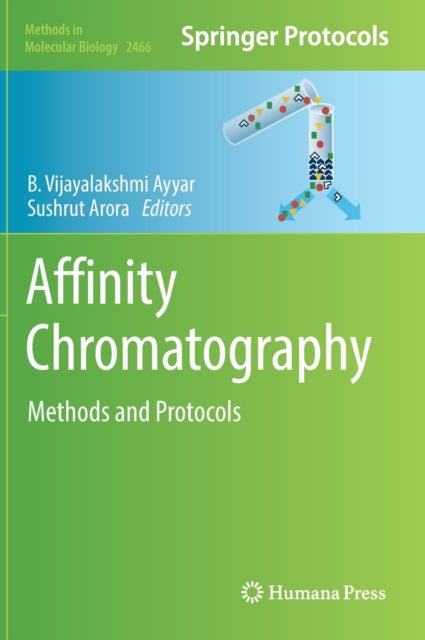
Affinity Chromatography: Methods and Protocols
Affinity Chromatography: Methods and Protocols
We can order this item for you. Delivery usually takes about 4 to 6 weeks.
This item is not held in our immediate stock. We will order it for you after checkout.
Estimated delivery: About 4 to 6 weeks
YOU SAVE £32.32
- Condition: Brand new
- UK Delivery times: Usually arrives within 2 - 3 working days
- UK Shipping: Fee starts at £3.89. Subject to product weight & dimension
Bulk ordering. Want 15 or more copies? Get a personalised quote and bigger discounts. Learn more about bulk orders.
Couldn't load pickup availability
- More about Affinity Chromatography: Methods and Protocols
This book provides a comprehensive guide to affinity chromatography methods and protocols, covering various applications and molecular targets. Written in the format of the highly successful Methods in Molecular Biology series, it includes step-by-step protocols and troubleshooting tips.
Format: Hardback
Length: 278 pages
Publication date: 19 May 2022
Publisher: Springer-Verlag New York Inc.
This comprehensive volume delves into diverse facets of affinity chromatography, accompanied by illustrative examples of its applications. The chapters provide a step-by-step guide for purifying a wide range of molecular targets, including antibodies, extracellular vesicles, recombinant proteins, biomarkers, metabolites, plant organelles, nucleic acids, ligand identification, and protocols for constructing affinity matrices. Written in the style of the highly acclaimed Methods in Molecular Biology series, each chapter begins with an introduction to the topic, outlines the necessary materials and reagents, offers helpful tips on troubleshooting and potential pitfalls, and presents readily reproducible step-by-step protocols. Authored by esteemed experts in the field, Affinity Chromatography: Methods and Protocols strives to serve as an indispensable resource for researchers and practitioners utilizing affinity chromatography-based methodologies.
Introduction:
Affinity chromatography is a powerful technique used to isolate and purify proteins, peptides, and other biomolecules from complex mixtures. It relies on the specific binding of target molecules to a ligand, such as an antibody or a peptide, immobilized on a solid support material. This technique has numerous applications in various fields, including biochemistry, biotechnology, and medicine.
Chapter 1:
In this chapter, the authors provide an overview of affinity chromatography, including its principles, mechanisms, and various types of ligands used. They discuss the advantages and limitations of the technique and highlight its applications in protein purification, peptide mapping, and ligand identification. The chapter also includes examples of affinity chromatography protocols for isolating specific proteins from cell lysates, recombinant proteins from bacteria, and analyzing protein-protein interactions.
Chapter 2:
Chapter 2 focuses on the development and optimization of affinity chromatography protocols. The authors discuss the selection of appropriate ligands, the immobilization of ligands on solid support materials, and the optimization of chromatographic conditions, such as buffer composition, pH, and temperature. They also provide tips on troubleshooting common issues encountered during affinity chromatography and offer strategies for improving the efficiency and specificity of the purification process.
Chapter 3:
Chapter 3 explores the application of affinity chromatography in the purification of extracellular vesicles. Extracellular vesicles are small membrane-bound particles that are secreted by cells and play important roles in intercellular communication and tissue homeostasis. The authors discuss the isolation and purification of extracellular vesicles from various biological samples, including cell culture supernatants, blood, and tissue samples. They also provide examples of affinity chromatography protocols for enriching and analyzing extracellular vesicles for their content, such as proteins, lipids, and nucleic acids.
Chapter 4:
Chapter 4 focuses on the application of affinity chromatography in the purification of recombinant proteins. Recombinant proteins are produced in bacteria or yeast using genetic engineering techniques and are used in various research and therapeutic applications. The authors discuss the isolation and purification of recombinant proteins from bacterial cultures, including the use of affinity chromatography columns with specific ligands to capture the target protein. They also provide examples of affinity chromatography protocols for purifying recombinant proteins from complex mixtures, such as cell lysates or fermentation broths.
Chapter 5:
Chapter 5 explores the application of affinity chromatography in the purification of biomarkers. Biomarkers are molecules that can be used to diagnose, monitor, and predict disease. The authors discuss the isolation and purification of biomarkers from biological samples, such as blood, urine, and tissue samples. They also provide examples of affinity chromatography protocols for enriching and analyzing biomarkers for their specificity and sensitivity.
Chapter 6:
Chapter 6 focuses on the application of affinity chromatography in the purification of metabolites. Metabolites are small molecules that are produced by cells and play important roles in various biological processes. The authors discuss the isolation and purification of metabolites from biological samples, including the use of affinity chromatography columns with specific ligands to capture the target metabolite. They also provide examples of affinity chromatography protocols for purifying metabolites from complex mixtures, such as plant extracts or animal tissues.
Chapter 7:
Chapter 7 explores the application of affinity chromatography in the purification of plant organelles. Plant organelles are specialized cellular structures that carry out specific functions in cells. The authors discuss the isolation and purification of plant organelles from various biological samples, including plant tissues and cell cultures. They also provide examples of affinity chromatography protocols for enriching and analyzing plant organelles for their content, such as proteins, lipids, and nucleic acids.
Chapter 8:
Chapter 8 focuses on the application of affinity chromatography in the purification of nucleic acids. Nucleic acids are the building blocks of DNA and RNA and play important roles in various biological processes. The authors discuss the isolation and purification of nucleic acids from biological samples, including the use of affinity chromatography columns with specific ligands to capture the target nucleic acid. They also provide examples of affinity chromatography protocols for purifying nucleic acids from complex mixtures, such as cell lysates or environmental samples.
Chapter 9:
Chapter 9 explores the application of affinity chromatography in the identification of ligands. Ligands are molecules that bind to specific targets and can be used to develop drugs, diagnostics, and other therapeutic agents. The authors discuss the identification of ligands using affinity chromatography, including the use of competitive binding assays, screening libraries, and high-throughput screening techniques. They also provide examples of affinity chromatography protocols for identifying ligands from complex mixtures, such as natural products or synthetic libraries.
Chapter 10:
Chapter 10 focuses on the application of affinity chromatography in the construction of affinity matrices. Affinity matrices are solid support materials that are used to immobilize ligands and capture target molecules. The authors discuss the construction of affinity matrices using various materials, such as beads, membranes, and polymers. They also provide examples of affinity chromatography protocols for constructing affinity matrices for specific target molecules, such as antibodies or peptides.
Conclusion:
In conclusion, affinity chromatography is a versatile and powerful technique that has numerous applications in various fields. This comprehensive volume provides a detailed overview of affinity chromatography, including its principles, mechanisms, and applications. The chapters cover a wide range of topics, from protein purification to ligand identification, and provide step-by-step protocols for conducting affinity chromatography-based experiments. By utilizing affinity chromatography, researchers can isolate and purify specific target molecules from complex mixtures, which is essential for advancing our understanding of biological processes and developing new therapeutic agents.
Weight: 743g
Dimension: 254 x 178 (mm)
ISBN-13: 9781071621752
Edition number: 1st ed. 2022
UK and International shipping information
UK and International shipping information
We deliver throughout the United Kingdom and to 128 countries and territories worldwide, including the United States, Australia, Canada, Germany, Spain and France.