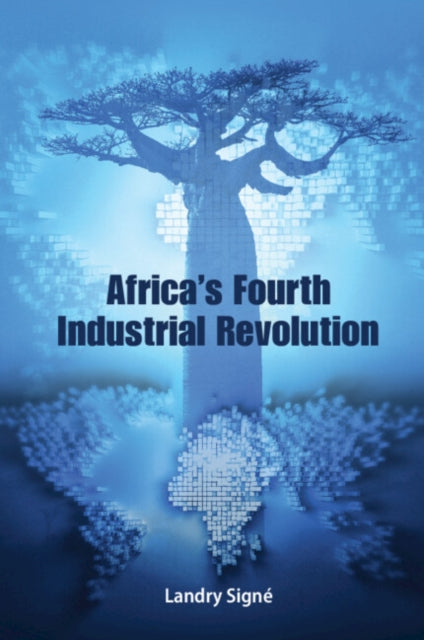
LandrySigne
Africa's Fourth Industrial Revolution
Africa's Fourth Industrial Revolution
💎 Earn 113 Points (£1.13) on this item.
We can order this item for you. Delivery usually takes about 4 to 6 weeks.
This item is not held in our immediate stock. We will order it for you after checkout.
Estimated delivery: About 4 to 6 weeks
YOU SAVE £1.34
- Condition: Brand new
- UK Delivery times: Usually arrives within 2 - 3 working days
- UK Shipping: Fee starts at £3.89. Subject to product weight & dimension
Bulk ordering. Want 15 or more copies? Get a personalised quote and bigger discounts. Learn more about bulk orders.
Couldn't load pickup availability
- More about Africa's Fourth Industrial Revolution
The Fourth Industrial Revolution is a fusion of physical, digital, and biological worlds, with trends across Africa indicating potential for growth and sustainable development. This study by Landry Signé examines the meaning, drivers, and implications of the Fourth Industrial Revolution for Africa, challenging our understanding of the continent's transformation and shedding light on the potential to change and shape the Global South.
Format: Paperback / softback
Length: 200 pages
Publication date: 22 June 2023
Publisher: Cambridge University Press
The Fourth Industrial Revolution, driven by the convergence of new technologies and disruptive innovations, is a transformative era that is reshaping the global economy. This revolution is characterized by the fusion of the physical, digital, and biological realms, leading to a range of groundbreaking developments. From the widespread adoption of mobile devices to the entrepreneurial use of 3D printing, artificial intelligence, and robotics, trends across Africa indicate the continent's immense potential for growth and sustainable development in the era of the Fourth Industrial Revolution.
In this innovative and timely study, Landry Signé delves into the meaning, drivers, and implications of the Fourth Industrial Revolution for Africa. Through a comparative, continent-wide analysis, Signé challenges our existing perceptions of Africa's transformation and sheds light on the transformative power of the Fourth Industrial Revolution for the Global South. By defining and investigating the Fourth Industrial Revolution, Signé develops a valuable framework for further study and offers practical strategies for Africans and their global partners to capitalize on this rapidly evolving technological landscape.
The Fourth Industrial Revolution brings about significant opportunities for Africa, including increased access to technology, improved infrastructure, and enhanced productivity. By leveraging these opportunities, Africa can foster economic growth, create job opportunities, and address social and environmental challenges. However, the revolution also presents challenges, such as the need for skills development, infrastructure investment, and policy reforms to ensure inclusive and sustainable development.
One of the key drivers of the Fourth Industrial Revolution in Africa is the increasing adoption of mobile devices. With the proliferation of smartphones and affordable internet access, individuals and businesses in Africa can access a range of digital services, including e-commerce, education, and healthcare. This has the potential to revolutionize the way people live, work, and interact with each other, particularly in rural and underserved communities.
Another driver of the Fourth Industrial Revolution in Africa is the entrepreneurial use of 3D printing, artificial intelligence, and robotics. These technologies have the potential to transform industries such as manufacturing, agriculture, and healthcare, by increasing efficiency, reducing costs, and improving quality. For example, 3D printing can enable the production of affordable medical devices and agricultural tools, while artificial intelligence can improve crop yields and livestock management.
Artificial intelligence is also playing a significant role in the Fourth Industrial Revolution in Africa. With the vast amounts of data generated by mobile devices, sensors, and other sources, AI can be used to analyze and predict trends, improve decision-making, and automate processes. This has the potential to improve the efficiency of government services, healthcare, and financial institutions, particularly in rural and underserved communities.
However, the Fourth Industrial Revolution also presents challenges for Africa. One of the biggest challenges is the need for skills development and training. As new technologies are introduced, there is a risk of job displacement and skill shortages. To address this challenge, governments, businesses, and educational institutions need to invest in skills development programs, particularly in areas such as digital literacy, programming, and data analysis.
Another challenge is the need for infrastructure investment. The Fourth Industrial Revolution requires high-speed internet, reliable power supply, and advanced transportation networks. While some African countries have made significant progress in infrastructure development, there is still a need for more investment to ensure that all regions of the continent benefit from the revolution.
Policy reforms are also crucial to ensure that the Fourth Industrial Revolution benefits all Africans. This includes policies that promote innovation, investment, and entrepreneurship, as well as policies that address issues such as inequality, poverty, and environmental degradation. Governments need to work closely with stakeholders, including the private sector, civil society
society, and academia, to develop and implement policies that promote inclusive and sustainable development.
In conclusion, the Fourth Industrial Revolution is a transformative era that presents significant opportunities for Africa's growth and sustainable development. By leveraging the opportunities presented by new technologies and disruptive innovations, Africa can foster economic growth, create job opportunities, and address social and environmental challenges. However, the revolution also presents challenges that require careful consideration and action. By investing in skills development, infrastructure investment, and policy reforms, Africans and their global partners can ensure that the Fourth Industrial Revolution benefits all Africans and contributes to the global development agenda.
ISBN-13: 9781009200011
UK and International shipping information
UK and International shipping information
We deliver throughout the United Kingdom and to 128 countries and territories worldwide, including the United States, Australia, Canada, Germany, Spain and France.