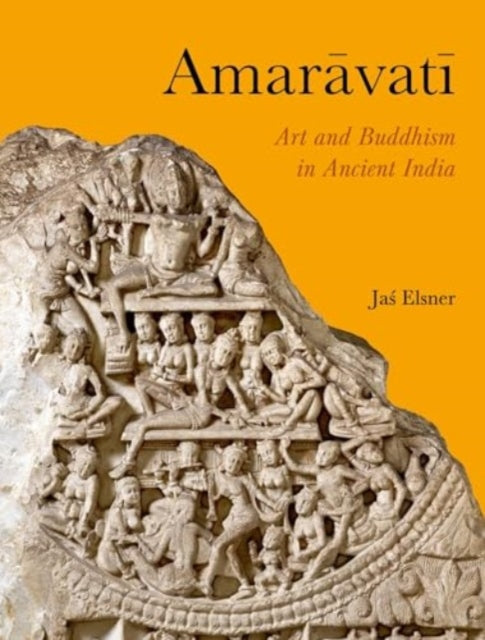
Jas Elsner
Amaravati: Art and Buddhism in Ancient India
Amaravati: Art and Buddhism in Ancient India
YOU SAVE £3.96
- Condition: Brand new
- UK Delivery times: Usually arrives within 2 - 3 working days
- UK Shipping: Fee starts at £3.89. Subject to product weight & dimension
Bulk ordering. Want 15 or more copies? Get a personalised quote and bigger discounts. Learn more about bulk orders.
Couldn't load pickup availability
- More about Amaravati: Art and Buddhism in Ancient India
The Amarāvatī stupa is a remarkable Buddhist monument that showcases the rich visual culture of ancient South Asia, connecting art history, Buddhist philosophy, and rituals. Jaś Elsner's book offers new insights into early Buddhist art and the relationship between Buddhism and its material culture, with detailed photographs of objects from the British Museum. It is an invaluable resource for students and scholars.
Format: Hardback
Length: 308 pages
Publication date: 15 July 2024
Publisher: Reaktion Books
The exploration of the exceptional Buddhist stupa (reliquary mound) at Amarāvatī, one of ancient India's most extraordinary monuments, presents a fresh perspective on the rich visual culture of ancient South Asia viewed through the lens of art history, connecting the stupas artistic innovations with advancements in Buddhist philosophy and rituals. Jaś Elsner offers new insights into early Buddhist art in South India, as well as a new understanding of the relationship between early Buddhism and its material culture. The excellent newly taken photographs, particularly those featuring objects from the British Museum in London, show in detail how the stupa communicated Buddhist teachings and practices to its followers, making this book an invaluable resource for students and scholars alike.
The Exceptional Buddhist Stupa at Amarāvatī: A Fresh Perspective on Ancient South Asian Visual Culture
Amarāvatī, one of ancient India's most extraordinary monuments, is a Buddhist stupa (reliquary mound) that has been the subject of extensive exploration and study. This exploration presents a fresh perspective on the rich visual culture of ancient South Asia viewed through the lens of art history, connecting the stupas artistic innovations with advancements in Buddhist philosophy and rituals. Jaś Elsner, a renowned scholar in the field of Buddhist art, offers new insights into early Buddhist art in South India, as well as a new understanding of the relationship between early Buddhism and its material culture. The excellent newly taken photographs, particularly those featuring objects from the British Museum in London, show in detail how the stupa communicated Buddhist teachings and practices to its followers, making this book an invaluable resource for students and scholars alike.
Early Buddhist Art in South India
Elsner's exploration of early Buddhist art in South India begins with the early Buddhist period, which dates back to the 3rd century BCE. During this period, the stupas were primarily constructed of brick and stone, with intricate carvings and sculptures adorning their exteriors. The stupas were designed to house the relics of the Buddha, including his ashes, hair, and teeth, which were believed to possess spiritual power. Elsner highlights the artistic innovations of the early Buddhist period, such as the use of geometric patterns, floral motifs, and the depiction of the Buddha in various postures. He also discusses the influence of Indian art on early Buddhist art, particularly the use of Hindu iconography and the incorporation of local styles and materials. Elsner's analysis of early Buddhist art in South India provides a valuable insight into the development of Buddhist art in the region and its relationship with other artistic traditions.
The Relationship between Early Buddhism and Its Material Culture
Elsner's exploration of the relationship between early Buddhism and its material culture is equally fascinating. He argues that the stupas were not just religious structures but also served as centers of economic and social activity. The stupas were used to store and distribute food, clothing, and other essential items to the local community, and they also played a significant role in the religious and social life of the community. Elsner highlights the use of various materials in the construction of the stupas, such as brick, stone, and wood, and discusses the techniques used to create the intricate carvings and sculptures. He also discusses the role of the stupas in the spread of Buddhism throughout South Asia and the influence of Buddhism on the material culture of the region.
New Insights into Early Buddhist Art in South India
Elsner's exploration of early Buddhist art in South India offers new insights into the development of Buddhist art in the region. He highlights the artistic innovations of the early Buddhist period, such as the use of geometric patterns, floral motifs, and the depiction of the Buddha in various postures. He also discusses the influence of Indian art on early Buddhist art, particularly the use of Hindu iconography and the incorporation of local styles and materials. Elsner's analysis of early Buddhist art in South India provides a valuable insight into the development of Buddhist art in the region and its relationship with other artistic traditions.
New Understanding of the Relationship between Early Buddhism and Its Material Culture
Elsner's exploration of the relationship between early Buddhism and its material culture is equally fascinating. He argues that the stupas were not just religious structures but also served as centers of economic and social activity. The stupas were used to store and distribute food, clothing, and other essential items to the local community, and they also played a significant role in the religious and social life of the community. Elsner highlights the use of various materials in the construction of the stupas, such as brick, stone, and wood, and discusses the techniques used to create the intricate carvings and sculptures. He also discusses the role of the stupas in the spread of Buddhism throughout South Asia and the influence of Buddhism on the material culture of the region.
New Photographs of the Stupa at Amarāvatī
The book features excellent newly taken photographs, particularly those featuring objects from the British Museum in London. These photographs show in detail how the stupa communicated Buddhist teachings and practices to its followers. The photographs depict the various features of the stupa, such as the stupa's dome, the stupa's base, the stupa's interior, and the stupa's exterior. The photographs also show the various sculptures and carvings that adorn the stupa, including the Buddha's statues, the Bodhisattva statues, and the various deities that are associated with Buddhism. The photographs provide a visual representation of the stupa's architectural and artistic features, making it an invaluable resource for students and scholars alike.
Conclusion
In conclusion, the exploration of the exceptional Buddhist stupa at Amarāvatī, one of ancient India's most extraordinary monuments, presents a fresh perspective on the rich visual culture of ancient South Asia viewed through the lens of art history, connecting the stupas artistic innovations with advancements in Buddhist philosophy and rituals. Jaś Elsner's exploration of early Buddhist art in South India offers new insights into the development of Buddhist art in the region and its relationship with other artistic traditions. The excellent newly taken photographs, particularly those featuring objects from the British Museum in London, show in detail how the stupa communicated Buddhist teachings and practices to its followers, making this book an invaluable resource for students and scholars alike.
Weight: 1148g
Dimension: 199 x 258 x 28 (mm)
ISBN-13: 9781789148695
UK and International shipping information
UK and International shipping information
We deliver throughout the United Kingdom and to 128 countries and territories worldwide, including the United States, Australia, Canada, Germany, Spain and France.