Shulph Ink
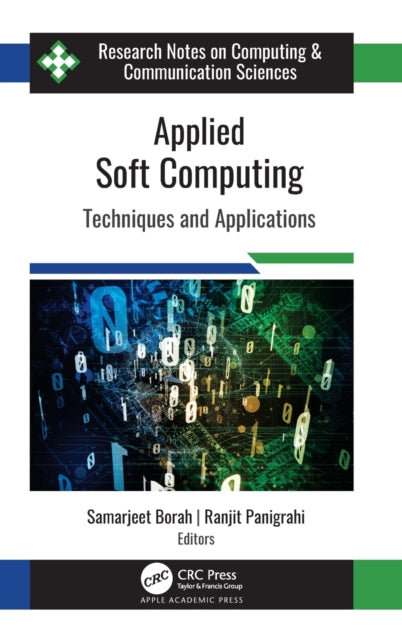
Applied Soft Computing: Techniques and Applications
Applied Soft Computing: Techniques and Applications
We can order this item for you. Delivery usually takes about 4 to 6 weeks.
This item is not held in our immediate stock. We will order it for you after checkout.
Estimated delivery: About 4 to 6 weeks
YOU SAVE £11.52
- Condition: Brand new
- UK Delivery times: Usually arrives within 2 - 3 working days
- UK Shipping: Fee starts at £3.89. Subject to product weight & dimension
Bulk ordering. Want 15 or more copies? Get a personalised quote and bigger discounts. Learn more about bulk orders.
Couldn't load pickup availability
- More about Applied Soft Computing: Techniques and Applications
The book explores soft computing applications in modern technology, such as bioinspired computing, reconfigurable computing, fuzzy logic, fusion-based learning, intelligent healthcare systems, bioinformatics, data mining, functional approximation, genetic and evolutionary algorithms, hybrid models, machine learning, meta heuristics, neuro fuzzy systems, and optimization principles. It serves as a reference for AI developers, researchers, and academicians.
Format: Hardback
Length: 258 pages
Publication date: 03 February 2022
Publisher: Apple Academic Press Inc.
The book delves into a diverse range of modern applications in the realm of soft computing, encompassing bioinspired computing, reconfigurable computing, fuzzy logic, fusion-based learning, intelligent healthcare systems, bioinformatics, data mining, functional approximation, genetic and evolutionary algorithms, hybrid models, machine learning, meta heuristics, neuro fuzzy systems, and optimization principles. Serving as a comprehensive reference for AI developers, researchers, and academicians, this text addresses the recent technological advancements in the field of soft computing.
Introduction:
Soft computing is a branch of computer science that focuses on the development of algorithms and systems that exhibit human-like intelligence and adaptability. It has gained significant importance in recent years due to its ability to solve complex problems in various fields, such as healthcare, finance, and engineering. In this book, we will explore a wide range of modern applications in soft computing, including bioinspired computing, reconfigurable computing, fuzzy logic, fusion-based learning, intelligent healthcare systems, bioinformatics, data mining, functional approximation, genetic and evolutionary algorithms, hybrid models, machine learning, meta heuristics, neuro fuzzy systems, and optimization principles.
Bioinspired Computing:
Bioinspired computing is a field that draws inspiration from biological systems and processes to develop algorithms and systems that are efficient, robust, and scalable. It involves the use of biological concepts, such as neural networks, genetic algorithms, and evolutionary algorithms, to solve complex problems in areas such as pattern recognition, optimization, and machine learning. One of the key applications of bioinspired computing is in the field of healthcare, where it is used to develop intelligent systems that can diagnose and treat diseases. For example, artificial neural networks are used to analyze medical images and diagnose diseases such as cancer and heart disease.
Reconfigurable Computing:
Reconfigurable computing is a technology that allows computers to be reconfigured or modified in real-time to adapt to changing environmental conditions or requirements. It involves the use of reconfigurable hardware, such as field-programmable gate arrays (FPGAs), and software that enables the dynamic reconfiguration of the computer system. One of the key applications of reconfigurable computing is in the field of embedded systems, where it is used to develop systems that can be customized for specific applications. For example, reconfigurable FPGAs are used in embedded systems to develop high-performance computing systems that can be used in aerospace and defense applications.
Fuzzy Logic:
Fuzzy logic is a branch of mathematics that deals with the representation and manipulation of uncertain or ambiguous information. It involves the use of fuzzy sets, which are a set of values that are partially defined or undefined. Fuzzy logic is used in a wide range of applications, such as control systems, decision-making, and pattern recognition. One of the key applications of fuzzy logic is in the field of control systems, where it is used to develop systems that are robust and adaptive to changing environmental conditions. For example, fuzzy logic is used in the control of industrial processes to optimize performance and reduce waste.
Fusion-Based Learning:
Fusion-based learning is a machine learning technique that combines multiple learning algorithms to improve the accuracy and performance of the learning system. It involves the use of multiple learning algorithms, such as decision trees, neural networks, and support vector machines, to solve a single problem. One of the key applications of fusion-based learning is in the field of image recognition, where it is used to develop systems that can recognize and classify images with high accuracy. For example, fusion-based learning is used in facial recognition systems to identify individuals.
Intelligent Healthcare Systems:
Intelligent healthcare systems are a set of technologies and systems that are used to improve the quality of healthcare services and reduce the cost of healthcare delivery. They involve the use of advanced technologies, such as artificial intelligence, machine learning, and big data analytics, to analyze medical data and provide personalized healthcare services. One of the key applications of intelligent healthcare systems is in the field of medical imaging, where they are used to develop systems that can analyze medical images and diagnose diseases with high accuracy. For example, intelligent healthcare systems are used in medical imaging to develop systems that can detect cancer and other diseases at an early stage.
Bioinformatics:
Bioinformatics is a field that combines computer science, biology, and mathematics to analyze and interpret biological data. It involves the use of advanced technologies, such as bioinformatics software, databases, and algorithms, to store, manage, and analyze large amounts of biological data. One of the key applications of bioinformatics is in the field of drug discovery, where it is used to develop new drugs and therapies. For example, bioinformatics is used in drug discovery to identify potential drug targets and develop new drugs that can target these targets.
Data Mining:
Data mining is a field that involves the extraction, analysis, and interpretation of large amounts of data from various sources. It involves the use of advanced technologies, such as data mining software, databases, and algorithms, to identify patterns, trends, and relationships in the data. One of the key applications of data mining is in the field of marketing, where it is used to analyze customer data and develop targeted marketing campaigns. For example, data mining is used in marketing to analyze customer behavior and develop targeted marketing campaigns that can increase customer engagement and sales.
Functional Approximation:
Functional approximation is a technique that involves the use of mathematical models to represent and approximate complex systems. It involves the use of mathematical models, such as differential equations, neural networks, and genetic algorithms, to solve complex problems in areas such as control systems, optimization, and machine learning. One of the key applications of functional approximation is in the field of control systems, where it is used to develop systems that are robust and adaptive to changing environmental conditions. For example, functional approximation is used in the control of industrial processes to optimize performance and reduce waste.
Genetic and Evolutionary Algorithms:
Genetic and evolutionary algorithms are two algorithms that are used to solve optimization problems. They involve the use of genetic algorithms, which are a set of rules that are used to generate new solutions to a problem, and evolutionary algorithms, which are a set of rules that are used to evolve new solutions to a problem. One of the key applications of genetic and evolutionary algorithms is in the field of machine learning, where they are used to develop algorithms that can learn from data and improve over time. For example, genetic and evolutionary algorithms are used in machine learning to develop algorithms that can recognize and classify images with high accuracy.
Hybrid Models:
Hybrid models are a combination of two or more different models that are used to solve a single problem. They involve the use of multiple models, such as neural networks, decision trees, and support vector machines, to solve a single problem. One of the key applications of hybrid models is in the field of image recognition, where they are used to develop systems that can recognize and classify images with high accuracy. For example, hybrid models are used in facial recognition systems to identify individuals.
Machine Learning:
Machine learning is a field of computer science that involves the development of algorithms that can learn from data and improve over time. It involves the use of advanced technologies, such as neural networks, decision trees, and support vector machines, to analyze data and make predictions. One of the key applications of machine learning is in the field of natural language processing, where it is used to develop systems that can understand and generate human language. For example, machine learning is used in natural language processing to develop systems that can understand and generate human language.
Meta Heuristics:
Meta heuristics are a set of rules that are used to guide the search for solutions to optimization problems. They involve the use of heuristic algorithms, which are a set of rules that are used to generate new solutions to a problem, and metaheuristic algorithms, which are a set of rules that are used to guide the search for solutions to optimization problems. One of the key applications of meta heuristics is in the field of machine learning, where they are used to develop algorithms that can learn from data and improve over time. For example, meta heuristics are used in machine learning to develop algorithms that can recognize and classify images with high accuracy.
Neuro-Fuzzy Systems:
Neuro-fuzzy systems are a combination of two or more different systems that are used to solve complex problems. They involve the use of neural networks, fuzzy logic, and other advanced technologies to solve complex problems. One of the key applications of neuro-fuzzy systems is in the field of control systems, where they are used to develop systems that are robust and adaptive to changing environmental conditions. For example, neuro-fuzzy systems are used in control systems to develop systems that can control industrial processes and reduce waste.
Optimization Principles:
Optimization principles are a set of rules that are used to optimize the performance of systems and processes. They involve the use of mathematical models, such as differential equations, and algorithms, to optimize the performance of systems and processes. One of the key applications of optimization principles is in the field of engineering, where they are used to design and optimize systems and processes. For example, optimization principles are used in engineering to design and optimize engines and other mechanical systems.
Conclusion:
In conclusion, soft computing is a rapidly evolving field that has the potential to revolutionize the way we solve complex problems. The applications of soft computing in various fields, such as healthcare, finance, and engineering, are endless. In this book, we have explored a wide range of modern applications in soft computing, including bioinspired computing, reconfigurable computing, fuzzy logic, fusion-based learning, intelligent healthcare systems, bioinformatics, data mining, functional approximation, genetic and evolutionary algorithms, hybrid models, machine learning, meta heuristics, neuro fuzzy systems, and optimization principles. We hope that this book will serve as a valuable resource for AI developers, researchers, and academicians as they continue to explore the exciting world of soft computing.
Weight: 689g
Dimension: 229 x 152 (mm)
ISBN-13: 9781774630297
UK and International shipping information
UK and International shipping information
We deliver throughout the United Kingdom and to 128 countries and territories worldwide, including the United States, Australia, Canada, Germany, Spain and France.