Shulph Ink
Architecture and Welfare: Scandinavian Perspectives
Architecture and Welfare: Scandinavian Perspectives
YOU SAVE £13.98
- Condition: Brand new
- UK Delivery times: Usually arrives within 2 - 3 working days
- UK Shipping: Fee starts at £3.89. Subject to product weight & dimension
Bulk ordering. Want 15 or more copies? Get a personalised quote and bigger discounts. Learn more about bulk orders.
Couldn't load pickup availability
- More about Architecture and Welfare: Scandinavian Perspectives
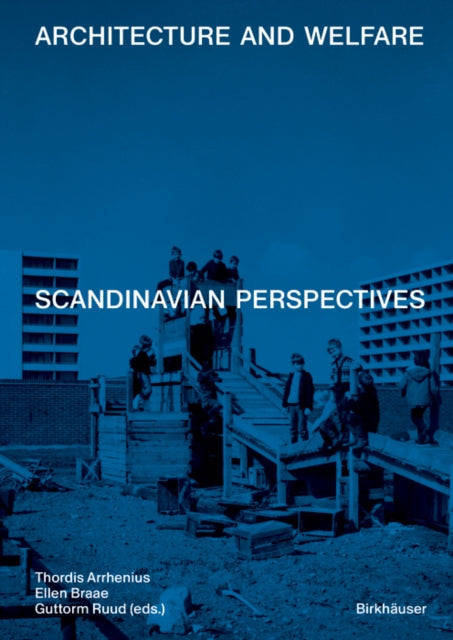
Architecture played a crucial role in the Nordic countries' implementation of welfare state policies, creating inclusive spaces that embodied democratic ideals. However, the legacy of this era is now contested, with the notion of welfare for all losing social and political consensus. This publication critically examines this legacy and presents a nuanced portrait of postwar welfare architecture navigating a contentious past and uncertain future.
Format: Hardback
Length: 392 pages
Publication date: 27 January 2025
Publisher: Birkhauser
Architecture played a crucial role in the implementation of welfare state policies in the Nordic countries, translating democratic ideals into tangible spatial manifestations. A generation of architects, landscape architects, and planners embraced an inclusive vision of welfare for all, striving to give physical shape to concepts of equality, collectivity, and democracy, resulting in a significant architectural output in Scandinavia during the postwar period. However, the architectural legacy of this era is now subject to debate. The notion of welfare for all has lost its social and political consensus, and this publication critically engages with this contested legacy, offering a nuanced portrayal of postwar welfare architecture grappling with its contentious past and uncertain future.
Architecture and Welfare State Policy in the Nordic Countries
Architecture played a fundamental role in the realization of welfare state policies in the Nordic countries. It was a means of translating democratic ideals into concrete spatial materializations, creating a society that was inclusive and equitable for all its citizens. A generation of architects, landscape architects, and planners embraced an inclusive notion of welfare for all, striving to give physical form to ideas of equality, collectivity, and democracy. This resulted in a vast architectural output in Scandinavia during the postwar years, with many iconic buildings and landscapes that continue to shape the region's urban and rural landscapes.
Contested Architectural Legacy
Today, the architectural legacy of this era is contested. Welfare for all no longer enjoys the social or political consensus it once did. This publication critically engages with this contested architectural legacy and provides a nuanced portrait of postwar welfare architecture coming to terms with a contentious past and facing an uncertain future. The book features newly commissioned photographic work by contemporary Nordic artists, which adds a visual dimension to the discussion.
Interdisciplinary Research Project
This publication is based on an interdisciplinary research project by KTH Stockholm, the Oslo School of Architecture, and the University of Copenhagen. Internationally renown contributors shed light on aspects of the relationship between architecture and welfare, exploring how architecture can contribute to the creation of inclusive and equitable societies. The book highlights the importance of collaboration between architects, planners, and other stakeholders in the design and implementation of welfare policies, and emphasizes the need for a more holistic approach to architecture that considers the social, economic, and environmental dimensions of society.
Conclusion
In conclusion, architecture played a crucial role in the realization of welfare state policies in the Nordic countries. It was a means of translating democratic ideals into tangible spatial materializations, creating a society that was inclusive and equitable for all its citizens. However, the architectural legacy of this era is now contested, and it is important to critically engage with this legacy to ensure that future welfare policies are designed and implemented in a way that promotes social justice and equity. The publication provides a nuanced portrait of postwar welfare architecture coming to terms with a contentious past and facing an uncertain future, and it highlights the importance of collaboration between architects, planners, and other stakeholders in the design and implementation of welfare policies.
Weight: 1024g
Dimension: 170 x 240 x 38 (mm)
ISBN-13: 9783035627961
UK and International shipping information
UK and International shipping information
We deliver throughout the United Kingdom and to 128 countries and territories worldwide, including the United States, Australia, Canada, Germany, Spain and France.