Shulph Ink
Arsenic in Rice: A Global Menace
Arsenic in Rice: A Global Menace
We can order this item for you. Delivery usually takes about 4 to 6 weeks.
This item is not held in our immediate stock. We will order it for you after checkout.
Estimated delivery: About 4 to 6 weeks
YOU SAVE £13.20
- Condition: Brand new
- UK Delivery times: Usually arrives within 2 - 3 working days
- UK Shipping: Fee starts at £3.89. Subject to product weight & dimension
Bulk ordering. Want 15 or more copies? Get a personalised quote and bigger discounts. Learn more about bulk orders.
Couldn't load pickup availability
- More about Arsenic in Rice: A Global Menace
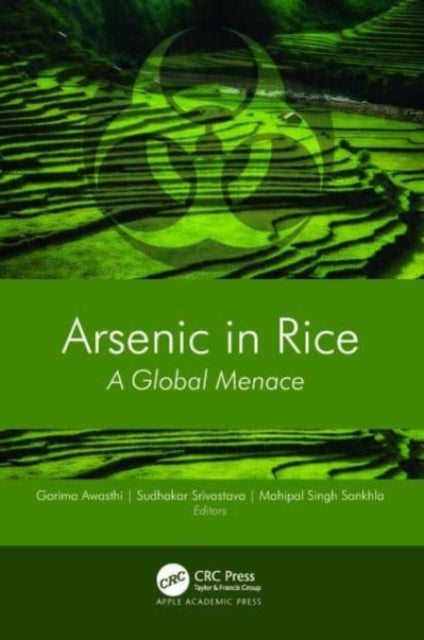
Arsenic contamination in rice is a major concern, and this new volume offers effective mitigation strategies to address this problem.
Format: Hardback
Length: 260 pages
Publication date: 06 February 2024
Publisher: Apple Academic Press Inc.
Arsenic has been widely recognized as one of the most toxic elements on the planet, posing significant risks to human health and the environment. It has the ability to infiltrate the food chain and contaminate various foods, leading to potential health hazards for consumers. Recent studies have raised alarmingly high levels of arsenic in rice, a staple food for a significant portion of the world's population. This alarming discovery has sparked widespread concern, as rice is a vital source of nutrition for many communities.
In response to this pressing issue, a new volume has been published that focuses on arsenic contamination in rice and provides comprehensive solutions to mitigate its effects. The book delves into the various sources and pathways of arsenic contamination in rice, including soil, water, and processing techniques. It also discusses the health risks associated with arsenic exposure and the potential consequences for human health.
The authors of the book have drawn upon extensive research and expertise to develop effective mitigation strategies for arsenic contamination in rice. These strategies include improving agricultural practices, such as using arsenic-resistant rice varieties and proper fertilization techniques, as well as implementing strict quality control measures during rice production and processing. Additionally, the book highlights the importance of raising awareness and educating communities about the risks associated with arsenic contamination and the steps they can take to protect themselves.
Arsenic contamination in rice is a complex issue that requires a multi-faceted approach. By addressing the sources and pathways of contamination, implementing effective mitigation strategies, and raising awareness, we can work towards ensuring the safety and nutrition of our food supply. This new volume provides valuable insights and practical solutions for addressing this critical problem.
In conclusion, arsenic contamination in rice is a significant concern that requires immediate action. This new volume offers valuable insights and practical solutions for mitigating arsenic contamination in rice and ensuring the safety and nutrition of our food supply. It is a must-read for researchers, policymakers, and anyone interested in protecting human health and the environment.
Arsenic has been widely recognized as one of the most toxic elements on the planet, posing significant risks to human health and the environment. It has the ability to infiltrate the food chain and contaminate various foods, leading to potential health hazards for consumers. Recent studies have raised alarmingly high levels of arsenic in rice, a staple food for a significant portion of the world's population. This alarming discovery has sparked widespread concern, as rice is a vital source of nutrition for many communities.
In response to this pressing issue, a new volume has been published that focuses on arsenic contamination in rice and provides comprehensive solutions to mitigate its effects. The book delves into the various sources and pathways of arsenic contamination in rice, including soil, water, and processing techniques. It also discusses the health risks associated with arsenic exposure and the potential consequences for human health.
The authors of the book have drawn upon extensive research and expertise to develop effective mitigation strategies for arsenic contamination in rice. These strategies include improving agricultural practices, such as using arsenic-resistant rice varieties and proper fertilization techniques, as well as implementing strict quality control measures during rice production and processing. Additionally, the book highlights the importance of raising awareness and educating communities about the risks associated with arsenic contamination and the steps they can take to protect themselves.
Arsenic contamination in rice is a complex issue that requires a multi-faceted approach. By addressing the sources and pathways of contamination, implementing effective mitigation strategies, and raising awareness, we can work towards ensuring the safety and nutrition of our food supply. This new volume provides valuable insights and practical solutions for addressing this critical problem.
In conclusion, arsenic contamination in rice is a significant concern that requires immediate action. This new volume offers valuable insights and practical solutions for mitigating arsenic contamination in rice and ensuring the safety and nutrition of our food supply. It is a must-read for researchers, policymakers, and anyone interested in protecting human health and the environment.
Weight: 680g
Dimension: 229 x 152 (mm)
ISBN-13: 9781774914663
UK and International shipping information
UK and International shipping information
We deliver throughout the United Kingdom and to 128 countries and territories worldwide, including the United States, Australia, Canada, Germany, Spain and France.