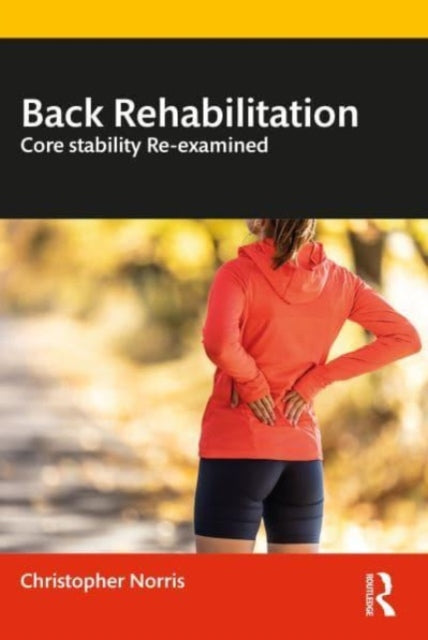
ChristopherNorris
Back Rehabilitation: Core Stability Re-examined
Back Rehabilitation: Core Stability Re-examined
💎 Earn 221 Points (£2.21) on this item.
YOU SAVE £2.63
- Condition: Brand new
- UK Delivery times: Usually arrives within 2 - 3 working days
- UK Shipping: Fee starts at £3.89. Subject to product weight & dimension
Bulk ordering. Want 15 or more copies? Get a personalised quote and bigger discounts. Learn more about bulk orders.
Couldn't load pickup availability
- More about Back Rehabilitation: Core Stability Re-examined
Exercise is essential for the prevention and treatment of low back pain, and this guide provides an integrated and practical approach for clinicians and personal trainers. It covers vital client assessment skills, exercise selection, teaching methods, and program structure and progression.
Format: Paperback / softback
Length: 350 pages
Publication date: 16 June 2023
Publisher: Taylor & Francis Ltd
Back pain is a common problem that affects most of us at some point in our lives. Fortunately, exercise is a powerful tool for both preventing and treating low back pain. In this comprehensive guide, we will critically appraise the latest research and evidence-based practices to develop an integrated and practical approach suitable for day-to-day clinicians and personal trainers.
Understanding the Science of Back Pain
Before we dive into the specifics of exercise programming for low back pain, it's important to understand the underlying causes and mechanisms of this condition. Back pain can be caused by a variety of factors, including poor posture, weak muscles, and injuries. It can also be a result of underlying medical conditions such as arthritis, disc degeneration, or spinal stenosis.
Understanding the science of back pain is crucial for designing effective exercise programmes. It allows us to identify the specific muscles and movements that are most important for strengthening and stabilizing the low back. It also helps us to understand the potential risks and benefits of different types of exercise.
Client Assessment Skills
One of the key aspects of designing and teaching effective exercise programmes for low back pain is the assessment of the client's condition. This includes evaluating their range of motion, strength, flexibility, and pain levels. It also involves assessing their functional abilities and any underlying medical conditions that may affect their ability to exercise.
Vital client assessment skills are essential for ensuring that the exercise programme is tailored to the individual's needs and goals. This includes understanding the client's motivation and preferences, as well as their physical limitations and potential risks.
Which Exercises to Use and Why
Once we have assessed the client's condition, we can begin to design an exercise programme that is tailored to their specific needs. The exercises used in low back pain management should focus on strengthening the core muscles, improving flexibility, and promoting proper posture.
Some of the most effective exercises for low back pain include:
Core strengthening exercises: These exercises target the abdominal muscles, which are essential for supporting the low back. Examples include crunches, planks, and bicycle crunches.
Flexibility exercises: These exercises improve the range of motion in the low back and surrounding muscles. Examples include stretching, yoga, and Pilates.
Posture exercises: These exercises help to improve the alignment of the spine and reduce the risk of further injury. Examples include wall squats, dead bugs, and cat-cow stretches.
It's important to choose exercises that are appropriate for the client's level of fitness and ability. Exercises that are too challenging or risky may cause further injury or exacerbate the client's condition.
The Most Effective Teaching Methods
In addition to choosing the right exercises, it's also important to use effective teaching methods to ensure that the exercises are performed correctly and safely. This includes providing clear instructions, demonstrating the exercises, and providing feedback and support to the client throughout the programme.
One of the most effective teaching methods for low back pain is the use of visual aids and cues. Visual aids can help the client to understand the correct form and technique for each exercise, while cues can help them to maintain proper posture and engage the correct muscles.
Another effective teaching method is the use of progressive overload. This involves gradually increasing the intensity and duration of the exercises over time to challenge the client's muscles and promote growth and improvement.
How to Structure and Progress a Full Back Pain Management Programme
Once we have designed an exercise programme for low back pain, it's important to structure it in a way that is easy to follow and progresses over time. This includes setting clear goals and objectives, providing a timeline for progression, and incorporating a variety of exercises to keep the programme interesting and challenging.
A full back pain management programme should typically include a combination of core strengthening exercises, flexibility exercises, and posture exercises. It may also include other exercises such as cardiovascular training, strength training, and balance training.
The programme should be structured in a way that allows for progression over time. This means that the exercises should become more challenging and intense as the client's fitness and ability improve. It may also include periods of rest and recovery to allow the muscles to recover and prevent injury.
Aimed at student therapists and clinical exercise teachers, as well as trainers planning exercise programmes for subjects recovering from low back pain, Back Rehabilitation is essential reading for therapists and exercise academics and professionals of all types.
In conclusion, low back pain is a common problem that affects many of us. Fortunately, exercise is a powerful tool for both preventing and treating this condition. By understanding the science of back pain, assessing the client's condition, choosing the right exercises, and using effective teaching methods, we can develop an integrated and practical approach suitable for day-to-day clinicians and personal trainers.
Back Rehabilitation is a comprehensive guide that provides students and professionals with the knowledge and skills they need to design and teach effective exercise programmes for subjects recovering from low back pain. It covers a wide range of topics, including client assessment skills, exercise selection, teaching methods, and programme structure and progression.
The book is written by a team of experienced therapists and exercise academics who have a deep understanding of the latest research and evidence-based practices in the field of back pain management. It is designed to be accessible and engaging, with clear explanations and illustrations that make it easy to understand and apply the information.
One of the key strengths of Back Rehabilitation is its focus on practical application. The book provides step-by-step instructions for designing and teaching exercise programmes, as well as tips and strategies for working with clients who have low back pain. It also includes case studies and examples that demonstrate the effectiveness of different exercise interventions in real-world settings.
Another important aspect of the book is its emphasis on safety. The authors recognize that exercise can be risky for individuals with low back pain, and they provide clear guidelines for avoiding injury and promoting optimal performance. This includes discussing the importance of proper technique, appropriate exercise intensity, and the use of appropriate equipment and support.
Back Rehabilitation is an essential resource for student therapists, clinical exercise teachers, and trainers who are interested in developing effective exercise programmes for subjects recovering from low back pain. It provides a comprehensive and evidence-based approach to back pain management that is grounded in practical experience and clinical expertise.
In conclusion, Back Rehabilitation is a valuable resource for anyone who is interested in developing effective exercise programmes for subjects recovering from low back pain. It provides a comprehensive and evidence-based approach to back pain management that is grounded in practical experience and clinical expertise. Whether you are a student therapist, clinical exercise teacher, or trainer, this book will help you to develop the knowledge and skills you need to provide high-quality care and support to your clients.
Weight: 670g
Dimension: 234 x 156 (mm)
ISBN-13: 9781032432144
Edition number: 3 ed
UK and International shipping information
UK and International shipping information
We deliver throughout the United Kingdom and to 128 countries and territories worldwide, including the United States, Australia, Canada, Germany, Spain and France.