Shulph Ink
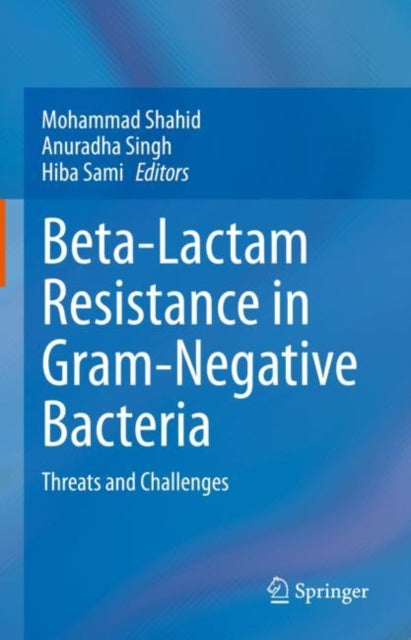
Beta-Lactam Resistance in Gram-Negative Bacteria: Threats and Challenges
Beta-Lactam Resistance in Gram-Negative Bacteria: Threats and Challenges
💎 Earn 495 Points (£4.95) on this item.
We can order this item for you. Delivery usually takes about 4 to 6 weeks.
This item is not held in our immediate stock. We will order it for you after checkout.
Estimated delivery: About 4 to 6 weeks
YOU SAVE £20.88
- Condition: Brand new
- UK Delivery times: Usually arrives within 2 - 3 working days
- UK Shipping: Fee starts at £3.89. Subject to product weight & dimension
Bulk ordering. Want 15 or more copies? Get a personalised quote and bigger discounts. Learn more about bulk orders.
Couldn't load pickup availability
- More about Beta-Lactam Resistance in Gram-Negative Bacteria: Threats and Challenges
This book discusses antimicrobial drug resistance, specifically the resistance against the beta-lactam class of antibiotics by Gram-Negative bacteria. It explains the underlying mechanisms, genetic basis, detection methods, epidemiology, and therapeutic options. It is a valuable resource for clinical practitioners, students, and researchers in microbiology.
Format: Hardback
Length: 324 pages
Publication date: 23 April 2022
Publisher: Springer Verlag, Singapore
Antimicrobial drug resistance, particularly the resistance against the beta-lactam class of antibiotics by Gram-Negative bacteria, is a pressing issue addressed in this timely publication. The book is organized into five comprehensive sections, each providing valuable insights into this complex topic.
The first section delves into the underlying mechanisms of antimicrobial resistance in Gram-negative bacteria. It explores the role of beta-lactamases, their types, classifications, inhibitors, and other factors contributing to resistance. This section serves as a foundation for understanding the genetic basis of resistance, which is discussed in the subsequent section.
The second section delves deep into the genetic basis of resistance. It discusses transposons, integrons, insertion sequences associated with antibiotic-resistant genes, and the mechanisms by which these elements contribute to the development of resistance. The authors provide a comprehensive understanding of the genetic mechanisms involved in beta-lactam resistance, which is crucial for developing effective strategies to combat this problem.
The third section describes phenotypic and molecular methods to detect beta-lactam resistance. It discusses the use of various diagnostic tools, such as antimicrobial susceptibility testing, PCR, and DNA sequencing, to identify beta-lactam-resistant bacteria and determine their genetic backgrounds. These methods are essential for timely identification and management of resistant infections.
The fourth section explores the epidemiology and prevalence of beta-lactamases in the environment. It discusses the sources of beta-lactamase production, the distribution of resistant bacteria, and the potential risks associated with environmental contamination. This section provides valuable information for healthcare professionals and policymakers in developing effective strategies to control the spread of antimicrobial resistance.
The last section of the book focuses on therapeutic options to combat antimicrobial resistance. It discusses the current reserve drugs, as well as the newer antibiotic agents that are in the pipeline. The authors provide an overview of the different treatment modalities, including combination therapy, alternative antibiotics, and vaccine development, and their potential benefits and limitations.
This book is an invaluable resource for clinical practitioners, students, and researchers in basic and medical microbiology. It offers a comprehensive and up-to-date understanding of antimicrobial drug resistance, providing valuable insights into the mechanisms, genetic basis, detection, epidemiology, and therapeutic options involved in combating this growing public threat. By addressing this issue, the book contributes to the development of effective strategies to preserve the effectiveness of antimicrobial treatments and ensure patient safety.
Weight: 688g
Dimension: 235 x 155 (mm)
ISBN-13: 9789811690969
Edition number: 1st ed. 2022
UK and International shipping information
UK and International shipping information
We deliver throughout the United Kingdom and to 128 countries and territories worldwide, including the United States, Australia, Canada, Germany, Spain and France.