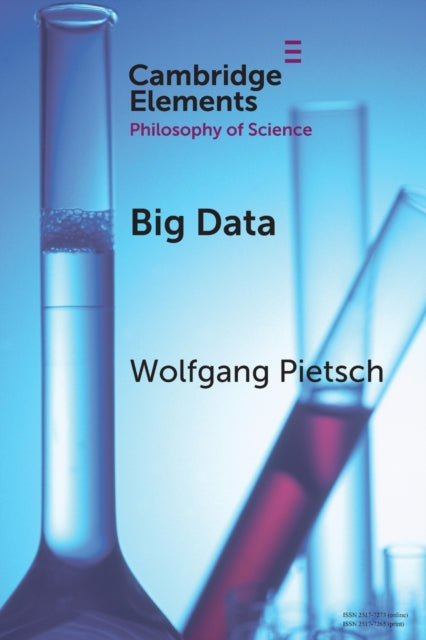
Wolfgang Pietsch
Big Data
Big Data
💎 Earn 84 Points (£0.84) on this item.
We can order this item for you. Delivery usually takes about 4 to 6 weeks.
This item is not held in our immediate stock. We will order it for you after checkout.
Estimated delivery: About 4 to 6 weeks
YOU SAVE £1.01
- Condition: Brand new
- UK Delivery times: Usually arrives within 2 - 3 working days
- UK Shipping: Fee starts at £3.89. Subject to product weight & dimension
Bulk ordering. Want 15 or more copies? Get a personalised quote and bigger discounts. Learn more about bulk orders.
Couldn't load pickup availability
- More about Big Data
Big Data and machine learning have transformed scientific practice, but an epistemological study is needed. This Element discusses controversial theses such as whether correlation replaces causation, whether the end of theory is in sight, and whether big data approaches constitute novel scientific methodology. I defend an inductivist view of big data research and argue that variational induction is the most successful algorithm.
Format: Paperback / softback
Length: 75 pages
Publication date: 18 February 2021
Publisher: Cambridge University Press
Big Data and its revolutionary methods, including machine learning, have undergone a profound transformation in scientific practice across numerous fields. Nevertheless, an in-depth epistemological exploration of these novel tools remains largely lacking. This Element begins by conducting a conceptual analysis of the concept of data, followed by a brief introduction to the methodological dichotomy between inductivism and hypothetico-deductivism. Subsequently, it delves into several contentious theses surrounding big data approaches. These theses encompass questions such as whether correlation replaces causation, whether the end of theory is imminent, and whether big data methodologies constitute a wholly novel scientific methodology.
In response to these challenges, this Element advocates for an inductivist perspective on big data research. It argues that the most successful big data algorithms employ a form of variational induction, drawing inspiration from the methods of Mill. By adopting this inductivist approach, the epistemological issues raised earlier can be systematically addressed.
The significance of this Element lies in its potential to shed light on the epistemological implications of big data and its methods. By providing a comprehensive analysis of these topics, it contributes to a better understanding of the role of big data in scientific inquiry and its potential to shape our understanding of the world. Furthermore, by advocating for an inductivist perspective, this Element offers a valuable alternative to the prevailing hypothetico-deductivist approach, which has been criticized for its limitations in addressing complex scientific problems.
In conclusion, big data and its methods have revolutionized scientific practice, but an epistemological study of these tools remains an area of significant need. This Element provides a comprehensive exploration of the concept of data, the methodological dichotomy between inductivism and hypothetico-deductivism, and the controversial theses surrounding big data approaches. By advocating for an inductivist perspective and highlighting the significance of variational induction, it offers a valuable contribution to the ongoing discourse on the epistemology of big data and its methods.
Weight: 146g
Dimension: 151 x 229 x 10 (mm)
ISBN-13: 9781108706698
UK and International shipping information
UK and International shipping information
We deliver throughout the United Kingdom and to 128 countries and territories worldwide, including the United States, Australia, Canada, Germany, Spain and France.