Garrett Gatzemeyer
Bodies for Battle: US Army Physical Culture and Systematic Training, 1885-1957
Bodies for Battle: US Army Physical Culture and Systematic Training, 1885-1957
💎 Earn 245 Points (£2.45) on this item.
YOU SAVE £2.91
- Condition: Brand new
- UK Delivery times: Usually arrives within 2 - 3 working days
- UK Shipping: Fee starts at £3.89. Subject to product weight & dimension
Bulk ordering. Want 15 or more copies? Get a personalised quote and bigger discounts. Learn more about bulk orders.
Couldn't load pickup availability
- More about Bodies for Battle: US Army Physical Culture and Systematic Training, 1885-1957
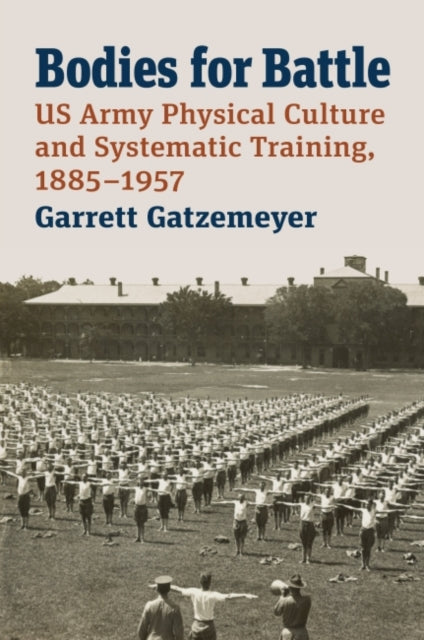
The US Army's physical culture, which developed in the late nineteenth century in response to tactical challenges and concerns over diminishing masculinity, is the focus of Bodies for Battle by Garrett Gatzemeyer. It connects social and cultural worries about American masculinity with military developments in the early twentieth century and analyzes applications of the armys physical culture to wider society.
Format: Hardback
Length: 336 pages
Publication date: 05 November 2021
Publisher: University Press of Kansas
The history of physical training in the US Army is surprisingly brief, dating back to the late 19th century. In response to tactical challenges and concerns about declining masculinity, the Army developed a unique physical culture that aimed to unite mind, body, and society. Bodies for Battle, written by Garrett Gatzemeyer, is the first comprehensive analysis of this culture, which emerged in the late 19th century.
The US Army's physical culture emphasized the development of the whole individual, not just physical strength. Learning physical acts was not just a matter of physical exertion but also involved mental and social aspects. Physical training and exercise were seen as a means to cultivate a unity of mind and body, which could benefit individuals and society as a whole.
Bodies for Battle explores how the US Army developed modern, scientific training methods in response to the challenges of entering a competitive imperial world. The book connects social and cultural concerns about American masculinity and manliness with military developments in the early 20th century. It also examines the broader trans-Atlantic trends that influenced the US and the Army.
Gatzemeyer offers a detailed historical understanding of physical training practices in the US Army, exploring the reasons why soldiers exercise the way they do. He also discusses the evolution of physical cultures and their impact on present-day reform efforts.
Between the 1880s and the 1950s, the Army's physical culture underwent significant maturation through various interactions. Combat experience played a crucial role in shaping training methods, as soldiers learned from their experiences on the battlefield. Developments in physical education also contributed to the evolution of the culture, as experts sought to improve the physical fitness and health of soldiers.
Institutional outsiders, such as physical education professionals and sports enthusiasts, also played a role in shaping the culture. They brought new ideas and methods to the Army, which helped to modernize training practices. The culture's application beyond the military also contributed to its growth, as soldiers began to use physical training methods to improve their overall health and well-being.
Popular culture also played a significant role in shaping the US Army's physical culture. Media representations of soldiers and military training influenced public perceptions and attitudes toward the Army. Movies, television shows, and books about the Army often depicted physical training as a means to build strength, discipline, and teamwork.
In conclusion, the history of physical training in the US Army is a fascinating and complex story that reflects the changing social and cultural landscape of the country. Bodies for Battle provides a valuable insight into the development of this unique culture and its impact on individuals and society. The book offers new perspectives on US civil-military relations, army officers' unease with citizen armies, and the implications of compulsory military service. By examining the historical roots of physical training practices, Gatzemeyer helps to shed light on the ongoing reform efforts in the Army and the importance of maintaining a strong physical culture for the modern battlefield.
Weight: 650g
Dimension: 163 x 237 x 34 (mm)
ISBN-13: 9780700632589
UK and International shipping information
UK and International shipping information
We deliver throughout the United Kingdom and to 128 countries and territories worldwide, including the United States, Australia, Canada, Germany, Spain and France.