Shulph Ink
Bridging the Family Care Gap
Bridging the Family Care Gap
We can order this item for you. Delivery usually takes about 4 to 6 weeks.
This item is not held in our immediate stock. We will order it for you after checkout.
Estimated delivery: About 4 to 6 weeks
YOU SAVE £11.45
- Condition: Brand new
- UK Delivery times: Usually arrives within 2 - 3 working days
- UK Shipping: Fee starts at £3.89. Subject to product weight & dimension
Bulk ordering. Want 15 or more copies? Get a personalised quote and bigger discounts. Learn more about bulk orders.
Couldn't load pickup availability
- More about Bridging the Family Care Gap
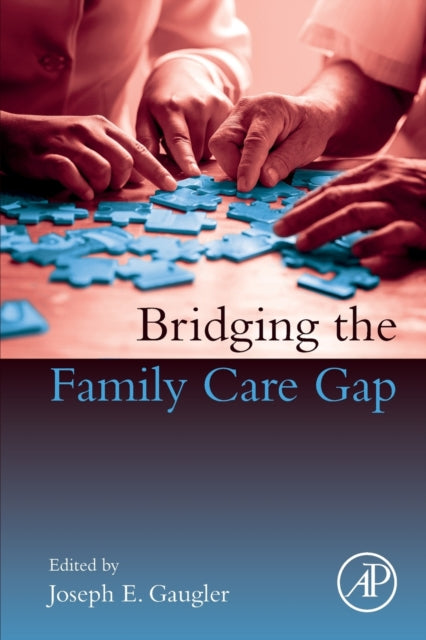
Bridging the Family Care Gap examines the future shortages of family caregivers of older persons and potential solutions, including care management models, policy initiatives, and technological innovations. It also explores lay healthcare workers as guides, interpreters, and advocates in healthcare systems.
\n Format: Paperback / softback
\n Length: 496 pages
\n Publication date: 12 January 2021
\n Publisher: Elsevier Science Publishing Co Inc
\n
Bridging the Family Care Gap delves into the impending scarcity of family caregivers for older individuals, shedding light on potential solutions. It scrutinizes the viability and accessibility of care management models, assessing their potential for widespread implementation to cater to community requirements. The book uncovers emerging policy initiatives at local, state, and federal levels, aimed at addressing the family care gap. Furthermore, it explores the state of family caregiving science, the dissemination and execution of promising programs and supports, technological innovations, and other strategies to mitigate the gap. This edited volume also delves into the role of lay healthcare workers as guides, interpreters, and advocates within healthcare systems that foster continuity of contact for family caregivers.
Introduction:
The aging population is a global phenomenon, with an increasing number of individuals requiring care and support. Family caregivers play a crucial role in providing this care, often at significant personal and financial costs. However, the demand for family caregivers is projected to outpace the availability of resources in the coming years, leading to a significant family care gap.
Expected Future Shortages of Family Caregivers:
According to various studies, the number of family caregivers is expected to decline significantly in the coming decades. This decline is attributed to several factors, including the increasing longevity of the population, the rising cost of care, and the declining birth rate. As a result, there will be a greater need for alternative care arrangements, such as assisted living facilities and nursing homes.
Potential Solutions:
Bridging the Family Care Gap explores potential solutions to address the family care gap. The book examines the sustainability and availability of care management models, such as home care and respite care, and assesses their potential for effective scaling up to meet community needs. It also identifies newly emerging policy initiatives at local, state, and federal levels, aimed at supporting family caregivers and promoting the sustainability of caregiving.
Sustainability and Availability of Care Management Models:
The book emphasizes the importance of ensuring the sustainability and availability of care management models. It explores whether these models can be effectively scaled up to meet the growing demand for care, taking into account factors such as cost, accessibility, and quality of care. The authors argue that scalable care management models can help alleviate the burden on family caregivers and provide high-quality care to older individuals.
Newly Emerging Policy Initiatives:
The book identifies newly emerging policy initiatives at local, state, and federal levels that are aimed at supporting family caregivers. These initiatives include programs that provide financial assistance, respite care, and training and education for family caregivers. The authors argue that these policy initiatives can help improve the well-being of family caregivers and reduce the family care gap.
State of Family Caregiving Science:
The book also addresses the state of family caregiving science, dissemination, and implementation of promising programs and supports. It highlights the need for evidence-based practices and interventions that can help support family caregivers and improve the quality of care they provide. The authors argue that dissemination of promising programs and supports can help increase the awareness and availability of resources for family caregivers.
Technological Innovations:
The book recognizes the potential of technological innovations to support family caregivers. It explores the use of technology, such as telehealth and wearable devices, to provide remote care and support to family caregivers. The authors argue that technological innovations can help reduce the burden on family caregivers and improve the quality of care they provide.
Other Strategies:
In addition to technological innovations, the book discusses other strategies that can help offset the family care gap. These strategies include promoting work-life balance for family caregivers, providing training and education for employers to support family caregivers, and developing community-based programs that support family caregivers.
Lay Healthcare Workers as Guides, Interpreters, and Advocates:
The book also explores the role of lay healthcare workers as guides, interpreters, and advocates within healthcare systems that provide continuity of contact for family caregivers. Lay healthcare workers, such as nurses, social workers, and chaplains, play a critical role in supporting family caregivers and ensuring that they receive the care and support they need. The authors argue that lay healthcare workers can help bridge the gap between family caregivers and healthcare providers and improve the overall quality of care for older individuals.
Conclusion:
Bridging the Family Care Gap is a valuable resource for policymakers, healthcare providers, and family caregivers. It provides insights into the impending shortage of family caregivers and identifies potential solutions to address this issue. The book emphasizes the importance of ensuring the sustainability and availability of care management models, promoting evidence-based practices and interventions, and leveraging technological innovations to support family caregivers. It also highlights the role of lay healthcare workers as guides, interpreters, and advocates within healthcare systems. By addressing the family care gap, we can improve the well-being of older individuals and ensure that they receive the care and support they need to live fulfilling lives.
\n Weight: 796g\n
Dimension: 153 x 228 x 28 (mm)\n
ISBN-13: 9780128138984\n \n
UK and International shipping information
UK and International shipping information
We deliver throughout the United Kingdom and to 128 countries and territories worldwide, including the United States, Australia, Canada, Germany, Spain and France.