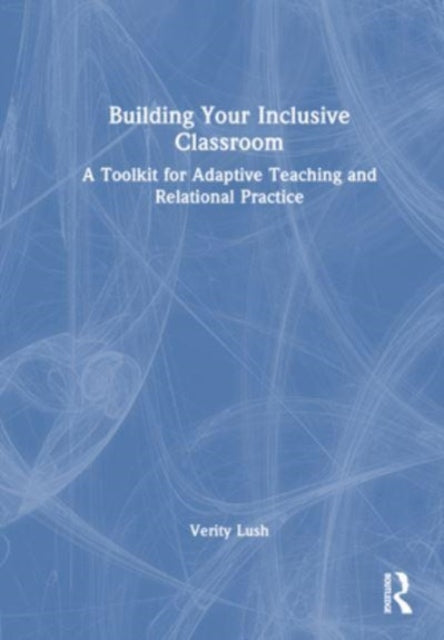
Verity Lush
Building Your Inclusive Classroom: A Toolkit for Adaptive Teaching and Relational Practice
Building Your Inclusive Classroom: A Toolkit for Adaptive Teaching and Relational Practice
We can order this item for you. Delivery usually takes about 4 to 6 weeks.
This item is not held in our immediate stock. We will order it for you after checkout.
Estimated delivery: About 4 to 6 weeks
YOU SAVE £15.13
- Condition: Brand new
- UK Delivery times: Usually arrives within 2 - 3 working days
- UK Shipping: Fee starts at £3.89. Subject to product weight & dimension
Bulk ordering. Want 15 or more copies? Get a personalised quote and bigger discounts. Learn more about bulk orders.
Couldn't load pickup availability
- More about Building Your Inclusive Classroom: A Toolkit for Adaptive Teaching and Relational Practice
Differentiated and adaptive teaching is essential for achieving success in the classroom, combining recent pedagogies with traditional ones. It is down-to-earth and empathetic, inspiring and upbeat, and full of ideas and creative thinking to inspire.
Format: Hardback
Length: 180 pages
Publication date: 21 December 2023
Publisher: Taylor & Francis Ltd
The Importance of Differentiating Instruction and the Role of Adaptive Teaching in Supporting Achievement for All in the Classroom
Differentiating instruction is a crucial approach in education that recognizes the unique needs and learning styles of individual students. By tailoring teaching strategies and materials to meet the diverse needs of the classroom, educators can create a more inclusive and effective learning environment where all students can thrive. Adaptive teaching is a powerful tool that supports the implementation of differentiated instruction. It involves using a variety of instructional methods and materials to meet the individual needs of students, including those with learning disabilities or English language learners. Adaptive teaching also allows teachers to provide personalized feedback and support to students, helping them to progress and achieve their goals.
One of the key benefits of differentiating instruction is that it supports the achievement of all students in the classroom, including the teacher. By providing students with a range of learning opportunities and challenges, educators can help them to develop their skills and knowledge at their own pace. This not only benefits the students but also helps teachers to become more effective and engaged in their teaching.
In addition to supporting student achievement, differentiating instruction can also help to create a more inclusive classroom environment. By recognizing and valuing the diversity of students in the classroom, educators can break down barriers to learning and promote a sense of belonging and respect among all students. This can lead to increased student engagement and motivation, as well as improved social and emotional development.
To implement differentiated instruction effectively, teachers need to have a deep understanding of their students' needs and learning styles. This requires them to use a variety of assessment tools and strategies, such as observation, questioning, and performance assessments, to gather information about their students' abilities and interests. Teachers also need to be flexible and adaptable in their teaching strategies, able to modify their approach based on the needs of individual students.
Adaptive teaching is a key tool that supports the implementation of differentiated instruction. It involves using a variety of instructional methods and materials to meet the individual needs of students, including those with learning disabilities or English language learners. Adaptive teaching also allows teachers to provide personalized feedback and support to students, helping them to progress and achieve their goals.
There are many different types of adaptive teaching strategies that teachers can use, including visual aids, technology, and hands-on activities. Visual aids, such as diagrams, charts, and graphs, can help students to visualize complex concepts and make connections between different ideas. Technology, such as interactive whiteboards and online learning platforms, can provide students with access to a range of resources and learning opportunities, including multimedia content and interactive simulations. Hands-on activities, such as experiments, projects, and simulations, can help students to apply their knowledge and skills in real-world situations.
In addition to these strategies, adaptive teaching also involves providing personalized feedback and support to students. Teachers can use a variety of feedback methods, such as written feedback, verbal feedback, and peer feedback, to help students understand their strengths and weaknesses and develop strategies for improvement. Teachers can also provide support to students through one-on-one tutoring, small group instruction, and peer mentoring programs.
One of the key benefits of adaptive teaching is that it can help to reduce the achievement gap between students from different backgrounds and abilities. By providing students with a range of learning opportunities and challenges, educators can help to level the playing field
In conclusion, differentiating instruction and adaptive teaching are two powerful tools that can help to support the achievement of all students in the classroom, including the teacher. By recognizing the unique needs and learning styles of individual students and tailoring teaching strategies and materials to meet those needs, educators can create a more inclusive and effective learning environment where all students can thrive. Adaptive teaching is a key tool that supports the implementation of differentiated instruction by providing teachers can use a variety of instructional methods and materials to meet the individual needs of students, including those with learning disabilities or English language learners. Adaptive teaching also allows teachers to provide personalized feedback and support to students, helping them to progress and achieve their goals. There are many different types of adaptive teaching strategies that teachers can use, including visual aids, technology, and hands-on activities. Visual aids, such as diagrams, charts, and graphs, can help students to visualize complex concepts and make connections between different ideas. Technology, such as interactive whiteboards and online learning platforms, can provide students with access to a range of resources and learning opportunities, including multimedia content and interactive simulations. Hands-on activities, such as experiments, projects, and simulations, can help students to apply their knowledge and skills in real-world situations. In addition to these strategies, adaptive teaching also involves providing personalized feedback and support to students. Teachers can use a variety of feedback methods, such as written feedback, verbal feedback, and peer feedback, to help students understand their strengths and weaknesses and develop strategies for improvement. Teachers can also provide support to students through one-on-one tutoring, small group instruction, and peer mentoring programs. One of the key benefits of adaptive teaching is that it can help to reduce the achievement gap between students from different backgrounds and abilities. By providing students with a range of learning opportunities and challenges, educators can help to level the playing field and promote equal access to education for all students.
Weight: 510g
Dimension: 246 x 174 (mm)
ISBN-13: 9781032559919
UK and International shipping information
UK and International shipping information
We deliver throughout the United Kingdom and to 128 countries and territories worldwide, including the United States, Australia, Canada, Germany, Spain and France.