Shulph Ink
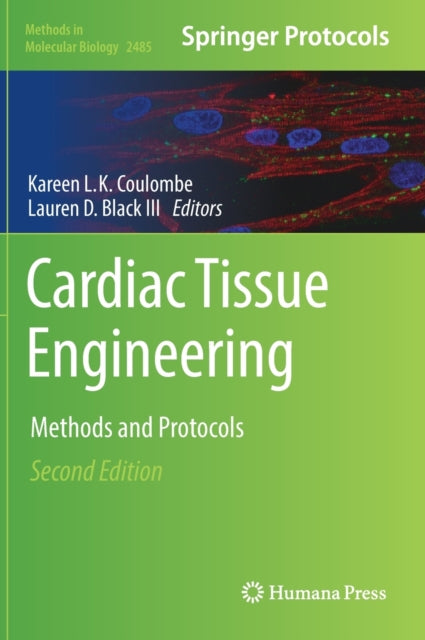
Cardiac Tissue Engineering: Methods and Protocols
Cardiac Tissue Engineering: Methods and Protocols
💎 Earn 825 Points (£8.25) on this item.
We can order this item for you. Delivery usually takes about 4 to 6 weeks.
This item is not held in our immediate stock. We will order it for you after checkout.
Estimated delivery: About 4 to 6 weeks
YOU SAVE £34.80
- Condition: Brand new
- UK Delivery times: Usually arrives within 2 - 3 working days
- UK Shipping: Fee starts at £3.89. Subject to product weight & dimension
Bulk ordering. Want 15 or more copies? Get a personalised quote and bigger discounts. Learn more about bulk orders.
Couldn't load pickup availability
- More about Cardiac Tissue Engineering: Methods and Protocols
Cardiac Tissue Engineering: Methods and Protocols, Second Edition is a comprehensive volume that provides updated protocols for creating engineered cardiac tissues, imaging, diagnostics, and therapeutic applications. It includes new animal models, biomaterials, and quantitative analyses and is written for the Methods in Molecular Biology series.
Format: Hardback
Length: 314 pages
Publication date: 28 May 2022
Publisher: Springer-Verlag New York Inc.
This comprehensive volume presents an up-to-date compilation of cutting-edge protocols in cardiac tissue engineering. These protocols showcase advancements in cell sourcing, assembly, and utilization of engineered cardiac tissues, imaging and diagnostics, as well as therapeutic applications. New animal models, biomaterials, and quantitative analyses are described for widespread adoption. Written for the highly successful Methods in Molecular Biology series, chapters include introductions to their respective topics, lists of the necessary materials and reagents, step-by-step, readily reproducible laboratory protocols, and tips on troubleshooting and avoiding known pitfalls. Authoritative and practical, Cardiac Tissue Engineering: Methods and Protocols, Second Edition serves as an ideal resource for inspiring the advancement of cardiotoxicity assessment, drug discovery, and heart repair and regeneration to accelerate heart health improvement worldwide.
Cardiac tissue engineering is a rapidly evolving field that aims to develop functional replacement heart tissues for patients with heart disease. The field has made significant progress in recent years, with the development of new techniques and technologies that allow for the creation of more complex and realistic engineered cardiac tissues. In this article, we will discuss some of the key protocols and techniques used in cardiac tissue engineering, including cell sourcing, assembly, and utilization.
Cell sourcing is the first step in cardiac tissue engineering. The cells used to create engineered cardiac tissues can be derived from various sources, including stem cells, progenitor cells, and adult cells. Stem cells are particularly attractive for cardiac tissue engineering because they have the ability to differentiate into multiple cell types, including cardiomyocytes, endothelial cells, and fibroblasts. Progenitor cells, on the other hand, are cells that have the potential to differentiate into multiple cell types but have not yet committed to a specific lineage. Adult cells, such as fibroblasts and adipocytes, can also be used for cardiac tissue engineering, but they may have limitations in terms of their differentiation potential.
Once the cells have been sourced, they must be cultured and differentiated into the desired cell types. This process is known as cell differentiation and is critical for the development of functional engineered cardiac tissues. Differentiation protocols can vary depending on the cell type being cultured and the desired outcome. For example, cardiomyocytes can be differentiated from stem cells using a combination of growth factors and signaling molecules. Endothelial cells can be differentiated from stem cells or progenitor cells using a similar approach. Fibroblasts can be differentiated into myofibroblasts, which are important for the formation of extracellular matrix.
Once the cells have been differentiated into the desired cell types, they must be assembled into engineered cardiac tissues. This process involves the seeding of the cells onto a scaffold or matrix, which provides a supportive environment for cell growth and differentiation. Scaffolds can be made from a variety of materials, including natural polymers, synthetic polymers, and biocompatible materials. The choice of scaffold material depends on the desired properties of the engineered cardiac tissue, such as biocompatibility, mechanical strength, and degradation rate.
Once the cells have been seeded onto the scaffold, they must be cultured and allowed to grow and differentiate into the desired cell types. This process can take several weeks or months, depending on the cell type and the scaffold material. During this time, the cells must be monitored for signs of differentiation and growth, and any necessary modifications to the culture conditions must be made.
Once the engineered cardiac tissue has been formed, it can be utilized for various therapeutic applications. For example, engineered cardiac tissues can be used to replace damaged heart tissue in patients with heart disease. These tissues can be implanted into the patient's heart and allowed to grow and function, providing a functional replacement for the damaged tissue. Engineered cardiac tissues can also be used to study heart disease and develop new treatments. For example, engineered cardiac tissues can be used to test the efficacy of new drugs or therapies in a controlled environment before they are tested in humans.
In conclusion, cardiac tissue engineering is a rapidly evolving field that has the potential to revolutionize the treatment of heart disease. The development of new techniques and technologies has allowed for the creation of more complex and realistic engineered cardiac tissues. Cell sourcing, assembly, and utilization are critical steps in the development of these tissues, and they are being used for a variety of therapeutic applications. As the field continues to evolve, it is likely that new protocols and techniques will be developed that will further improve the efficacy and safety of engineered cardiac tissues.
Weight: 823g
Dimension: 254 x 178 (mm)
ISBN-13: 9781071622605
Edition number: 2nd ed. 2022
UK and International shipping information
UK and International shipping information
We deliver throughout the United Kingdom and to 128 countries and territories worldwide, including the United States, Australia, Canada, Germany, Spain and France.