Shulph Ink
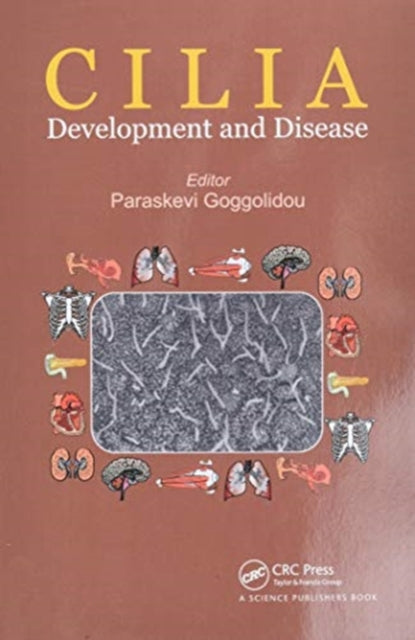
Cilia: Development and Disease
Cilia: Development and Disease
We can order this item for you. Delivery usually takes about 4 to 6 weeks.
This item is not held in our immediate stock. We will order it for you after checkout.
Estimated delivery: About 4 to 6 weeks
YOU SAVE £4.75
- Condition: Brand new
- UK Delivery times: Usually arrives within 2 - 3 working days
- UK Shipping: Fee starts at £3.89. Subject to product weight & dimension
Bulk ordering. Want 15 or more copies? Get a personalised quote and bigger discounts. Learn more about bulk orders.
Couldn't load pickup availability
- More about Cilia: Development and Disease
The book explores the diverse roles of cilia in human development and disease, highlighting their sensory, motility, and signaling functions and their association with defective development and human disease. It aims to bring together expertise from various fields to provide a medical and research context for postgraduate students, researchers, medics, and scientists.
Format: Paperback / softback
Length: 240 pages
Publication date: 31 March 2021
Publisher: Taylor & Francis Ltd
Cilia are tiny hair-like structures that protrude from the surface of cells in various parts of the body, including the brain, lungs, and reproductive organs. They play a crucial role in many biological processes, including the movement of fluids, the transport of nutrients, and the regulation of cell growth and division. However, cilia can also be involved in disease, and mutations in cilia genes can lead to a wide range of disorders, including blindness, deafness, and cystic fibrosis.
The book "Cilia in Human Development and Disease" aims to highlight the diverse roles of cilia in human development and disease. It covers a wide range of topics, including the structure and function of cilia, their role in sensory functions, motility, and signaling pathways, and their involvement in various human diseases. The book is written by experts in the field and is intended for postgraduate students, researchers, medics, and scientists.
One of the key aspects of the book is the emphasis on the importance of cilia in human development. Cilia are present in almost all cell types and play a critical role in the development of the nervous system, the lungs, and the reproductive organs. Mutations in cilia genes can lead to a wide range of developmental disorders, including blindness, deafness, and cystic fibrosis. The book provides a detailed overview of the mechanisms by which cilia contribute to development and discusses the potential therapeutic strategies that can be used to treat these disorders.
In addition to its focus on development, the book also covers the role of cilia in disease. Cilia can be involved in a wide range of diseases, including cancer, respiratory diseases, and neurological disorders. Mutations in cilia genes can lead to the formation of tumors, the development of respiratory diseases, and the impairment of neurological function. The book provides a detailed overview of the mechanisms by which cilia contribute to disease and discusses the potential therapeutic strategies that can be used to treat these disorders.
One of the challenges in studying cilia is the complexity of their structure and function. Cilia are composed of a microtubule-based structure that is surrounded by a membrane. The microtubules are responsible for the movement of fluids and the transport of nutrients, while the membrane is responsible for the regulation of cell growth and division. Mutations in cilia genes can lead to the formation of defective cilia, which can result in a wide range of disorders.
To address this challenge, the book provides a detailed overview of the techniques that can be used to study cilia. These techniques include electron microscopy, immunofluorescence, and genetic analysis. Electron microscopy allows researchers to visualize the structure of cilia at the nanometer level, while immunofluorescence allows researchers to identify the proteins that are present in cilia. Genetic analysis allows researchers to identify the genes that are responsible for cilia-related disorders.
In addition to its scientific content, the book also provides a practical guide for researchers and clinicians. It includes chapters on the diagnosis and treatment of cilia-related disorders, as well as chapters on the ethical and social implications of research on cilia. The book also includes a glossary of terms and a list of references for further reading.
One of the strengths of the book is its interdisciplinary nature. It brings together experts from a wide range of fields, including biology, medicine, and engineering, to provide a comprehensive overview of the role of cilia in human development and disease. This interdisciplinary approach allows researchers to develop new insights and approaches to the study of cilia and to develop new therapeutic strategies for cilia-related disorders.
However, there are also some limitations to the book. One of the limitations is the lack of clinical data. While the book provides a detailed overview of the mechanisms by which cilia contribute to disease, it does not provide a comprehensive overview of the clinical outcomes of cilia-related disorders. This lack of clinical data can make it difficult for researchers and clinicians to develop effective therapeutic strategies for these disorders.
Another limitation is the cost of research on cilia. Research on cilia can be expensive, and many researchers and clinicians are unable to access the necessary equipment and resources. This can limit the progress of research on cilia and can prevent the development of new therapeutic strategies for cilia-related disorders.
Despite these limitations, the book "Cilia in Human Development and Disease" is a valuable resource for researchers, medics, and scientists. It provides a comprehensive overview of the role of cilia in human development and disease and provides a practical guide for researchers and clinicians. The book is written by experts in the field and is intended for postgraduate students, researchers, medics, and scientists.
In conclusion, cilia are tiny hair-like structures that protrude from the surface of cells in various parts of the body. They play a crucial role in many biological processes, including the movement of fluids, the transport of nutrients, and the regulation of cell growth and division. However, cilia can also be involved in disease, and mutations in cilia genes can lead to a wide range of disorders. The book "Cilia in Human Development and Disease" aims to highlight the diverse roles of cilia in human development and disease and provides a practical guide for researchers and clinicians. While there are some limitations to the book, it is a valuable resource for researchers, medics, and scientists.
Weight: 467g
Dimension: 234 x 156 (mm)
ISBN-13: 9780367781453
UK and International shipping information
UK and International shipping information
We deliver throughout the United Kingdom and to 128 countries and territories worldwide, including the United States, Australia, Canada, Germany, Spain and France.