PatriciaChurchland
Conscience: The Origins of Moral Intuition
Conscience: The Origins of Moral Intuition
💎 Earn 57 Points (£0.57) on this item.
YOU SAVE £2.44
- Condition: Brand new
- UK Delivery times: Usually arrives within 2 - 3 working days
- UK Shipping: Fee starts at £3.89. Subject to product weight & dimension
Bulk ordering. Want 15 or more copies? Get a personalised quote and bigger discounts. Learn more about bulk orders.
Couldn't load pickup availability
- More about Conscience: The Origins of Moral Intuition
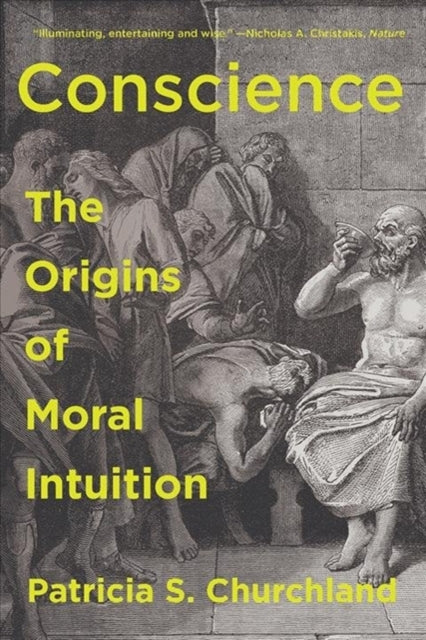
Patricia S. Churchland explores why all social groups have ideals for behavior, looking to evolution to explain how our brains are configured to form bonds and care and to philosophy to understand how morality is transmitted through generations.
Format: Paperback / softback
Length: 240 pages
Publication date: 08 January 2021
Publisher: WW Norton & Co
Distinguished founder of neurophilosophy Patricia S. Churchland delves into the intriguing question of why all social groups possess ideals for behavior, despite the diverse ethical perspectives found across different cultures and even within individuals. By seamlessly blending an understanding of nature and nurture, Churchland seeks to unravel the intricate mechanisms behind our brains' configuration for forming bonds and demonstrating care. In her quest for answers, she turns to the realm of evolution, employing its insights to shed light on how our minds are designed to transmit morality across generations and why it has emerged as a fundamental aspect of all societies.
Churchland begins by examining the fundamental nature of ideals for behavior. She argues that these ideals serve as guiding principles that shape our interactions with others and guide our moral judgments. However, the existence of diverse ethical frameworks across cultures and individuals highlights the complex interplay between nature and nurture in shaping our moral compass.
To delve deeper into this topic, Churchland explores the evolutionary origins of morality. She argues that our moral instincts are deeply rooted in our biological makeup, as they have evolved to facilitate cooperation and survival within social groups. Our brains are equipped with reward systems that reinforce positive behaviors and punish negative ones, thereby promoting the development of moral habits.
Furthermore, Churchland examines the role of philosophy in understanding morality. She argues that philosophy provides a framework for analyzing and evaluating moral principles and that it can help us develop a deeper understanding of the nature of morality. By studying the works of great philosophers, such as Kant and Aristotle, Churchland explores how moral values are transmitted across generations and why they have become a central component of all societies.
In conclusion, Patricia S. Churchland's exploration of the why behind all social groups possessing ideals for behavior offers a profound insight into the complex interplay between nature and nurture in shaping our moral compass. By examining the evolutionary origins of morality, the role of philosophy in understanding morality, and the transmission of moral values across generations, Churchland provides a comprehensive framework for understanding why morality has become a central piece of all societies. Her work sheds light on the mechanisms that drive our moral judgments and offers valuable insights into how we can cultivate a more ethical and harmonious world.
Weight: 202g
Dimension: 138 x 208 x 22 (mm)
ISBN-13: 9780393358469
UK and International shipping information
UK and International shipping information
We deliver throughout the United Kingdom and to 128 countries and territories worldwide, including the United States, Australia, Canada, Germany, Spain and France.