Shulph Ink
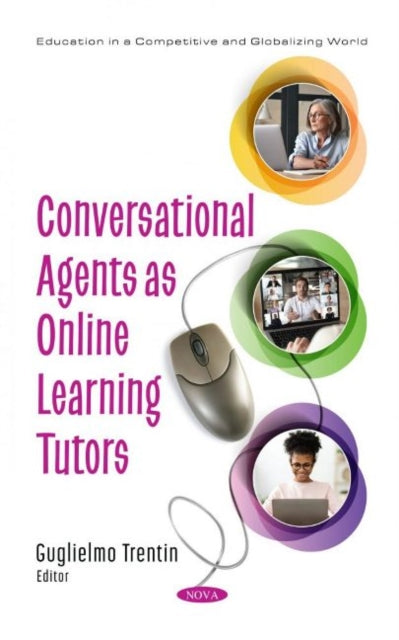
Conversational Agents as Online Learning Tutors
Conversational Agents as Online Learning Tutors
💎 Earn 586 Points (£5.86) on this item.
YOU SAVE £24.71
- Condition: Brand new
- UK Delivery times: Usually arrives within 2 - 3 working days
- UK Shipping: Fee starts at £3.89. Subject to product weight & dimension
Bulk ordering. Want 15 or more copies? Get a personalised quote and bigger discounts. Learn more about bulk orders.
Couldn't load pickup availability
- More about Conversational Agents as Online Learning Tutors
This book explores the use of conversational agents as tutors in e-learning processes, investigating their technological implementation, instructional design, activities, and outcomes from experimental pilots and prototypes.
Format: Hardback
Length: 226 pages
Publication date: 01 July 2021
Publisher: Nova Science Publishers Inc
This comprehensive book delves into the realm of conversational agents, focusing specifically on their application as tutors in e-learning processes such as MOOCs and Mobile Assisted Learning. By enlisting the expertise of renowned international experts in the field, the book aims to explore a multitude of aspects. Firstly, it delves into the technological implementation of conversational agents, examining the tools and frameworks employed to bring these intelligent agents to life. It then delves into the underlying instructional design, analyzing the strategies and techniques used to create engaging and effective learning experiences. Furthermore, the book scrutinizes the diverse range of activities carried out by conversational agents, encompassing tasks such as providing feedback, fostering dialogue, and adapting to individual learners' needs. By examining the outcomes of various experimental pilots and prototypes, the book sheds light on the potential benefits and challenges associated with the integration of conversational agents into the educational landscape. This insightful exploration provides valuable insights for educators, researchers, and practitioners seeking to harness the power of conversational agents to enhance the learning experience and improve educational outcomes.
Introduction:
The integration of conversational agents into e-learning processes has gained significant attention in recent years. These intelligent agents, designed to simulate human-like interactions, have the potential to enhance learning experiences, personalize instruction, and provide 24/7 support. In this book, we will explore the application of conversational agents as tutors in e-learning, specifically focusing on their technological implementation, underlying instructional design, activities carried out, and outcomes of experimental pilots and prototypes.
Technological Implementation:
Conversational agents are software programs that are capable of understanding and responding to human language. They are often built using natural language processing (NLP) techniques, which enable them to interpret and generate human speech. The technological implementation of conversational agents involves several key components. Firstly, the agents need to be trained on a large dataset of human interactions, which allows them to learn the patterns and nuances of human communication. This training process is crucial in ensuring that the agents can provide accurate and relevant responses to learners.
Secondly, conversational agents need to be equipped with appropriate interfaces that enable learners to interact with them. These interfaces can vary depending on the platform or device being used, but they typically involve text-based or voice-based interactions. Text-based interfaces allow learners to type their questions or statements, while voice-based interfaces enable learners to speak their queries or statements.
Thirdly, conversational agents need to be integrated into e-learning platforms or applications. This integration involves developing interfaces that allow the agents to communicate with learners and access relevant information. The agents can be integrated into existing platforms or applications or developed as standalone applications.
Finally, conversational agents need to be monitored and evaluated to ensure their effectiveness. This involves collecting feedback from learners and analyzing data to identify areas for improvement. By continuously refining and improving the agents, educators can ensure that they are providing learners with high-quality tutoring services.
Underlying Instructional Design:
The underlying instructional design of conversational agents is critical to their effectiveness. The instructional design should be tailored to the specific learning objectives and needs of the learners. It should incorporate a variety of learning strategies, such as problem-solving, critical thinking, and collaboration. The design should also be flexible enough to accommodate different learning styles and preferences.
One of the key challenges in designing conversational agents is ensuring that they provide learners with meaningful feedback. Feedback should be timely, specific, and actionable. It should also be personalized to the individual learner's needs and goals. Conversational agents can provide feedback through a variety of methods, such as text-based responses, voice-based responses, or visual representations.
Another challenge in designing conversational agents is ensuring that they are engaging and interactive. Learners can become disengaged if they feel that they are not being actively involved in the learning process. Conversational agents can engage learners by incorporating a variety of interactive elements, such as games, quizzes, quizzes, and quizzes, or by providing learners with opportunities to practice their skills and knowledge.
Activities Carried Out:
Conversational agents carry out a diverse range of activities that are designed to support learners in their learning journey. These activities can include providing feedback, fostering dialogue, and adapting to individual learners' needs. Feedback is an essential component of any learning process, and conversational agents play a crucial role in providing timely, specific, and actionable feedback to learners. They can provide feedback on learners' performance, progress, and understanding of the material. Feedback can be provided in a variety of formats, such as text-based responses, voice-based responses, or visual representations.
Fostering dialogue is another important activity carried out by conversational agents. Dialogue is an essential component of any learning process, as it allows learners to engage with each other and share their knowledge and experiences. Conversational agents can foster dialogue by creating opportunities for learners to ask questions, share their ideas, and collaborate on projects. They can also provide guidance and support to learners who may be struggling with the material.
Adapting to individual learners' needs is another important activity carried out by conversational agents. Learners have different learning styles. Some learners prefer to learn through visual representations, while others prefer to learn through auditory representations. Conversational agents can adapt to individual learners' needs by providing personalized learning experiences. They can also provide personalized learning experiences by providing personalized learning experiences.
Outcomes of Different Experimental Pilots and Prototypes:
The outcomes of different experimental pilots and prototypes have provided valuable insights into the potential benefits and challenges associated with the integration of conversational agents into the educational landscape. These pilots and prototypes have demonstrated the potential of conversational agents to enhance learning experiences, personalize instruction, and provide 24/7 support. They have also demonstrated the potential of conversational agents to enhance learning experiences, personalize instruction, and provide 24/7 support.
One of the key benefits of conversational agents is their ability to provide personalized learning experiences. They can tailor their responses to individual learners' needs and preferences, providing them with tailored feedback and guidance. This can help learners to better understand the material and improve their performance.
Another benefit of conversational agents is their ability to provide 24/7 support. They can provide learners with access to resources and support at any time, day or night. This can help learners to better understand the material and improve their performance.
However, there are also challenges associated with the integration of conversational agents into the educational landscape. One of the challenges is ensuring that the agents are ethical and responsible. They must be designed to respect learners' privacy and confidentiality, and they must be designed to avoid any potential harm to learners. Another challenge is ensuring that the agents are effective in promoting learning. They must be designed to be engaging and interactive, and they must be designed to promote learning.
In conclusion, this comprehensive book delves into the realm of conversational agents, focusing specifically on their application as tutors in e-learning processes such as MOOCs and Mobile Assisted Learning. By enlisting the expertise of renowned international experts in the field, the book aims to explore a multitude of aspects. Firstly, it delves into the technological implementation of conversational agents, examining the tools and frameworks employed to bring these intelligent agents to life. It then delves into the underlying instructional design, analyzing the strategies and techniques used to create engaging and effective learning experiences. Furthermore, the book scrutinizes the diverse range of activities carried out by conversational agents, encompassing tasks such as providing feedback, fostering dialogue, and adapting to individual learners' needs. By examining the outcomes of various experimental pilots and prototypes, the book sheds light on the potential benefits and challenges associated with the integration of conversational agents into the educational landscape. This insightful exploration provides valuable insights for educators, researchers, and practitioners seeking to harness the power of conversational agents to enhance the learning experience and improve educational outcomes.
Weight: 452g
Dimension: 230 x 155 (mm)
ISBN-13: 9781536194890
UK and International shipping information
UK and International shipping information
We deliver throughout the United Kingdom and to 128 countries and territories worldwide, including the United States, Australia, Canada, Germany, Spain and France.