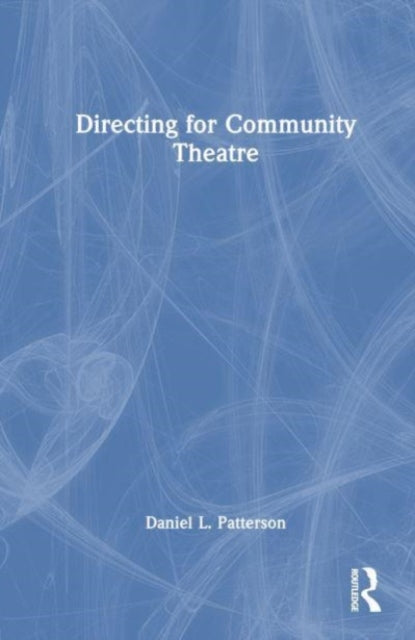
Daniel L. Patterson
Directing for Community Theatre
Directing for Community Theatre
We can order this item for you. Delivery usually takes about 4 to 6 weeks.
This item is not held in our immediate stock. We will order it for you after checkout.
Estimated delivery: About 4 to 6 weeks
YOU SAVE £15.13
- Condition: Brand new
- UK Delivery times: Usually arrives within 2 - 3 working days
- UK Shipping: Fee starts at £3.89. Subject to product weight & dimension
Bulk ordering. Want 15 or more copies? Get a personalised quote and bigger discounts. Learn more about bulk orders.
Couldn't load pickup availability
- More about Directing for Community Theatre
The Director's Handbook is a comprehensive guide for community theatre enthusiasts that provides an overview of the role and processes of a director, offers "how-to" tips and detailed information on preparing for rehearsals, and includes a chapter on ethics and behavior for those participating in community theatre.
Format: Hardback
Length: 198 pages
Publication date: 25 May 2023
Publisher: Taylor & Francis Ltd
The director is the visionary behind a theatrical production, responsible for bringing a script to life on stage. They oversee every aspect of the production, from casting and rehearsals to performance and post-show analysis. In this comprehensive guide, we will explore the role and processes of a director, providing valuable insights for community theatre enthusiasts.
The director's role is multifaceted and requires a deep understanding of the creative process, as well as strong leadership and communication skills. They work closely with the cast and crew to bring the script to life, shaping the performances and ensuring that the production aligns with the vision of the playwright.
One of the key responsibilities of a director is to cast the right actors for the roles. They must consider not only the physical characteristics of the actors but also their ability to convey the emotions and motivations of the characters. This requires a thorough audition process and a deep understanding of the script.
Rehearsals are an essential part of the production process, and the director plays a crucial role in guiding the actors and crew toward a successful performance. They work closely with the actors to develop their characters and ensure that they understand the nuances of the script. They also provide feedback and guidance to the crew, such as lighting and sound design, to ensure that the production is visually and aurally stunning.
Performance is the culmination of the production process, and the director is responsible for ensuring that the performance is seamless and engaging. They work closely with the actors to ensure that they deliver their lines with conviction and emotion, and they work with the crew to ensure that the technical aspects of the performance run smoothly.
Post-show analysis is also an important part of the director's role. They work with the cast and crew to evaluate the production and identify areas for improvement. This may involve analyzing audience feedback, reviewing the performance footage, and discussing the creative choices that were made throughout the production process.
In addition to their technical skills, directors must also have a strong understanding of the ethical and behavioral standards that apply to community theatre. They must ensure that the production is respectful of the community and that all participants are treated with dignity and respect. This includes addressing issues such as diversity, inclusivity, and accessibility.
To prepare for a production, directors must undergo a rigorous preparation process. This may include reading the script multiple times, analyzing the characters and plot, and developing a vision for the production. They may also work with the playwright process, such as blocking and scene work, to ensure that the production is well-prepared for rehearsals.
In conclusion, the director is a critical component of a theatrical production, responsible for bringing a script to life on stage. They oversee every aspect of the production, from casting and rehearsals to performance and post-show analysis. By understanding the role and processes of a director, community theatre enthusiasts can gain valuable insights into the creative process and develop the skills necessary to create successful productions. Whether you are a seasoned director or a newcomer to the field, this guide
The director is the visionary behind a theatrical production, responsible for bringing a script to life on stage. They oversee every aspect of the production, from casting and rehearsals to performance and post-show analysis. In this comprehensive guide, we will explore the role and processes of a director, providing valuable insights for community theatre enthusiasts.
The director's role is multifaceted and requires a deep understanding of the creative process, as well as strong leadership and communication skills. They work closely with the cast and crew to bring the script to life, shaping the performances and ensuring that the production aligns ails with the vision of the playwright.
One of the key responsibilities of a director is to cast the right. They must consider not only the physical characteristics of the actors but also their ability to convey the emotions and motivations of the characters. This requires a thorough audition process and a deep understanding of the script.
Rehearsals are an essential part of the production process, and the director plays a crucial role in guiding the actors and crew toward the successful performance. They work closely with the actors to develop their characters and ensure that they understand the nuances of the script. They also provide feedback and guidance to the crew, such as lighting and sound design, to ensure that the production is visually and aurally stunning.
Performance is the culmination of the production process, and the director is responsible for ensuring that the performance is seamless and engaging. They work closely with the actors to ensure that they deliver their lines with conviction and emotion, and they work with the crew to ensure that the technical aspects of the performance run smoothly.
Post-show analysis is also an important part of the director's role. They work with the cast and crew to evaluate the production and identify areas for improvement. This may involve analyzing audience feedback, reviewing the performance footage, and discussing the creative choices that were made throughout the production process.
In addition to their technical skills, directors must also have a strong understanding of the ethical and behavioral standards that apply to community theatre. They must ensure that the production is respectful of the community and that all participants are treated with dignity and respect. This includes addressing issues such as diversity, inclusivity, and accessibility.
To prepare for a production, directors must undergo a rigorous preparation process. This may include reading the script multiple times, analyzing the characters and plot, and developing a vision for the production. They may also work with the process, such as blocking and scene work, to ensure that the production is well-prepared for rehearsals.
In conclusion, the director is a critical component of a theatrical production, responsible for bringing a script to life on stage. They oversee every aspect of the production, from casting and rehearsals to performance and post-show analysis. By understanding the role and processes of a director, community theatre enthusiasts can gain valuable insights into the creative process and develop the skills necessary to create successful productions. Whether you are a seasoned director or a newcomer to the field, this comprehensive guide will provide you with the tools and resources you need to succeed in your community theatre endeavors.
Weight: 410g
Dimension: 158 x 235 x 17 (mm)
ISBN-13: 9781032418841
UK and International shipping information
UK and International shipping information
We deliver throughout the United Kingdom and to 128 countries and territories worldwide, including the United States, Australia, Canada, Germany, Spain and France.