Hsiao-wen Cheng
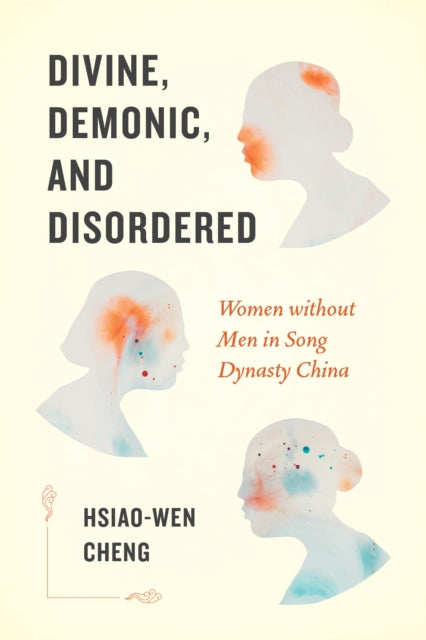
Divine, Demonic, and Disordered: Women without Men in Song Dynasty China
Divine, Demonic, and Disordered: Women without Men in Song Dynasty China
💎 Earn 140 Points (£1.40) on this item.
- Condition: Brand new
- UK Delivery times: Usually arrives within 2 - 3 working days
- UK Shipping: Fee starts at £3.89. Subject to product weight & dimension
Bulk ordering. Want 15 or more copies? Get a personalised quote and bigger discounts. Learn more about bulk orders.
Couldn't load pickup availability
- More about Divine, Demonic, and Disordered: Women without Men in Song Dynasty China
Female chastity in medieval China caused trouble as it deviated from social constructs of female sexuality defined in relation to men. Elite male authors were forced to contemplate the purpose of women's bodies and lives apart from wifehood and motherhood, leading to troubling questions about normalcy, desire, sexuality, and identity. Hsiao-wen Cheng's book "Divine, Demonic, and Disordered" offers a fresh look at the unstable meanings attached to women's behaviors and lives in a time of codified patriarchy.
Format: Paperback / softback
Length: 244 pages
Publication date: 31 January 2021
Publisher: University of Washington Press
In medieval China, a complex tapestry of Chinese writings from the Song period (960-1279) unfurled, revealing a profound exploration of women who defied societal norms and challenged the boundaries of gender and sexuality. These women, often referred to as "manless women," were considered peculiar for their sexual bodies that did not conform to the male-dominated constructs of the time. They refused to marry, were deemed unmarriageable, or were married but denied their husbands sexual access, effectively removing themselves from the social constructs of female sexuality as defined in relation to men.
As elite male authors grappled with the enigmatic presence of these women whose bodies remained beyond their reach, they were compelled to delve into the deeper purpose of womens bodies and lives beyond the realms of wifehood and motherhood. This introspection sparked troubling questions about the concept of normalcy, desire, sexuality, and identity, casting a shadow over the prevailing societal norms.
In her groundbreaking work, Divine, Demonic, and Disordered, Hsiao-wen Cheng delves into accounts of "manless women," many of which depict women afflicted with "enchantment disorder" or engaging in "intercourse with ghosts." Cheng challenges conventional binary gender analyses and redirects attention away from womens reproductive bodies and familial roles. Through her innovative study, she offers historians of China and readers interested in women, gender, sexuality, medicine, and religion a fresh perspective on the unstable meanings attached to womens behaviors and lives, even in the context of a codified patriarchy.
These women, who defied societal expectations and refused to conform to male-dominated norms, became a subject of fascination and speculation in medieval Chinese society. Their stories, captured in various forms of literature, including medical texts, religious treatises, fiction, and anecdotes, shed light on the complex interplay between gender, sexuality, and power dynamics.
The portrayal of "manless women" in Chinese writings highlights the societal pressures and expectations placed on women during that time. Women were expected to fulfill their roles as wives and mothers, and their sexual bodies were closely tied to their reproductive capabilities. However, these women who refused to marry or were denied sexual access challenged these constructs and demanded recognition and respect for their autonomy and desires.
Their stories also shed light on the medical and religious perspectives of the time. Medical texts often described "manless women" as suffering from various disorders or conditions, such as "enchantment disorder" or "intercourse with ghosts." These diagnoses were often used to explain their unconventional behaviors and to justify their marginalization within society. However, Cheng argues that these medical explanations should be approached with caution, as they may have been influenced by patriarchal beliefs and biases.
Religion played a significant role in shaping the understanding and treatment of "manless women." Many religious texts and doctrines condemned their behaviors as sinful and immoral, and they were often subjected to harsh punishments and social stigma. However, some religious figures and communities offered a more compassionate and inclusive approach, recognizing the complexities of womens experiences and advocating for their rights and dignity.
Despite the challenges and marginalization faced by "manless women," their stories continue to resonate with modern readers and scholars. They serve as a reminder of the historical and cultural complexities of gender and sexuality, and they challenge us to reexamine our assumptions and biases about these topics.
In conclusion, the portrayal of "manless women" in medieval Chinese writings offers a rich and complex exploration of gender, sexuality, and power dynamics. These women, who defied societal norms and refused to conform to male-dominated constructs, challenged the prevailing societal norms and demanded recognition and respect for their autonomy and desires. Their stories shed light on the medical and religious perspectives of the time, as well as the historical and cultural complexities of gender and sexuality. As we continue to navigate the evolving landscape of gender and sexuality, it is essential to remember the lessons learned from the past and to work towards a more inclusive and equitable society for all.
Weight: 346g
Dimension: 229 x 152 x 17 (mm)
ISBN-13: 9780295748320
UK and International shipping information
UK and International shipping information
We deliver throughout the United Kingdom and to 128 countries and territories worldwide, including the United States, Australia, Canada, Germany, Spain and France.