DK
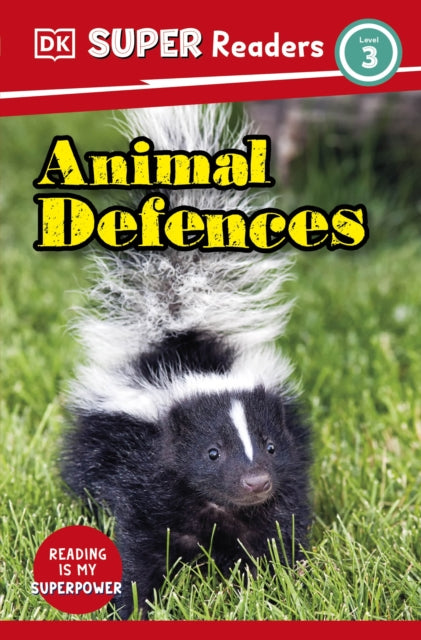
DK Super Readers Level 3 Animal Defences
DK Super Readers Level 3 Animal Defences
YOU SAVE £1.58
- Condition: Brand new
- UK Delivery times: Usually arrives within 2 - 3 working days
- UK Shipping: Fee starts at £3.89. Subject to product weight & dimension
Bulk ordering. Want 15 or more copies? Get a personalised quote and bigger discounts. Learn more about bulk orders.
Couldn't load pickup availability
- More about DK Super Readers Level 3 Animal Defences
Animal Defences is a beautifully designed reader that teaches children about animal defenses, including camouflage, claws, poisons, and armor, through engaging text and leveled content.
Format: Paperback / softback
Length: 32 pages
Publication date: 06 July 2023
Publisher: Dorling Kindersley Ltd
Animals have developed various strategies to protect themselves from predators throughout their evolutionary history. These defenses range from camouflage and mimicry to physical adaptations such as claws, poison, and armor. Camouflage is a common defense mechanism used by animals to blend in with their environment, making it difficult for predators to locate and capture them. Mimicry involves animals copying the appearance or behavior of other species to avoid being detected by predators. For example, some birds mimic the calls of other birds to attract potential mates or to deter predators.
Physical adaptations, such as claws and poison, are also used by animals to defend themselves. Claws are sharp appendages that animals use to fight or defend themselves from predators. They can be used to tear apart prey, scratch predators, or defend themselves from attacks. Poison is a toxic substance produced by animals that can harm or kill predators. It can be ingested, injected, or sprayed onto predators to cause symptoms such as paralysis, vomiting, or death.
Armor, such as scales or shells, is another physical adaptation used by animals to protect themselves. Scales are hard, protective coatings that cover the body of some animals, such as reptiles and fish. They provide protection from scratches and bites and can also help to deter predators by making the animal appear larger and more intimidating. Shells, on the other hand, are hard, protective coverings that cover the body of some animals, such as turtles and crabs. They provide protection from predators and can also be used to burrow into the ground or swim underwater.
In addition to physical adaptations, animals also use social behaviors to defend themselves from predators. For example, some animals form groups or colonies to protect each other from predators. These groups can provide mutual support and defense, making it more difficult for predators to target individual animals. Some animals also use scent marking to communicate with other animals and deter predators. For example, some predators are deterred by the scent of certain animals, such as wolves, which can signal danger to other animals in the area.
Overall, animal defenses are a fascinating and diverse topic that provides insight into the incredible adaptations and behaviors of animals. By understanding these defenses, we can better appreciate the complexity and diversity of the natural world and the important role that animals play in maintaining ecosystems.
Animals have developed a wide range of defense mechanisms to protect themselves from predators throughout their evolutionary history. These strategies include camouflage, mimicry, physical adaptations such as claws, poison, and armor, and social behaviors such as forming groups or colonies and using scent marking. Camouflage is a common defense mechanism used by animals to blend in with their environment, making it difficult for predators to locate and capture them. Mimicry involves animals copying the appearance or behavior of other species to avoid being detected by predators. For example, some birds mimic the calls of other birds to attract potential mates or to deter predators.
Physical adaptations, such as claws and poison, are also used by animals to defend themselves. Claws are sharp appendages that animals use to fight or defend themselves from predators. They can be used to tear apart prey, scratch predators, or defend themselves from attacks. Poison is a toxic substance produced by animals that can harm or kill predators. It can be ingested, injected, or sprayed onto predators to cause symptoms such as paralysis, vomiting, or death.
Armor, such as scales or shells, is another physical adaptation used by animals to protect themselves. Scales are hard, protective coatings that cover the body of some animals, such as reptiles and fish. They provide protection from scratches and bites and can also help to deter predators by making the animal appear larger and more intimidating. Shells, on the other hand, are hard, protective coverings that cover the body of some animals, such as turtles and crabs. They provide protection from predators and can also be used to burrow into the ground or swim underwater.
In addition to physical adaptations, animals also use social behaviors to defend themselves from predators. For example, some animals form groups or colonies to protect each other from predators. These groups can provide mutual support and defense, making it more difficult for predators to target individual animals. Some animals also use scent marking to communicate with other animals and deter predators. For example, some predators are deterred by the scent of certain animals, such as wolves, which can signal danger to other animals in the area.
Overall, animal defenses are a fascinating and diverse topic that provides insight into the incredible adaptations and behaviors of animals. By understanding these defenses, we can better appreciate the complexity and diversity of the natural world and the important role that animals play in maintaining ecosystems.
Weight: 90g
Dimension: 151 x 227 x 7 (mm)
ISBN-13: 9780241602706
UK and International shipping information
UK and International shipping information
We deliver throughout the United Kingdom and to 128 countries and territories worldwide, including the United States, Australia, Canada, Germany, Spain and France.