Shulph Ink
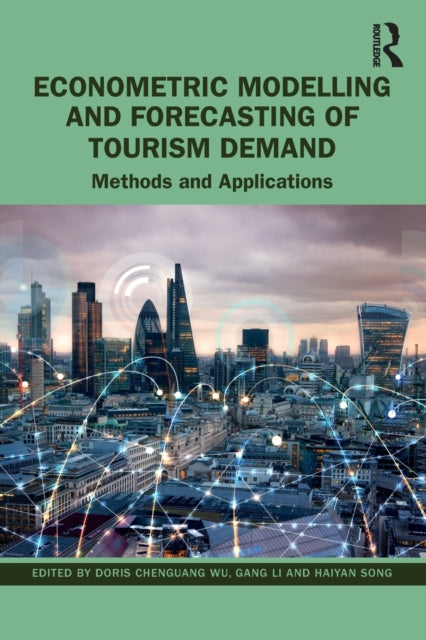
Econometric Modelling and Forecasting of Tourism Demand: Methods and Applications
Econometric Modelling and Forecasting of Tourism Demand: Methods and Applications
We can order this item for you. Delivery usually takes about 4 to 6 weeks.
This item is not held in our immediate stock. We will order it for you after checkout.
Estimated delivery: About 4 to 6 weeks
YOU SAVE £3.69
- Condition: Brand new
- UK Delivery times: Usually arrives within 2 - 3 working days
- UK Shipping: Fee starts at £3.89. Subject to product weight & dimension
Bulk ordering. Want 15 or more copies? Get a personalised quote and bigger discounts. Learn more about bulk orders.
Couldn't load pickup availability
- More about Econometric Modelling and Forecasting of Tourism Demand: Methods and Applications
This book is a valuable resource for anyone interested in tourism economics and demand forecasting, especially in the context of the Covid19 pandemic. It provides a comprehensive approach to the field and offers insights from experts in the highest academic calibre.
Format: Paperback / softback
Length: 310 pages
Publication date: 20 October 2022
Publisher: Taylor & Francis Ltd
Forecasting demand has become an essential tool for decision-makers in various industries, including tourism. It provides valuable insights into the future trends and patterns of travel and tourism, which can inform policy development and implementation. In the aftermath of the COVID-19 pandemic, the importance of demand forecasting has become even more apparent. The tourism industry has been severely impacted, with travel restrictions, lockdowns, and uncertainty causing a decline in demand for tourism services. However, with the gradual easing of these measures and the emergence of new vaccines, there is hope for a recovery in the tourism industry.
This book offers a comprehensive approach to tourism econometrics, covering a wide range of topics. It explores novel and recent developments in the field, such as judgment and scenario forecasting, which have become increasingly important in the face of uncertainty. The authors of the book are experts in this field, with extensive research and academic backgrounds.
The book is divided into several chapters, each focusing on a different aspect of tourism econometrics. The first chapter provides an introduction to the field, explaining the importance of demand forecasting and the challenges that it presents. The second chapter explores the theoretical foundations of tourism econometrics, including the principles of supply and demand, price elasticity, and market segmentation. The third chapter examines the data used in demand forecasting, including the types of data available and the methods used to analyze them. The fourth chapter discusses the methods of demand forecasting, including time series analysis, regression analysis, and scenario analysis. The fifth chapter explores the application of demand forecasting in the tourism industry, including the use of forecasting models, the evaluation of forecasting results, and the development of tourism policies.
The book is written in a clear and concise manner, making it accessible to a wide range of readers, including students, researchers, and professionals in the tourism industry. It includes numerous examples and case studies to illustrate the practical applications of the theory and methods discussed in the book. Overall, this book is a valuable resource for anyone interested in understanding the dynamics of the tourism industry and developing effective demand forecasting strategies. It provides a comprehensive approach to tourism econometrics, covering a wide range of topics and offering insights from experts in the field.
Weight: 464g
Dimension: 151 x 227 x 21 (mm)
ISBN-13: 9781032216416
UK and International shipping information
UK and International shipping information
We deliver throughout the United Kingdom and to 128 countries and territories worldwide, including the United States, Australia, Canada, Germany, Spain and France.