ChristineMonaghan
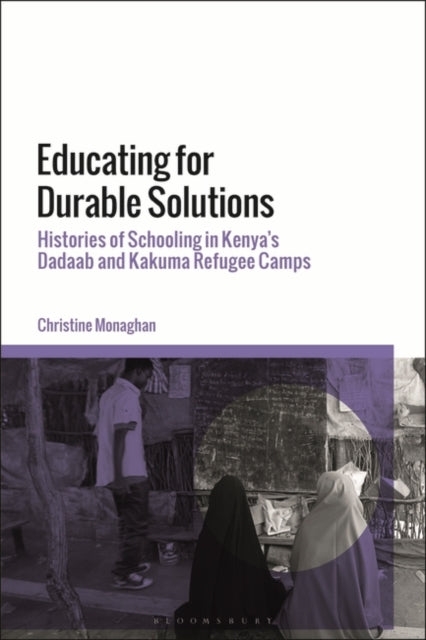
Educating for Durable Solutions: Histories of Schooling in Kenya's Dadaab and Kakuma Refugee Camps
Educating for Durable Solutions: Histories of Schooling in Kenya's Dadaab and Kakuma Refugee Camps
YOU SAVE £71.50
- Condition: Brand new
- UK Delivery times: Usually arrives within 2 - 3 working days
- UK Shipping: Fee starts at £3.89. Subject to product weight & dimension
Bulk ordering. Want 15 or more copies? Get a personalised quote and bigger discounts. Learn more about bulk orders.
Couldn't load pickup availability
- More about Educating for Durable Solutions: Histories of Schooling in Kenya's Dadaab and Kakuma Refugee Camps
Education for an unknowable future is explored in Educating for Durable Solutions by Christine Monaghan, who shows how refugees and policymakers have conceptualized, developed, implemented, and changed refugee education programs in Dadaab and Kakuma refugee camps. Despite these changes, real challenges persist, such as high numbers of out-of-school children and youth, high student-to-teacher ratios, unpredictable funding, and questions regarding what refugee education is for. The author shifts focus from debates over the impacts of specific policies and programs to explore how and why different policies and programs were implemented, leading to meaningful changes in the long-standing challenges of refugee education.
Format: Hardback
Length: 192 pages
Publication date: 06 May 2021
Publisher: Bloomsbury Publishing PLC
In her book titled "Educating for Durable Solutions," Christine Monaghan delves into the historical trajectory of education in Kenya's Dadaab and Kakuma refugee camps, shedding light on how refugees and policymakers have grappled with the challenge of preparing for an unknowable future. Through a combination of oral histories and archival research, Monaghan meticulously reconstructs the contemporary history of education in these camps, highlighting the conceptualization, development, implementation, and evolution of refugee education programs since their establishment in 1991.
Despite these ongoing changes, Monaghan uncovers persistent challenges that plague refugee education across various camps worldwide. These challenges include significant numbers of out-of-school children and youth, overcrowded classrooms with high student-to-teacher ratios, erratic funding, and ongoing debates about the purpose and objectives of refugee education.
Rather than dwelling on debates about the impacts of specific policies and programs, Monaghan shifts her focus to explore the mechanisms and factors that influenced the implementation of different policies and programs. She seeks to understand how and why certain initiatives were adopted, whether they resulted in meaningful long-term changes in addressing the enduring challenges of refugee education.
Through her comprehensive analysis, Monaghan reveals that when and where real transformations occurred, it was often the result of the collective efforts of individuals and small groups of refugees and policymakers who exhibited tremendous agency and unwavering advocacy. These advocates worked tirelessly to push for policies and programs that prioritized the education and well-being of refugee communities, advocating for inclusive and equitable learning environments that foster resilience and empowerment.
In conclusion, "Educating for Durable Solutions" serves as a valuable resource for scholars, policymakers, and educators interested in understanding the complexities of refugee education. By tracing the historical evolution of education programs in Dadaab and Kakuma, Monaghan provides insights into the strategies and approaches employed by refugees and policymakers to navigate the challenges of an uncertain future. Her book underscores the importance of collaboration, advocacy, and resilience in shaping education policies and practices that serve the needs of displaced populations, ultimately contributing to their sustainable integration and well-being.
Weight: 448g
Dimension: 241 x 164 x 18 (mm)
ISBN-13: 9781350133297
UK and International shipping information
UK and International shipping information
We deliver throughout the United Kingdom and to 128 countries and territories worldwide, including the United States, Australia, Canada, Germany, Spain and France.