NeilSelwyn
Education and Technology: Key Issues and Debates
Education and Technology: Key Issues and Debates
YOU SAVE £3.91
- Condition: Brand new
- UK Delivery times: Usually arrives within 2 - 3 working days
- UK Shipping: Fee starts at £3.89. Subject to product weight & dimension
Bulk ordering. Want 15 or more copies? Get a personalised quote and bigger discounts. Learn more about bulk orders.
Couldn't load pickup availability
- More about Education and Technology: Key Issues and Debates
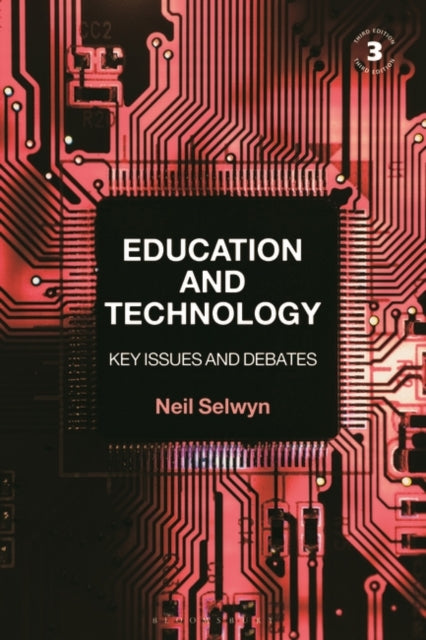
Neil Selwyn examines the major debates and controversies surrounding digital technologies and education, focusing on the social and technical aspects. He explores the people, practices, processes, and structures behind the increasing use of technologies in education, with an emphasis on the implications for individuals and institutions. The book includes new chapters on AI and big data-driven automation of education, and the future(s) of education and technology. It also challenges readers to reflect on future directions and controversies for education in the (post)digital age.
\n Format: Paperback / softback
\n Length: 232 pages
\n Publication date: 16 December 2021
\n Publisher: Bloomsbury Publishing PLC
\n
The future of digital technology and education is a subject of great interest and speculation. As technology continues to advance, it is clear that it will have a significant impact on the way we learn and teach. In this essay, we will explore some of the potential trends and developments in digital technology and education.
One of the most significant trends in digital technology and education is the increasing use of artificial intelligence (AI). AI is being used to personalize learning experiences, automate grading and assessment, and provide personalized feedback to students. AI is also being used to develop new teaching tools and resources that can help students learn more effectively.
Another trend in digital technology and education is the increasing use of big data. Big data is being used to analyze student performance and identify areas where students are struggling. This data can then be used to develop targeted interventions and support for students.
The use of digital technology in education is also leading to the development of new forms of collaboration and communication. Online learning platforms and social media are being used to connect students and teachers from around the world. This is allowing students to access a wider range of resources and perspectives and to engage in more interactive and collaborative learning experiences.
However, there are also concerns about the impact of digital technology on education. Some argue that digital technology is leading to a decline in critical thinking and problem-solving skills, as students are increasingly relying on technology to do their work. Others argue that digital technology is creating a digital divide, as some students do not have access to the necessary technology or resources to participate fully in online learning.
In conclusion, the future of digital technology and education is uncertain, but it is clear that it will have a significant impact on the way we learn and teach. As technology continues to advance, we will need to be mindful of the potential risks and benefits of digital technology and work to ensure that it is used to enhance the educational experience for all students.
The history of technology use in education is a rich and complex topic that has evolved over centuries. From the invention of the printing press to the widespread use of computers and the internet, technology has played a pivotal role in shaping the way we learn and teach.
One of the earliest examples of technology use in education is the printing press. The printing press was invented in the 15th century by Johannes Gutenberg, and it revolutionized the way information was disseminated. Before the printing press, books were expensive and difficult to produce, which limited the access to knowledge to a small elite. With the printing press, books could be produced quickly and cheaply, which allowed for the widespread dissemination of knowledge.
The printing press also played a role in the spread of literacy. Before the printing press, most people were illiterate, which limited their ability to access knowledge and participate in the democratic process. With the printing press, literacy rates began to rise, which allowed for a more educated and engaged citizenry.
In the 19th century, the invention of the telegraph and the telephone revolutionized communication and education. The telegraph allowed for the rapid transmission of information over long distances, which made it easier for teachers and students to communicate and collaborate. The telephone allowed for the direct communication between teachers and students, which made it easier for students to receive personalized instruction and feedback.
In the 20th century, the invention of the computer and the internet transformed education. Computers allowed for the storage and retrieval of vast amounts of information, which made it easier for teachers and students to access and analyze data. The internet allowed for the widespread dissemination of information and the creation of online learning platforms, which made it easier for students to access education from anywhere in the world.
Today, digital technology is used in a wide range of educational settings, from primary schools to universities. Digital technology is used to create interactive learning experiences, to deliver personalized instruction, to assess student performance, and to facilitate communication and collaboration between teachers and students.
One of the key benefits of digital technology in education is its ability to personalize learning experiences. Digital technology can be used to tailor learning experiences to the individual needs and interests of students. For example, digital technology can be used to create personalized learning paths
Another benefit of digital technology in education is its ability to deliver personalized instruction. Digital technology can be used to deliver personalized instruction to students based on their individual needs and interests. For example, digital technology can be used to create personalized learning paths based on students' individual needs and interests.
Digital technology can also be used to assess student performance. Digital technology can be used to assess student performance in a variety of ways, including through quizzes
Digital technology can also be used to facilitate communication and collaboration between teachers and students. Digital technology can be used to facilitate communication and collaboration between teachers and students in a variety of ways, including through
However, there are also concerns about the impact of digital technology on education. Some argue that digital technology is leading to a decline in critical thinking and problem-solving skills, as students are increasingly relying on technology to do their work. Others argue that digital technology is creating a digital divide, as some students do not have access to the necessary technology or resources to participate fully in online learning.
In conclusion, the history of technology use in education is a rich and complex topic that has evolved over centuries. From the invention of the printing press to the widespread use of computers and the internet, technology has played a pivotal digital role in shaping the way digital way we learn and teach. As technology continues to advance, we will need to be mindful of the potential risks and benefits of digital technology and work to ensure that it is used to enhance the educational experience for all students.
The future of digital technology and education is a subject of great interest and speculation. As technology continues to advance, it is clear that it will have a significant impact on the way the way we learn and teach. In this essay, we will explore some of the potential trends and developments in digital technology and education.
One of the most significant trends in digital technology and education is the increasing use of artificial intelligence (AI). AI is being used to personalize learning experiences, automate grading and assessment, and provide personalized feedback to students. AI is also being used to develop new teaching tools and resources that can help students learn more effectively.
Another trend in digital technology and education is the increasing use of big data. Big data is being used to analyze student performance and identify areas where students are struggling. This data can then be used to develop targeted interventions and support for students.
The use of digital technology in education is also leading to the development of new forms of collaboration and communication. Online learning platforms and social media are being used to connect students and teachers from around the world. This is allowing students to access a wider range of resources and perspectives and to engage in more interactive and collaborative learning experiences.
However, there are also concerns about the impact of digital technology on education. Some argue that digital technology is leading to a decline in critical thinking and problem-solving skills, as students are increasingly relying on technology to do their work. Others argue that digital technology is creating a digital divide, as some students do not have access to the necessary technology or resources to participate fully in online learning.
In conclusion, the future of digital technology and education is uncertain, but it is clear that it will have a significant impact on the way we learn and teach. As technology continues to advance, we will need to be mindful of the potential risks and benefits of digital technology and work to ensure that it is used to enhance the educational experience for all students.
\n \n
Dimension: 234 x 156 (mm)\n
ISBN-13: 9781350145559\n
Edition number: 3 ed\n
UK and International shipping information
UK and International shipping information
We deliver throughout the United Kingdom and to 128 countries and territories worldwide, including the United States, Australia, Canada, Germany, Spain and France.