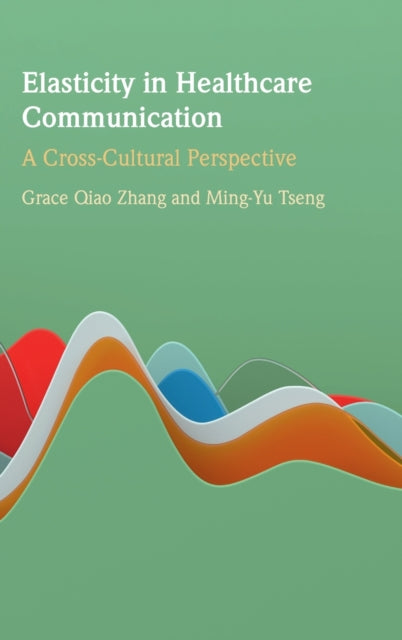
Grace QiaoZhang,Ming-Yu Tseng
Elasticity in Healthcare Communication: A Cross-Cultural Perspective
Elasticity in Healthcare Communication: A Cross-Cultural Perspective
💎 Earn 434 Points (£4.34) on this item.
YOU SAVE £5.15
- Condition: Brand new
- UK Delivery times: Usually arrives within 2 - 3 working days
- UK Shipping: Fee starts at £3.89. Subject to product weight & dimension
Bulk ordering. Want 15 or more copies? Get a personalised quote and bigger discounts. Learn more about bulk orders.
Couldn't load pickup availability
- More about Elasticity in Healthcare Communication: A Cross-Cultural Perspective
Elastic language is a linguistic phenomenon that allows words to have flexible meanings depending on the context. This study explores how elastic language is used in medicine and healthcare to serve the needs of both patients and professionals, particularly in the delivery of online medical information. It takes a cross-cultural perspective and examines the harmony and disharmony between professional medical websites and their users.
Format: Hardback
Length: 280 pages
Publication date: 18 August 2022
Publisher: Cambridge University Press
Elastic language is a fascinating linguistic phenomenon that allows us to manipulate the meanings of words based on the context in which they are used. This study delves into the realm of elastic language specifically in the fields of medicine and healthcare, highlighting its role in meeting the needs of both patients and professionals. By examining the pragmatics and metapragmatics of elasticity in the delivery of online medical information, the study aims to prevent miscommunication and promote harmony between professional medical websites and their users.
Drawing on data from Chinese and English sources, the study adopts a cross-cultural perspective to present an account of the interplay between professional medical websites and their users. It offers exciting new insights into the fields of health communication and pragmatics, making it an essential read for scholars, advanced students, and professionals engaged in healthcare and communication.
Elastic language is a versatile tool that enables us to convey nuanced meanings and adapt our language to different situations. In the context of medicine and healthcare, it plays a crucial role in ensuring effective communication between patients, healthcare providers, and researchers. By leveraging the elasticity of language, we can convey complex medical information in a way that is accessible, understandable, and relatable to a wide range of audiences.
One of the key advantages of elastic language is its ability to bridge cultural and linguistic barriers. Medical terminology and concepts can be challenging to comprehend for individuals who speak different languages or have different cultural backgrounds. However, by using elastic language, we can adapt our language to meet the needs of these individuals, ensuring that they receive the care they need without any misunderstandings.
Elastic language also plays a vital role in promoting patient-centered care. By adapting our language to the individual patient's needs and preferences, we can create a more personalized and compassionate healthcare experience. This approach not only improves patient satisfaction but also leads to better health outcomes and increased patient engagement.
In the field of online medical information, elastic language is particularly important. With the rise of the internet and the increasing availability of medical information, patients are now able to access a wealth of information at their fingertips. However, this abundance of information can also be overwhelming and confusing, leading to miscommunication and poor health decisions.
Elastic language can help mitigate these risks by providing a framework for delivering online medical information in a way that is accessible, understandable, and relevant to the individual patient. By using language that is flexible and adaptable, we can tailor our communication to meet the specific needs and preferences of each patient, ensuring that they receive the information they need in a way that is easy to comprehend and apply.
One of the challenges associated with elastic language in the delivery of online medical information is the need to balance accuracy and accessibility. While it is essential to provide accurate and comprehensive information, it is also important to make it accessible to a wide range of audiences. This requires a careful approach to language use, including the use of simple and concise language, the use of visual aids, and the inclusion of interactive elements to engage and educate patients.
Another challenge is the potential for miscommunication to occur when language is used in a way that is not intended or understood. For example, the use of colloquial or informal language can lead to misunderstandings or confusion, particularly if it is used in a medical context where precision and accuracy are critical. Similarly, the use of technical or medical jargon can be off-putting and inaccessible to non-experts, leading to a lack of engagement and understanding.
To address these challenges, it is important for healthcare providers and communication professionals to have a deep understanding of the elasticity of language and the pragmatics and metapragmatics of its use. This requires a commitment to ongoing education and training, as well as a willingness to adapt and evolve our language practices to meet the changing needs of patients and healthcare providers.
In conclusion, elastic language is a fascinating linguistic phenomenon that plays a crucial role in medicine and healthcare. By leveraging the elasticity of language, we can ensure effective communication, promote patient-centered care, and mitigate the risks associated with online medical information. However, it is important to approach the use of elastic language with caution and a commitment to accuracy and accessibility. By working together, healthcare providers, communication professionals, and patients can create a healthcare system that is more patient-centered, effective, and compassionate.
Weight: 540g
Dimension: 235 x 158 x 20 (mm)
ISBN-13: 9781108842396
UK and International shipping information
UK and International shipping information
We deliver throughout the United Kingdom and to 128 countries and territories worldwide, including the United States, Australia, Canada, Germany, Spain and France.