Springer International Publishing AG
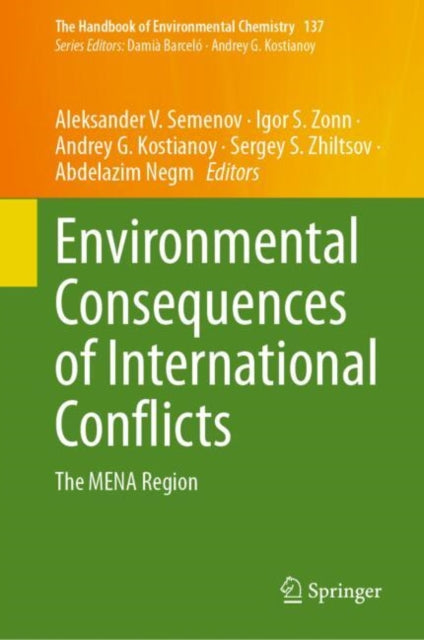
Environmental Consequences of International Conflicts: The MENA Region
Environmental Consequences of International Conflicts: The MENA Region
YOU SAVE £40.40
- Condition: Brand new
- UK Delivery times: Usually arrives within 2 - 3 working days
- UK Shipping: Fee starts at £3.89. Subject to product weight & dimension
Bulk ordering. Want 15 or more copies? Get a personalised quote and bigger discounts. Learn more about bulk orders.
Couldn't load pickup availability
- More about Environmental Consequences of International Conflicts: The MENA Region
This is the first of two volumes that, taken together, provide an integrated picture of the environmental consequences arising from international conflicts. The volumes build upon the successful book Environmental Consequences of War and Aftermath published in The Handbook of Environmental Chemistry in 2009. The books focus on environmental consequences only and discuss land degradation, erosion, water scarcity and pollution, water resources management, air pollution, desertification, deforestation, food scarcity and radioactive contamination, among others. This volume addresses conflicts in the MENA region (Middle East and North Africa), covering historical and more recent events such as water conflicts, military conflicts, migration and overpopulation, and infrastructure projects. Readers will also find several chapters in this book on the theory of international conflicts and their impact on the environment in general. Given its breadth, this book appeals to environmental scientists, policy makers, and researchers interested in the environmental impacts of international conflicts.
- Publication date: 24 January 2025
- Page count: 361
- Dimensions: Height 235 mm; Width 155 mm
- Publisher: Springer International Publishing AG
- Format: Hardback
- ISBN-13: 9783031804922
UK and International shipping information
UK and International shipping information
We deliver throughout the United Kingdom and to 128 countries and territories worldwide, including the United States, Australia, Canada, Germany, Spain and France.