Shulph Ink
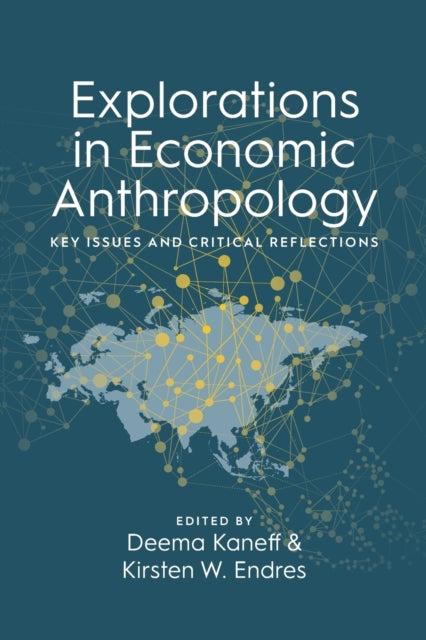
Explorations in Economic Anthropology: Key Issues and Critical Reflections
Explorations in Economic Anthropology: Key Issues and Critical Reflections
💎 Earn 119 Points (£1.19) on this item.
We can order this item for you. Delivery usually takes about 4 to 6 weeks.
This item is not held in our immediate stock. We will order it for you after checkout.
Estimated delivery: About 4 to 6 weeks
YOU SAVE £4.04
- Condition: Brand new
- UK Delivery times: Usually arrives within 2 - 3 working days
- UK Shipping: Fee starts at £3.89. Subject to product weight & dimension
Bulk ordering. Want 15 or more copies? Get a personalised quote and bigger discounts. Learn more about bulk orders.
Couldn't load pickup availability
- More about Explorations in Economic Anthropology: Key Issues and Critical Reflections
Economic anthropology provides solutions to global economic precarity and social inequality through the study of local and contextualized economic practices, featuring essays by leading scholars from the field and sociology and history.
Format: Paperback / softback
Length: 316 pages
Publication date: 09 June 2023
Publisher: Berghahn Books
Economic anthropology is a vital field that provides solutions to global economic precarity and social inequality by studying local and contextualized economic practices. This book is a collection of essays by leading scholars in the field, as well as contributions from sociology and history. The chapters engage with debates at the cutting edge of research on Eurasia, postsocialism, and the embeddedness of economic practices.
Economic anthropology is a field that examines the economic practices of individuals, groups, and societies in different parts of the world. It seeks to understand the social, cultural, and political factors that shape economic behavior and to develop theories and models that can help us understand and address economic problems.
One of the key challenges facing economic anthropology is the increasing global economic precarity and social inequality. This is due to a variety of factors, including globalization, neoliberalism, and climate change. Globalization has led to the integration of economies around the world, which has resulted in increased competition and economic instability. Neoliberalism has led to the privatization of public services and the deregulation of markets, which has resulted in increased inequality and poverty. Climate change has led to the destruction of ecosystems and the displacement of people, which has resulted in increased food insecurity and environmental degradation.
Economic anthropology offers solutions to these problems by studying the economic practices of different groups and societies. It seeks to understand the ways in which people use resources, produce goods and services, and distribute wealth. It also seeks to understand the ways in which economic practices are shaped by social, cultural, and political factors, such as gender, race, and class.
One of the key insights of economic anthropology is that economic practices are not static but are constantly evolving. This is due to a variety of factors, including technological change, social change, and political change. Technological change has led to the development of new technologies and industries, which has resulted in increased productivity and economic growth. Social change has led to the emergence of new social groups and identities, which has resulted in changes in economic behavior. Political change has led to the establishment of new political systems, which has resulted in changes in economic policy.
Economic anthropology also offers solutions to the problem of social inequality. It seeks to understand the ways in which economic practices contribute to social inequality and to develop strategies for addressing it. One of the key strategies for addressing social inequality is to promote economic equality. This can be done by implementing policies that promote equal access to resources, such as education and healthcare, and by reducing income inequality.
Another strategy for addressing social inequality is to promote economic empowerment. This can be done by providing people with the skills and resources they need to participate in the economy, such as education and training. It can also be done by promoting social entrepreneurship and by creating jobs that pay a living wage.
Economic anthropology also offers solutions to the problem of environmental degradation. It seeks to understand the ways in which economic practices contribute to environmental degradation and to develop strategies for addressing it. One of the key strategies for addressing environmental degradation is to promote sustainable development. This can be done by implementing policies that promote the use of renewable energy, the reduction of greenhouse gas emissions, and the protection of natural resources.
In conclusion, economic anthropology is a vital field that provides solutions to global economic precarity and social inequality by studying local and contextualized economic practices. It offers insights into the ways in which economic practices are shaped by social, cultural, and political factors and seeks to develop strategies for addressing these problems. By promoting economic equality, economic empowerment, and sustainable development, economic anthropology can help to create a more just and sustainable world.
ISBN-13: 9781800739116
UK and International shipping information
UK and International shipping information
We deliver throughout the United Kingdom and to 128 countries and territories worldwide, including the United States, Australia, Canada, Germany, Spain and France.