Natsuko Tsujimura
Expressing Silence: Where Language and Culture Meet in Japanese
Expressing Silence: Where Language and Culture Meet in Japanese
We can order this item for you. Delivery usually takes about 4 to 6 weeks.
This item is not held in our immediate stock. We will order it for you after checkout.
Estimated delivery: About 4 to 6 weeks
- Condition: Brand new
- UK Delivery times: Usually arrives within 2 - 3 working days
- UK Shipping: Fee starts at £3.89. Subject to product weight & dimension
Bulk ordering. Want 15 or more copies? Get a personalised quote and bigger discounts. Learn more about bulk orders.
Couldn't load pickup availability
- More about Expressing Silence: Where Language and Culture Meet in Japanese
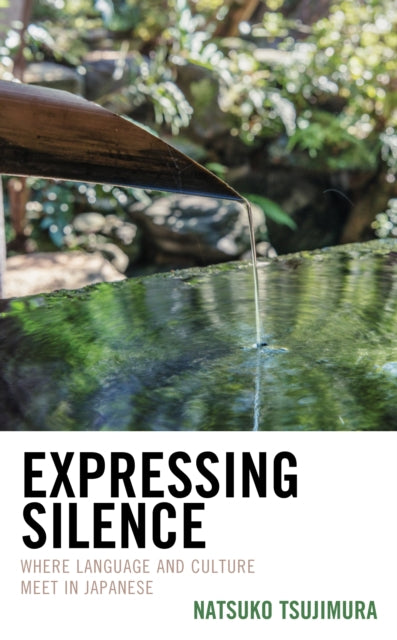
Natsuko Tsujimura explores how silence is conceptualized and linguistically represented in Japanese, highlighting the role of sounds in nature and onomatopoeia in simulating silent scenes. She argues that depictions of silence through language cannot be understood without exploring what sound or silence mean to the speakers.
Format: Hardback
Length: 172 pages
Publication date: 03 March 2022
Publisher: Bloomsbury Publishing Plc
Silence is a complex and multifaceted phenomenon that has been the subject of extensive study in various fields, including linguistics, cultural studies, and psychology. In Japanese, silence is conceptualized and linguistically represented in a unique and fascinating way that reflects the country's rich cultural heritage. One of the key aspects of Japanese silence is its connection to nature. The sounds of nature, such as the rustling of leaves, the chirping of birds, and the crashing of waves, are often used to evoke a sense of silence and tranquility. This connection between sound and silence is deeply embedded in the Japanese cultural experience and is reflected in the language itself.
One of the most significant linguistic mechanisms used to depict silence in Japanese is onomatopoeia. Onomatopoeia are words that imitate the sounds of objects or actions, and they are often used to simulate silent scenes. For example, the word "shhh" is used to indicate silence, and the word "gasp" is used to simulate the sound of someone taking a breath. These onomatopoeia are not only used to convey the sound of silence but also to convey the emotional impact of silence.
Another important aspect of Japanese silence is its use of sound symbolism. Sound symbolism is the use of sounds to convey meaning beyond their literal meaning. In Japanese, certain sounds are associated with specific emotions or concepts, and they are used to create a sense of atmosphere and meaning. For example, the sound of a bell is often associated with happiness and celebration, while the sound of a siren is often associated with danger and urgency.
In addition to its linguistic and cultural aspects, silence in Japanese is also influenced by social and historical factors. For example, during the Edo period (1603-1867), silence was highly valued in Japanese society, and it was used as a means of self-expression and meditation. During this period, many Japanese artists and writers created works that explored the theme of silence, and these works have had a lasting impact on Japanese culture.
Despite its importance in Japanese culture, silence is often overlooked in Western societies. In Western cultures, silence is often seen as a negative or uncomfortable experience, and it is often avoided or ignored. However, in Japanese culture, silence is seen as a valuable and essential aspect of communication and self-expression.
One of the challenges of studying silence in Japanese is the lack of available research. While there have been some studies on silence in Japanese literature and film, there is still a need for more comprehensive research on the topic. This research could include studies on the linguistic and cultural aspects of silence, as well as studies on the social and historical factors that influence silence in Japanese society.
Despite these challenges, there are many ways that silence can be studied and appreciated in Japanese culture. One of the most effective ways is to visit Japan and experience the country's rich cultural heritage firsthand. Visitors can visit temples and shrines, attend traditional music and dance performances, and explore the natural beauty of the country.
In addition to visiting Japan, there are many resources available online that can help individuals learn more about silence in Japanese culture. For example, there are many websites that offer translations of Japanese literature and film, as well as articles and essays on the topic. There are also many podcasts and audiobooks that feature Japanese speakers discussing the topic of silence.
In conclusion, silence is a complex and multifaceted phenomenon that has been the subject of extensive study in various fields, including linguistics, cultural studies, and psychology. In Japanese, silence is conceptualized and linguistically represented in a unique and fascinating way that reflects the country's rich cultural heritage. Onomatopoeia, sound symbolism, and social and historical factors all play a role in shaping the way that silence is depicted in Japanese language and culture. Despite its importance in Japanese culture, silence is often overlooked in Western societies, and there is a need for more comprehensive research on the topic. By visiting Japan and exploring the country's rich cultural heritage, individuals can gain a deeper understanding of the role that silence plays in Japanese communication and self-expression.
Weight: 396g
Dimension: 158 x 235 x 18 (mm)
ISBN-13: 9781498569248
UK and International shipping information
UK and International shipping information
We deliver throughout the United Kingdom and to 128 countries and territories worldwide, including the United States, Australia, Canada, Germany, Spain and France.