Shulph Ink
Fermentation Processes: Emerging and Conventional Technologies
Fermentation Processes: Emerging and Conventional Technologies
💎 Earn 698 Points (£6.98) on this item.
We can order this item for you. Delivery usually takes about 4 to 6 weeks.
This item is not held in our immediate stock. We will order it for you after checkout.
Estimated delivery: About 4 to 6 weeks
YOU SAVE £18.17
- Condition: Brand new
- UK Delivery times: Usually arrives within 2 - 3 working days
- UK Shipping: Fee starts at £3.89. Subject to product weight & dimension
Bulk ordering. Want 15 or more copies? Get a personalised quote and bigger discounts. Learn more about bulk orders.
Couldn't load pickup availability
- More about Fermentation Processes: Emerging and Conventional Technologies
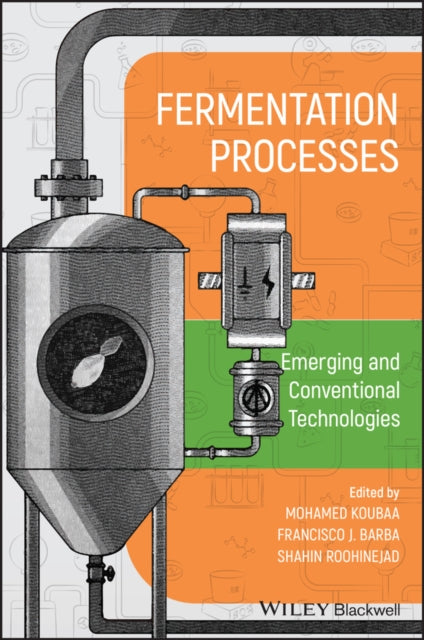
Fermentation Processes explores the use of conventional and novel technologies to enhance fermentation processes, covering cell division and growth kinetics, industrial fermentation processes, and emerging technologies. It is an authoritative resource for scientists and industry professionals, providing an up-to-date overview of the subject and discussing the advantages of new technologies.
Format: Hardback
Length: 240 pages
Publication date: 08 March 2021
Publisher: John Wiley and Sons Ltd
Fermentation Processes: Enhancing Fermentation Conditions with Conventional and Novel Technologies
Fermentation Processes is a comprehensive and authoritative volume that delves into the use of conventional and novel technologies to enhance fermentation processes. The book explores the principles and mechanisms of fermentation processes, the microorganisms used in bioprocesses, their implementation in industrial fermentation, and various other aspects related to fermentation. Designed for scientists and industry professionals alike, this up-to-date volume provides valuable insights into how non-conventional technologies can be employed to improve the accessibility and bioavailability of substrates for microorganisms during fermentation. This, in turn, promotes microbial growth and enhances processes and productivity across the agri-food, nutraceutical, pharmaceutical, and beverage industries.
The text begins by covering the conventional fermentation process, discussing cell division and growth kinetics, current technologies and developments in industrial fermentation processes, the parameters and modes of fermentation, various culture media, and the impact of culture conditions on fermentation processes. Subsequent chapters provide in-depth examination of the use of emerging technologies, such as pulsed electric fields, ultrasound, high-hydrostatic pressure, and microwave irradiation, for biomass fractionation and microbial stimulation.
One of the key advantages of emerging technologies is their ability to shorten fermentation time, accelerate substrate consumption, and increase microbial biomass. These technologies can be particularly useful in industries where efficient and cost-effective production is crucial, such as the food and beverage industry. By using these technologies, manufacturers can improve their bottom line while also reducing their environmental footprint.
Another advantage of emerging technologies is their ability to enhance fermentation at conventional conditions by changing oxygenation, agitation, temperature, and other medium conditions. For example, pulsed electric fields can be used to disrupt cell walls and promote the release of intracellular compounds, while ultrasound can be used to increase the efficiency of nutrient uptake by microorganisms. High-hydrostatic pressure can be used to improve the solubility of substrates and increase the yield of desired products.
In addition to their advantages, emerging technologies also present challenges. One of the main challenges is the need for specialized equipment and expertise to implement and maintain these technologies. Additionally, there may be concerns about the safety and environmental impact of these technologies, particularly if they are used on a large scale.
To address these challenges, it is important to conduct thorough research and development to improve the efficiency and sustainability of emerging technologies. This may involve collaboration between scientists, industry professionals, and regulatory agencies to ensure that these technologies are used responsibly and in compliance with relevant regulations.
In conclusion, Fermentation Processes: Enhancing Fermentation Conditions with Conventional and Novel Technologies is a valuable resource for scientists and industry professionals seeking to improve their understanding of fermentation processes and enhance their productivity. By exploring the application of both conventional and emerging technologies, the book provides insights into how non-conventional technologies can be used to increase the accessibility and bioavailability of substrates for microorganisms during fermentation, promoting microbial growth and improving processes and productivity across a wide range of industries.
Weight: 580g
Dimension: 250 x 176 x 21 (mm)
ISBN-13: 9781119505853
UK and International shipping information
UK and International shipping information
We deliver throughout the United Kingdom and to 128 countries and territories worldwide, including the United States, Australia, Canada, Germany, Spain and France.