Shulph Ink
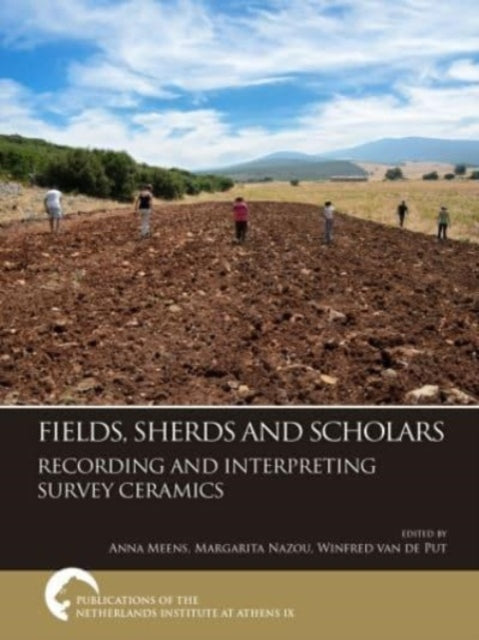
Fields, Sherds and Scholars. Recording and Interpreting Survey Ceramics
Fields, Sherds and Scholars. Recording and Interpreting Survey Ceramics
💎 Earn 285 Points (£2.85) on this item.
- Condition: Brand new
- UK Delivery times: Usually arrives within 2 - 3 working days
- UK Shipping: Fee starts at £3.89. Subject to product weight & dimension
Bulk ordering. Want 15 or more copies? Get a personalised quote and bigger discounts. Learn more about bulk orders.
Couldn't load pickup availability
- More about Fields, Sherds and Scholars. Recording and Interpreting Survey Ceramics
The book is a significant contribution to survey pottery studies, providing guidance and inspiration for archaeologists designing their own survey projects and methodologies. It focuses on transparency in ceramic collecting, processing, and interpretation, improving diagnosticity, and expanding the interpretive potential of survey ceramics. The chapters are geographically oriented towards Greece and Italy and chronologically range from the Bronze Age to the Medieval period.
Format: Paperback / softback
Length: 160 pages
Publication date: 07 December 2023
Publisher: Sidestone Press
This book is a significant contribution to the field of survey pottery studies, which is not frequently theorized and could also serve as a guide and provide inspiration to archaeologists designing their own survey projects and methodologies. Landscape archaeology has heavily relied on pedestrian survey as a field method for more than half a century. In most field projects, archaeological ceramics constitute the lion's share among the finds, and the amount of collected sherds is overwhelming. Survey ceramics provide the basis for understanding human activity in a landscape, and sherds serve as convenient chronological markers for the archaeological sites discovered in field projects. However, how this pottery is collected and studied determines the possibilities for using the sherds as a source material. Not only the collection practices, but also the process and practicalities of ceramic analysis are rarely made explicit, even though the archaeological interpretations of human activity in the landscape strongly rely on it. Most contributions in this volume provide an insight into collection, processing, and interpretation practices in a specific survey project, and we hope this transparency is inspiring and contributes to a better understanding of surface ceramics as a basis for historical interpretations. Three themes run as a red thread through the contributions in this book: first of all, transparency in ceramic collecting, processing, and interpretation; secondly, improving diagnosticity; and thirdly, expanding the interpretive potential of survey ceramics. The chapters are geographically oriented towards Greece and Italy, two countries in which archaeological surface survey is widely practised. Chronologically, the contributions range from the Bronze Age to the Medieval period.
Book Review: "Survey Pottery Studies: Methodologies, Interpretations, and Perspectives"
This book is a significant contribution to the field of survey pottery studies, which is not frequently theorized and could also serve as a guide and provide inspiration to archaeologists designing their own survey projects and methodologies. Landscape archaeology has heavily relied on pedestrian survey as a field method for more than half a century. In most field projects, archaeological ceramics constitute the lion's share among the finds, and the amount of collected sherds is overwhelming. Survey ceramics provide the basis for understanding human activity in a landscape, and sherds serve as convenient chronological markers for the archaeological sites discovered in field projects. However, how this pottery is collected and studied determines the possibilities for using the sherds as a source material. Not only the collection practices, but also the process and practicalities of ceramic analysis are rarely made explicit, even though the archaeological interpretations of human activity in the landscape strongly rely on it. Most contributions in this volume provide an insight into collection, processing, and interpretation practices in a specific survey project, and we hope this transparency is inspiring and contributes to a better understanding of surface ceramics as a basis for historical interpretations. Three themes run as a red thread through the contributions in this book: first of all, transparency in ceramic collecting, processing, and interpretation; secondly, improving diagnosticity; and thirdly, expanding the interpretive potential of survey ceramics. The chapters are geographically oriented towards Greece and Italy, two countries in which archaeological surface survey is widely practised. Chronologically, the contributions range from the Bronze Age to the Medieval period.
Dimension: 280 x 210 (mm)
ISBN-13: 9789464262094
UK and International shipping information
UK and International shipping information
We deliver throughout the United Kingdom and to 128 countries and territories worldwide, including the United States, Australia, Canada, Germany, Spain and France.