1
/
of
1
Springer International Publishing AG
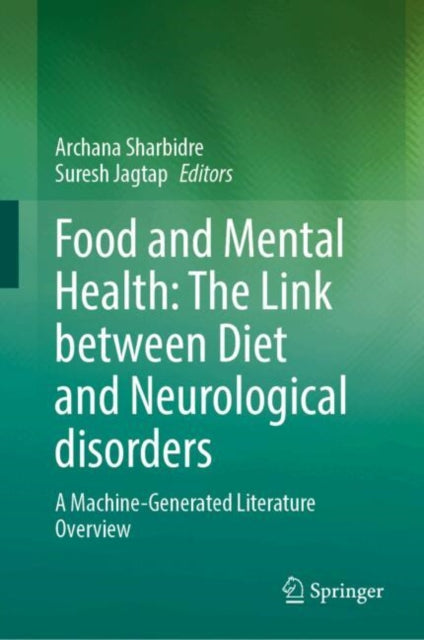
Food and Mental Health: The Link between Diet and Neurological disorders: A Curated Literature Overview
Food and Mental Health: The Link between Diet and Neurological disorders: A Curated Literature Overview
💎 Earn 764 Points (£7.64) on this item.
ORDERED FOR YOU
We can order this item for you. Delivery usually takes about 4 to 6 weeks.
This item is not held in our immediate stock. We will order it for you after checkout.
Estimated delivery: About 4 to 6 weeks
Regular price
£152.92 GBP
Regular price
£179.99 GBP
Sale price
£152.92 GBP
Unit price
/
per
Taxes included.
Shipping calculated at checkout.
YOU SAVE £27.07
- Condition: Brand new
- UK Delivery times: Usually arrives within 2 - 3 working days
- UK Shipping: Fee starts at £3.89. Subject to product weight & dimension
Bulk ordering. Want 15 or more copies? Get a personalised quote and bigger discounts. Learn more about bulk orders.
Couldn't load pickup availability
- More about Food and Mental Health: The Link between Diet and Neurological disorders: A Curated Literature Overview
Diet is frequently the first thing that comes to mind when discussing our health. We all know that eating healthy can help us stay fit and prevent disease as the health of a person is highly depending on the type of diet consumed. Earlier, the diet was considered to be only impacting the heart health, but now, several evidences advocate that it also has a great role in brain health. Thus, what we eat can impact our brains' function. Our eating habits have an effect on how our brains work. Consuming unhealthy meals, such as processed food or sugary snacks, can cause the inflammation interfering with the brain's capacity to connect with other organs. This disruption in communication results in reduced cognitive function due to oxidative stress, neuroinflammation, and mitochondrial dysfunction involved in the aetiology of many neurological illnesses. The gastrointestinal tract (GIT), which has the biggest and most exposed surface and desired properties to detect food, nutrients,and environmental variables as well as to distinguish commensals, invading pathogens, and others, includes the gut microbiome as an essential component. The relationship between the stomach and the central nervous system (CNS) in terms of health and sickness is well-known. Normal brain and emotional functioning depends on a healthy gut with a variety of microorganisms. Moreover, the majority of GI physiology is managed by the CNS. In order to maintain gut homeostasis and appropriate digestion, a complex and bidirectional molecular connection exists between the CNS and the gut/microbiome. In addition, a number of mechanisms, such as endocrine, neuronal, toll-like receptor, and metabolites-dependent pathways, have been postulated. Because changes in the bidirectional interaction between the GIT and the CNS are associated with the pathophysiology of gastrointestinal and neurological illness. Changing Lifestyle and health behaviors such as diet can be predominantly effective publichealth targets for disease prevention. There is increasing evidence that dietary interventions including dietary supplement and dietary restriction can prevent or even reverse the cognitive deficits seen in neurological disorders such as age-related cognitive decline, Alzheimer's disease, Parkinson’s disease, stroke, epilepsy, traumatic brain injury, amyotrophic lateral sclerosis, Huntington's disease, multiple sclerosis, and epilepsy that display this pathophysiology. There is now substantial evidence that diet promotes prevention and correction of neurological symptoms in a variety of pathological conditions. It also emphasizes the critical role of several possible routes for nutrient delivery to the risk of neurologic disease and treatment response, including metabolic management, epigenetic alteration, neuroinflammation, and gut-brain axis. The unique idea that dietary nutrition supplementation altersthe metabolism-epigenetics-immunity loop to treat brain dysfunction is highlighted last. The metabolism, epigenetics, and immune networks will be the focus of a novel strategy for overcoming neurological deficiencies. Diets based on plants, wild vegetables, low in fat, high in fiber, antioxidant-rich especially polyphenols, and adopting other healthy lifestyle choices may help to lessen the severity and impairment of common neurological illnesses. Such a diet is the ketogenic diet, which is preferred for the treatment of refractory epilepsy. Multiple pathophysiological pathways are shared by a variety of neurological illnesses, including increased oxidative stress, neuroinflammation, and disrupted metabolism. Dietary treatments may affect these pathophysiological functions and consequently improve or worsen clinical results. A spectrum of healthy lifestyle choices must include adequate nutritional choices.
- Publication date: 11 September 2026
- Dimensions: Height 235 mm; Width 155 mm
- Publisher: Springer International Publishing AG
- Format: Hardback
- ISBN-13: 9783031469091
UK and International shipping information
UK and International shipping information
We deliver throughout the United Kingdom and to 128 countries and territories worldwide, including the United States, Australia, Canada, Germany, Spain and France.