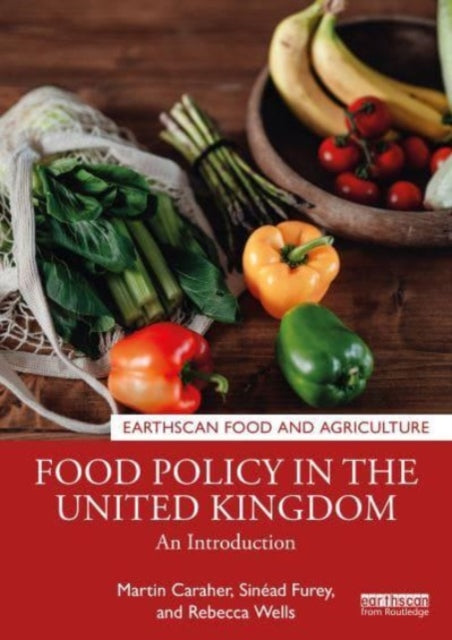
Martin Caraher,Sinead Furey,Rebecca Wells
Food Policy in the United Kingdom: An Introduction
Food Policy in the United Kingdom: An Introduction
💎 Earn 193 Points (£1.93) on this item.
We can order this item for you. Delivery usually takes about 4 to 6 weeks.
This item is not held in our immediate stock. We will order it for you after checkout.
Estimated delivery: About 4 to 6 weeks
YOU SAVE £2.30
- Condition: Brand new
- UK Delivery times: Usually arrives within 2 - 3 working days
- UK Shipping: Fee starts at £3.89. Subject to product weight & dimension
Bulk ordering. Want 15 or more copies? Get a personalised quote and bigger discounts. Learn more about bulk orders.
Couldn't load pickup availability
- More about Food Policy in the United Kingdom: An Introduction
The UK's food policy is complex,with influences from the EU,globalization,public health,and social policy. It covers issues such as malnutrition,obesity,food poverty,food regulation,sustainable diets,and food media and marketing. BREXIT and COVID-19 have revealed challenges and opportunities for food policy.
Format: Paperback / softback
Length: 248 pages
Publication date: 13 July 2023
Publisher: Taylor & Francis Ltd
The United Kingdom's food policy is a complex and multifaceted system that encompasses a wide range of issues, from public health to food poverty, food regulation, sustainable diets, and food media and marketing. This policy is developed and implemented by a variety of government departments, agencies, and non-governmental organizations, with the aim of ensuring that everyone in the country has access to safe, healthy, and nutritious food.
One of the key challenges facing food policy in the UK is public health. The country has experienced a rise in both malnutrition and obesity in recent years, and there is a growing concern about the impact of food on health outcomes. Food policy interventions aimed at promoting healthy diets and reducing the consumption of unhealthy foods have been implemented, such as the introduction of calorie labelling on food products and the promotion of physical activity.
Another important issue is food poverty. The UK has a high rate of food poverty, with many people unable to afford to buy enough food to meet their basic needs. Food policy interventions aimed at reducing food poverty include the provision of food aid, the expansion of the school breakfast program, and the implementation of social safety nets such as the Universal Credit system.
Food regulation is also an important aspect of food policy in the UK. The government has implemented a number of regulations to ensure that food is safe, wholesome, and properly labeled. These regulations cover a wide range of food products, from meat and poultry to fruits and vegetables, and include measures to prevent foodborne illness and protect consumers from misleading marketing practices.
Sustainable diets are another key area of food policy in the UK. The government has committed to reducing greenhouse gas emissions and promoting sustainable agriculture practices, and food policy interventions aimed at promoting sustainable diets include the promotion of plant-based diets, the reduction of food waste, and the support of local and organic food producers.
Food media and marketing are also important areas of food policy in the UK. The government has implemented regulations to ensure that food advertising is truthful and not misleading, and there is a growing concern about the impact of food marketing on children's eating habits. Food policy interventions aimed at promoting healthy eating habits include the promotion of healthy food choices in schools and the restriction of advertising for unhealthy foods to children.
In conclusion, the United Kingdom's food policy is a complex and multifaceted system that encompasses a wide range of issues, from public health to food poverty, food regulation, sustainable diets, and food media and marketing. The government and other stakeholders are committed to ensuring that everyone in the country has access to safe, healthy, and nutritious food, and there are a number of ongoing policy interventions aimed at achieving this goal.
This policy serves as a key introduction to food and agricultural policy for students, scholars, policymakers, and professionals, as well as those interested in food systems, sustainable diets, public health, and social policy more widely. It is accompanied by lesson plans, links to further reading, practical resources, and resources on theoretical frameworks related to public and food policy.
In recent years, the UK's food policy has been significantly influenced by a number of external factors, including Brexit and COVID-19. Brexit has led to changes in trade agreements.
The UK's food policy has been significantly influenced by a number of external factors, including Brexit and COVID-19. Brexit has led to changes in trade agreements and regulations, which have had implications for the country's food supply chain and food prices. The COVID-19 pandemic has also had a significant impact on food policy in the UK, with the government implementing a number of measures to support businesses and individuals affected by the pandemic, such as the provision of food aid and the expansion of the school breakfast program.
In conclusion, the United Kingdom's food policy is a complex and multifaceted system that encompasses a wide range of issues, from public health to food poverty, food regulation, sustainable diets, and food media and marketing. The government and other stakeholders are committed to ensuring that everyone in the country has access to safe, healthy, and nutritious food, and there are a number of ongoing policy interventions aimed at achieving this goal. Brexit and COVID-19 have revealed a number of challenges and opportunities for food policy in the UK, and it will be important for policymakers to continue to monitor and adapt to these changes in order to ensure that everyone in the country has access to the food they need.
Weight: 490g
Dimension: 246 x 174 (mm)
ISBN-13: 9781032196770
UK and International shipping information
UK and International shipping information
We deliver throughout the United Kingdom and to 128 countries and territories worldwide, including the United States, Australia, Canada, Germany, Spain and France.