Shulph Ink
Fuel Cell and Hydrogen Technologies in Aviation
Fuel Cell and Hydrogen Technologies in Aviation
We can order this item for you. Delivery usually takes about 4 to 6 weeks.
This item is not held in our immediate stock. We will order it for you after checkout.
Estimated delivery: About 4 to 6 weeks
YOU SAVE £18.18
- Condition: Brand new
- UK Delivery times: Usually arrives within 2 - 3 working days
- UK Shipping: Fee starts at £3.89. Subject to product weight & dimension
Bulk ordering. Want 15 or more copies? Get a personalised quote and bigger discounts. Learn more about bulk orders.
Couldn't load pickup availability
- More about Fuel Cell and Hydrogen Technologies in Aviation
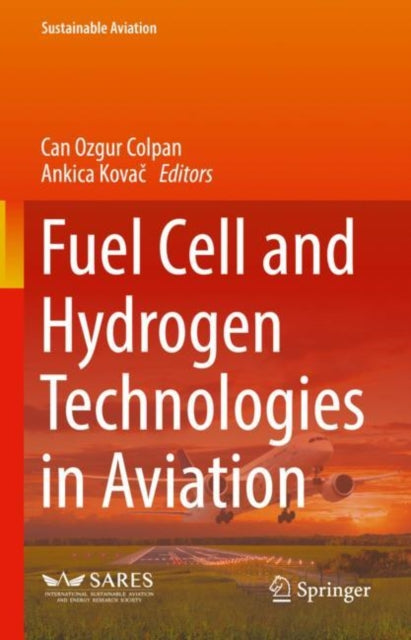
This book explores cutting-edge topics on hydrogen and fuel cell technologies in aviation, covering comparisons with conventional technologies, storage options, energy management strategies, life cycle assessment, and applications in different vehicle classes. It also provides insights into recent progress and technological developments, with case studies and practical applications.
Format: Hardback
Length: 202 pages
Publication date: 24 September 2022
Publisher: Springer Nature Switzerland AG
This comprehensive book delves into the latest advancements in hydrogen and fuel cell technologies for aviation applications. It provides a thorough examination of these technologies, comparing them to conventional counterparts and exploring various hydrogen storage options, energy management strategies, life cycle assessments, and the application of fuel cells in different aerial vehicle classes. Furthermore, the book offers insightful perspectives on recent progress and emerging technological developments in the field, accompanied by case studies and practical applications.
Fuel Cell and Hydrogen Technologies in Aviation serves as a vital resource for students, researchers, and engineers engaged in the pursuit of sustainable air transportation and the evaluation of fuel cell-powered aerial vehicles' performance and environmental impact. By comprehensively covering these cutting-edge technologies, the book facilitates a deeper understanding of the challenges and opportunities associated with hydrogen-powered aviation.
The book begins by providing an overview of hydrogen and fuel cell technologies, including their historical development, advantages, and challenges. It then delves into the various aspects of fuel cell and hydrogen technologies in aviation, such as hydrogen storage systems, energy management strategies, life cycle assessments, and the application of fuel cells in different aerial vehicle classes.
Comparisons with conventional technologies are made throughout the book to highlight the potential benefits and drawbacks of hydrogen and fuel cell-powered aircraft. This analysis helps readers understand the trade-offs and considerations involved in adopting these technologies and enables them to make informed decisions about their implementation in the aviation industry.
Hydrogen storage options are a critical component of fuel cell and hydrogen technologies in aviation. The book explores various storage methods, including pressurized tanks, cryogenic storage, and solid-state storage, and evaluates their performance, safety, and cost-effectiveness. It also discusses the challenges associated with hydrogen supply and distribution, including the need for infrastructure development and the potential impact on the environment.
Energy management strategies are essential for optimizing the efficiency and performance of fuel cell-powered aircraft. The book discusses various energy management techniques, such as regenerative braking, power splitting, and energy storage systems, and evaluates their effectiveness in reducing fuel consumption, improving power output, and extending the range of the vehicle.
Life cycle assessments are used to evaluate the environmental impact of fuel cell and hydrogen technologies in aviation. The book discusses the lifecycle stages of fuel cell-powered aircraft, including manufacturing, operation, and disposal, and assesses their potential environmental benefits and drawbacks. It also highlights the importance of sustainability and the role of these technologies in achieving carbon-neutral air transportation.
The application of fuel cells in different aerial vehicle classes is explored in detail. The book discusses the use of fuel cells in commercial aircraft, regional aircraft, drones, and helicopters, and evaluates their performance, efficiency, and cost-effectiveness in each application. It also discusses the challenges and opportunities associated with integrating fuel cells into these vehicles and the potential for collaboration between industry stakeholders to accelerate the adoption of these technologies.
In addition to the technical aspects, the book also offers insights into recent progress and emerging technological developments in the field of fuel cell and hydrogen technologies in aviation. It discusses the latest research and development initiatives, including the development of more efficient fuel cell stacks, the use of renewable energy sources for hydrogen production, and the integration of fuel cells with other technologies such as electric motors and batteries.
Case studies and practical applications are included throughout the book to illustrate the real-world applications of fuel cell and hydrogen technologies in aviation. These examples showcase the benefits and challenges of implementing these technologies and provide valuable insights for practitioners and policymakers.
Fuel Cell and Hydrogen Technologies in Aviation is an essential resource for students, researchers, and engineers working on sustainable air transportation and the performance and environmental analysis of fuel cell-powered aerial vehicles. It provides a comprehensive and up-to-date examination of these technologies, facilitating a deeper understanding of the challenges and opportunities associated with hydrogen-powered aviation.
By exploring the latest advancements in hydrogen and fuel cell technologies, the book equips readers with the knowledge and tools necessary to contribute to the development of a more sustainable and efficient air transportation system. It serves as a valuable reference for professionals seeking to stay informed about the latest developments in this field and for policymakers and industry stakeholders seeking to promote the adoption of fuel cell and hydrogen technologies in aviation.
In conclusion, Fuel Cell and Hydrogen Technologies in Aviation is a groundbreaking book that offers a comprehensive and insightful examination of the latest advancements in hydrogen and fuel cell technologies for aviation applications. It provides a valuable resource for students, researchers, and engineers seeking to advance the development of sustainable air transportation and the performance and environmental analysis of fuel cell-powered aerial vehicles. With its comprehensive coverage, practical applications, and insightful perspectives, this book is poised to shape the future of hydrogen-powered aviation and contribute to the realization of a more sustainable and carbon-neutral air transportation system.
Weight: 502g
Dimension: 160 x 242 x 17 (mm)
ISBN-13: 9783030990176
Edition number: 1st ed. 2022
UK and International shipping information
UK and International shipping information
We deliver throughout the United Kingdom and to 128 countries and territories worldwide, including the United States, Australia, Canada, Germany, Spain and France.