Matheson Russell
Habermas and Politics: A Critical Introduction
Habermas and Politics: A Critical Introduction
YOU SAVE £8.02
- Condition: Brand new
- UK Delivery times: Usually arrives within 2 - 3 working days
- UK Shipping: Fee starts at £3.89. Subject to product weight & dimension
Bulk ordering. Want 15 or more copies? Get a personalised quote and bigger discounts. Learn more about bulk orders.
Couldn't load pickup availability
- More about Habermas and Politics: A Critical Introduction
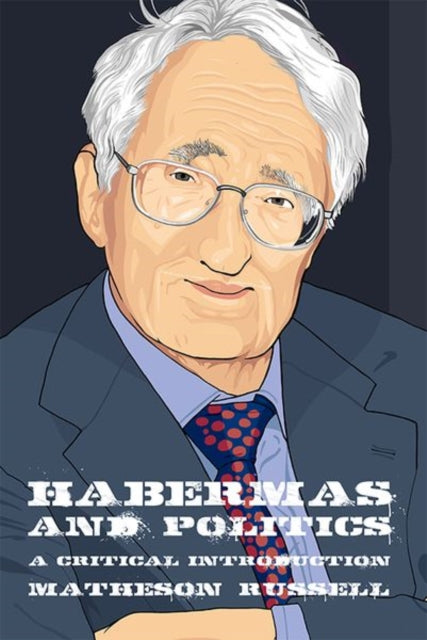
Jrgen Habermas is a prominent philosopher in the European Union, known for his contributions to contemporary political theory. This book explores his ideas, focusing on power and its sociological and philosophical perspectives, and comparing him to other Continental theorists and current debates in Anglo-American political philosophy.
Format: Paperback / softback
Length: 224 pages
Publication date: 31 May 2019
Publisher: Edinburgh University Press
Jrgen Habermas, often referred to as the unofficial philosopher laureate of the European Union, has gained significant attention for his contributions to contemporary political theory. This book aims to bring to life the ideas of this unique thinker, an heir to the Enlightenment legacy, a champion of reason and democracy, a social theorist of remarkable sophistication, and an astute commentator on contemporary politics.
The book is organized around a central theme of power, which serves as a unifying thread throughout its pages. It guides its readers through the sociological and philosophical perspectives that are essential to Habermas's political theory, situating his political thinking in relation to key Continental theorists such as Carl Schmitt and Michel Foucault, as well as current debates in contemporary Anglo-American political philosophy.
Habermas's political theory is characterized by a deep commitment to the ideals of democracy and reason. He believes that society should be governed by a system of laws that are based on universal principles of justice and that individuals should have the freedom to participate in the political process. He also emphasizes the importance of dialogue and communication in shaping public opinion and promoting social change.
One of Habermas's most significant contributions to political theory is his concept of the public sphere. He argues that the public sphere is a space where individuals can come together to discuss and debate important issues of public concern. The public sphere is characterized by a set of norms and values that promote rational discourse and the exchange of ideas.
Habermas's concept of the public sphere has been influential in a wide range of fields, including media studies, sociology, and political science. It has been used to analyze the role of the media in shaping public opinion, the impact of social media on democracy, and the challenges of promoting social justice in a globalized world.
However, Habermas's theory has also faced criticism. Some critics argue that his concept of the public sphere is too idealistic and that it does not take into account the power dynamics that exist in society. They argue that the public sphere is often dominated by powerful elites and that ordinary citizens have little influence over the political process.
Habermas has responded to these criticisms by developing a more nuanced understanding of the public sphere. He argues that the public sphere is not a static entity but rather a dynamic and evolving space that is shaped by a range of factors, including social, economic, and cultural forces. He also emphasizes the importance of civil society and the role that it plays in promoting social change.
In addition to his work on the public sphere, Habermas has also made significant contributions to the study of democracy. He argues that democracy is not just a system of government but rather a way of life that involves the active participation of citizens in the political process. He emphasizes the importance of political equality, the rule of law, and the protection of individual rights.
Habermas's theory of democracy has been influential in a wide range of countries, including Germany, France, and the United States. It has been used to guide the development of democratic institutions and to promote social justice and human rights.
However, Habermas's theory has also faced challenges. Some critics argue that his theory of democracy is too idealistic and that it does not take into account the realities of power and inequality in society. They argue that democracy is often dominated by powerful elites and that ordinary citizens have little influence over the political process.
Habermas has responded to these criticisms by developing a more nuanced understanding of democracy. He argues that democracy is not just a system of government but rather a way of life that involves the active participation of citizens in the political process. He emphasizes the importance of political equality, the rule of law, and the protection of individual rights.
In conclusion, Jrgen Habermas has come to be viewed as the unofficial philosopher laureate of the European Union due to his significant contributions to contemporary political theory. His ideas are characterized by a deep commitment to the ideals of democracy and reason, a focus on the public sphere, and a nuanced understanding of democracy. His theory has been influential in a wide range of fields, including media studies, sociology, and political science, and has been used to guide the development of democratic institutions and to promote social justice and human rights. However, his theory has also faced criticism, and he has responded to these criticisms by developing a more nuanced understanding of the public sphere and democracy.
Weight: 354g
Dimension: 158 x 235 x 15 (mm)
ISBN-13: 9781474420280
UK and International shipping information
UK and International shipping information
We deliver throughout the United Kingdom and to 128 countries and territories worldwide, including the United States, Australia, Canada, Germany, Spain and France.