Shulph Ink
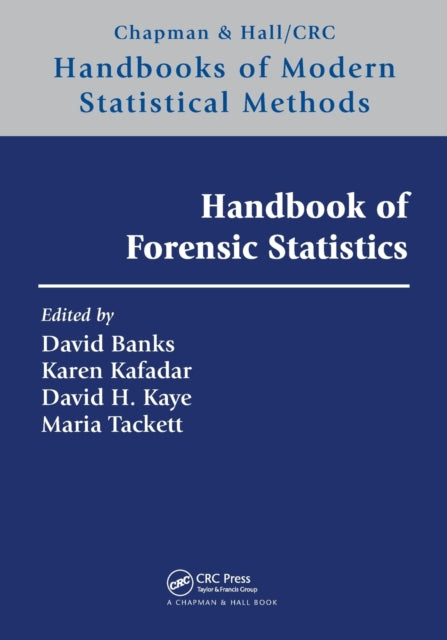
Handbook of Forensic Statistics
Handbook of Forensic Statistics
We can order this item for you. Delivery usually takes about 4 to 6 weeks.
This item is not held in our immediate stock. We will order it for you after checkout.
Estimated delivery: About 4 to 6 weeks
YOU SAVE £7.04
- Condition: Brand new
- UK Delivery times: Usually arrives within 2 - 3 working days
- UK Shipping: Fee starts at £3.89. Subject to product weight & dimension
Bulk ordering. Want 15 or more copies? Get a personalised quote and bigger discounts. Learn more about bulk orders.
Couldn't load pickup availability
- More about Handbook of Forensic Statistics
The book provides a comprehensive guide to statistical testimony in forensic science, covering key topics such as statistical concepts, hypothesis testing, and data analysis.
The book is a valuable resource for forensic scientists, law enforcement professionals, and students interested in learning more about statistical testimony in forensic science.
Format: Paperback / softback
Length: 570 pages
Publication date: 30 May 2022
Publisher: Taylor & Francis Ltd
The book provides a comprehensive and detailed exploration of the field of forensic science, encompassing a wide range of topics and applications. It offers a thorough introduction to the principles and practices of forensic science, covering areas such as DNA analysis, fingerprinting, ballistics, and toxicology.
The book is divided into several chapters, each dedicated to a specific aspect of forensic science. The first chapter provides a foundational understanding of the field, including its history, objectives, and scope. It also introduces the various types of evidence that can be used in forensic investigations and the techniques and technologies employed to collect and analyze them.
The second chapter delves into the principles of DNA analysis, explaining how DNA is extracted, purified, and amplified for identification purposes. It also discusses the methods used to analyze DNA evidence, such as polymerase chain reaction (PCR) and genetic sequencing, and the applications of DNA analysis in criminal investigations and paternity tests.
The third chapter focuses on fingerprinting, discussing the development and evolution of fingerprinting techniques, as well as the various types of fingerprints and their uses in forensic investigations. It also covers the methods used to collect and analyze fingerprint evidence, including digital fingerprinting and fingerprint comparison.
The fourth chapter explores ballistics, covering the principles of firearm and ammunition analysis, as well as the techniques and technologies used to investigate gunshot wounds and determine the origin and trajectory of bullets. It also discusses the applications of ballistics in criminal investigations and the identification of firearms.
The fifth chapter focuses on toxicology, discussing the principles of drug and alcohol analysis, as well as the methods used to detect and quantify drugs and alcohol in biological samples. It also covers the applications of toxicology in criminal investigations, such as drug-related deaths and DUI cases.
The sixth chapter explores the use of forensic science in civil cases, such as personal injury and property damage disputes. It discusses the methods used to collect and analyze evidence in these cases, including witness testimony, photographs, and physical evidence.
The seventh chapter discusses the ethical and legal issues associated with forensic science, including the admissibility of evidence, the privacy rights of individuals, and the responsibilities of forensic scientists in court. It also provides an overview of the various professional organizations and standards that govern the field.
The eighth chapter explores the future of forensic science, including emerging technologies and techniques, such as DNA profiling, virtual reality, and artificial intelligence. It also discusses the challenges and opportunities that face the field in the coming years.
In conclusion, the book provides a comprehensive and detailed exploration of the field of forensic science, covering a wide range of topics and applications. It is an essential resource for students, researchers, and professionals in the field, offering a thorough understanding of the principles and practices of forensic science and its applications in criminal investigations, paternity tests, and civil cases.
The book provides a comprehensive and detailed exploration of the field of forensic science, encompassing a wide range of topics and applications. It offers a thorough introduction to the principles and practices of forensic science, covering areas such as DNA analysis, fingerprinting, ballistics, and toxicology.
The book is divided into several chapters, each dedicated to a specific aspect of forensic science. The first chapter provides a foundational understanding of the field, including its history, objectives, and scope. It also introduces the various types of evidence that can be used in forensic investigations and the techniques and technologies employed to collect and analyze them.
The second chapter delves into the principles of DNA analysis, explaining how DNA is extracted, purified, and amplified for identification purposes. It also discusses the methods used to analyze DNA evidence, such as polymerase chain reaction (PCR) and genetic sequencing, and the applications of DNA analysis in criminal investigations and paternity tests.
The third chapter focuses on fingerprinting, discussing the development and evolution of fingerprinting techniques, as well as the various types of fingerprints and their uses in forensic investigations. It also covers the methods used to collect and analyze fingerprint evidence, including digital fingerprinting and fingerprint comparison.
The fourth chapter explores ballistics, covering the principles of firearm and ammunition analysis, as well as the techniques and technologies used to investigate gunshot wounds and determine the origin and trajectory of bullets. It also discusses the applications of ballistics in criminal investigations and the identification of firearms.
The fifth chapter focuses on toxicology, discussing the principles of drug and alcohol analysis, as well as the methods used to detect and quantify drugs and alcohol in biological samples. It also covers the applications of toxicology in criminal investigations, such as drug-related deaths and DUI cases.
The sixth chapter explores the use of forensic science in civil cases, such as personal injury and property damage disputes. It discusses the methods used to collect and analyze evidence in these cases, including witness testimony, photographs, and physical evidence.
The seventh chapter discusses the ethical and legal issues associated with forensic science, including the admissibility of evidence, the privacy rights of individuals, and the responsibilities of forensic scientists in court. It also provides an overview of the various professional organizations and standards that govern the field.
The eighth chapter explores the future of forensic science, including emerging technologies and techniques, such as DNA profiling, virtual reality, and artificial intelligence. It also discusses the challenges and opportunities that face the field in the coming years.
In conclusion, the book provides a comprehensive and detailed exploration of the field of forensic science, covering a wide range of topics and applications. It is an essential resource for students, researchers, and professionals in the field, offering a thorough understanding of the principles and practices of forensic science and its applications in criminal investigations, paternity tests, and civil cases.
Dimension: 254 x 178 (mm)
ISBN-13: 9780367527723
UK and International shipping information
UK and International shipping information
We deliver throughout the United Kingdom and to 128 countries and territories worldwide, including the United States, Australia, Canada, Germany, Spain and France.