SeamusTaylor
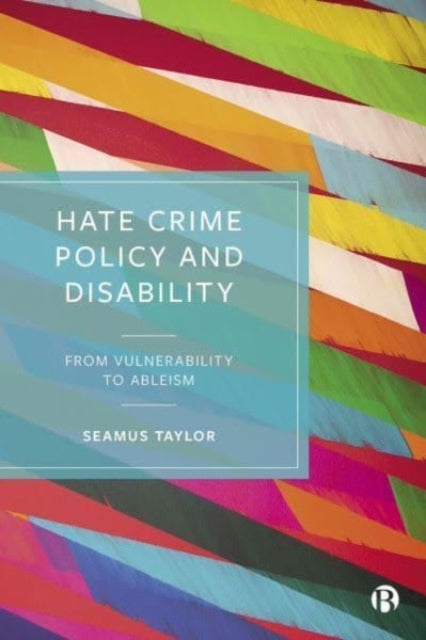
Hate Crime Policy and Disability: From Vulnerability to Ableism
Hate Crime Policy and Disability: From Vulnerability to Ableism
💎 Earn 123 Points (£1.23) on this item.
YOU SAVE £5.22
- Condition: Brand new
- UK Delivery times: Usually arrives within 2 - 3 working days
- UK Shipping: Fee starts at £3.89. Subject to product weight & dimension
Bulk ordering. Want 15 or more copies? Get a personalised quote and bigger discounts. Learn more about bulk orders.
Couldn't load pickup availability
- More about Hate Crime Policy and Disability: From Vulnerability to Ableism
Seamus Taylor's Disability Hate Crime policy agenda explores theoretical and practical questions, analyzing contributions of activists, politicians, policymakers, and criminal justice system practitioners, and critiquing under-recognition of disability prejudice and vulnerability in addressing hostility. It concludes with policy recommendations to address current challenges in the criminal justice system.
Format: Paperback / softback
Length: 262 pages
Publication date: 12 March 2024
Publisher: Bristol University Press
Seamus Taylor's Disability Hate Crime policy agenda offers a comprehensive examination of the theoretical and practical aspects of the issue. By analyzing the contributions of activists, politicians, policymakers, and criminal justice system practitioners, the book highlights the under-recognition of disability prejudice fueled by ableism and the challenge of vulnerability in addressing disability hostility. Taylor concludes that a critically reflective approach by policymakers and practitioners can lead to progress and provides clear policy recommendations to address current challenges in the criminal justice system.
The Disability Hate Crime policy agenda is a complex and multifaceted issue that requires a comprehensive examination of the theoretical and practical aspects of the issue. Seamus Taylor's book provides a unique consideration of these questions, analyzing the contributions of activists, politicians, policymakers, and criminal justice system practitioners to policy development and critiquing both the under-recognition of disability prejudice fueled by ableism and the challenge of vulnerability in addressing disability hostility.
One of the key developments in the Disability Hate Crime policy agenda is the recognition of the importance of activism and advocacy in shaping policy. Taylor argues that activists have played a crucial role in raising awareness of disability prejudice and in pushing for policy change. They have worked to challenge stereotypes and promote understanding of the experiences of disabled people, and have been instrumental in developing policies that address disability hostility.
Politicians have also played a significant role in the Disability Hate Crime policy agenda. Taylor notes that politicians have been responsible for implementing policies that address disability hostility, and have been instrumental in shaping public opinion on the issue. However, he argues that politicians have often been reluctant to address disability prejudice, and have been more focused on economic and social issues.
Policymakers have also been instrumental in the Disability Hate Crime policy agenda. Taylor notes that policymakers have been responsible for developing policies that address disability hostility, and have been instrumental in shaping the criminal justice system. However, he argues that policymakers have often been reluctant to address disability prejudice, and have been more focused on reducing crime rates.
Criminal justice system practitioners have also played a significant role in the Disability Hate Crime policy agenda. Taylor notes that criminal justice system practitioners have been responsible for responding to incidents of disability hate crime, and have been instrumental in developing policies that address the needs of disabled victims. However, he argues that criminal justice system practitioners have often been reluctant to address disability prejudice, and have been more focused on protecting the rights of offenders.
One of the challenges facing the Disability Hate Crime policy agenda is the under-recognition of disability prejudice fueled by ableism. Taylor argues that ableism is a pervasive social and cultural phenomenon that perpetuates discrimination against disabled people. He notes that ableism is often invisible, and that it can be difficult for disabled people to identify and challenge it.
Another challenge facing the Disability Hate Crime policy agenda is the challenge of vulnerability in addressing disability hostility. Taylor argues that disabled people are particularly vulnerable to disability hate crime, and that they may be more likely to experience physical and emotional harm as a result of it. He notes that disabled people may also be less likely to report incidents of disability hate crime, and that this can make it difficult for policymakers and practitioners to address the issue.
To address these challenges, Taylor provides clear policy recommendations. He argues that policymakers should prioritize the recognition of disability prejudice fueled by ableism, and should work to develop policies that address the needs of disabled victims. He also argues that policymakers should work to reduce the vulnerability of disabled people to disability hate crime, and should work to promote understanding of the experiences of disabled people.
In addition to these policy recommendations, Taylor also provides a critical analysis of the criminal justice system. He notes that the criminal justice system has been slow to respond to incidents of disability hate crime, and that it has often been ineffective in addressing the needs of disabled victims. He argues that the criminal justice system should be more responsive to the needs of disabled victims, and should work to prevent disability hate crime from occurring in the first place.
Taylor's book provides a valuable contribution to the Disability Hate Crime policy agenda. It offers a comprehensive examination of the theoretical and practical aspects of the issue, and provides clear policy recommendations to address current challenges in the criminal justice system. By recognizing the importance of activism and advocacy, politicians, policymakers, and criminal justice system practitioners can work together to create a more inclusive and just society for disabled people.
In conclusion, Seamus Taylor's Disability Hate Crime policy agenda offers a comprehensive examination of the theoretical and practical aspects of the issue. By analyzing the contributions of activists, politicians, policymakers, and criminal justice system practitioners, the book highlights the under-recognition of disability prejudice fueled by ableism and the challenge of vulnerability in addressing disability hostility. Taylor concludes that a critically reflective approach by policymakers and practitioners can lead to progress, and provides clear policy recommendations to address current challenges in the criminal justice system.
ISBN-13: 9781529217889
UK and International shipping information
UK and International shipping information
We deliver throughout the United Kingdom and to 128 countries and territories worldwide, including the United States, Australia, Canada, Germany, Spain and France.