Shulph Ink
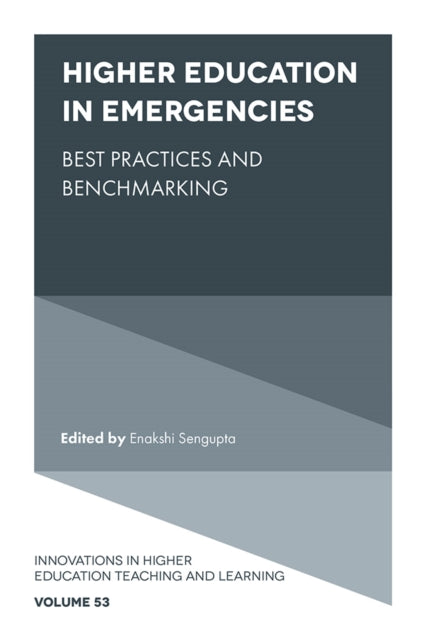
Higher Education in Emergencies: Best Practices and Benchmarking
Higher Education in Emergencies: Best Practices and Benchmarking
💎 Earn 236 Points (£2.36) on this item.
YOU SAVE £32.80
- Condition: Brand new
- UK Delivery times: Usually arrives within 2 - 3 working days
- UK Shipping: Fee starts at £3.89. Subject to product weight & dimension
Bulk ordering. Want 15 or more copies? Get a personalised quote and bigger discounts. Learn more about bulk orders.
Couldn't load pickup availability
- More about Higher Education in Emergencies: Best Practices and Benchmarking
Education provides stability, structure, and hope for the future, supporting conflict resolution, peacebuilding efforts, and scientific research. Universities can apply their experiences from the COVID-19 pandemic to other emergency situations by designing curriculums that focus on resilience and equipping staff with the capability to navigate future scenarios. Higher Education in Emergencies: Best Practices and Benchmarking provides a critical toolkit for preparing universities for the next pandemic, earthquake, or civil conflict.
Format: Hardback
Length: 180 pages
Publication date: 11 December 2023
Publisher: Emerald Publishing Limited
The world we live in today is a complex and challenging place, characterized by numerous perils and pandemics that threaten our safety and well-being. In such a context, education emerges as a powerful tool for shaping a brighter future, offering structure, stability, and hope. It plays a crucial role in supporting conflict resolution, peacebuilding efforts, and scientific research that can help prevent and mitigate both natural and manmade disasters.
At the heart of education's value lies its ability to provide a foundation for personal and societal growth. It equips individuals with the knowledge, skills, and values necessary to navigate the complexities of the world and contribute to positive change. By fostering critical thinking, creativity, and empathy, education enables people to make informed decisions, solve problems, and build strong communities.
In the face of the COVID-19 pandemic, universities have demonstrated their resilience and adaptability by adapting to new teaching and learning formats, providing support to students and staff, and engaging in innovative research to address the challenges posed by the crisis. These experiences offer valuable insights into how universities can apply their expertise to other emergency situations.
One key aspect of ensuring accessibility to education under any circumstances is the development of flexible and adaptable learning environments. Universities can leverage technology, online platforms, and distance learning to reach students who may be unable to attend physical classes due to various factors such as geographical restrictions, health conditions, or emergencies. This approach not only ensures continuity of learning but also promotes inclusivity and equity, allowing all individuals to access high-quality education regardless of their background or circumstances.
Quality is another critical aspect of education in emergencies. While it is essential to provide access to education, it is equally important to maintain the standards and quality of education. Universities can ensure the quality of their programs by implementing rigorous assessment processes, hiring qualified faculty, and providing resources and support to students to ensure their success. This includes providing access to academic materials, counseling services, and other support services that may be necessary to address the unique challenges faced by students during emergencies.
In addition to ensuring accessibility and quality, universities can also play a crucial role in promoting resilience and preparedness for future emergencies. This involves developing comprehensive emergency management plans, conducting regular drills and training exercises, and building partnerships with local communities and organizations to enhance response efforts. By fostering a culture of preparedness and response, universities can help ensure the safety and well-being of their students, staff, and communities.
Higher Education in Emergencies: Best Practices and Benchmarking, a collaborative publication by Qatar, Kosovo, Turkey, Austria, Israel, Sweden, and the United States, provides a comprehensive toolkit for preparing universities for the next pandemic, earthquake, or civil conflict. The book challenges educators to design curriculums that focus on resilience and equip staff with the capability to navigate future scenarios. It advocates for programs that address the needs of individual campuses and emphasizes effective methods for evaluating and assessing emergency preparedness.
The chapters in the book showcase exemplary responses from universities that have set a precedent for institutional adaptability in the face of emergencies. These responses include the development of flexible learning environments, the implementation of innovative teaching and learning strategies, and the establishment of support services to address the unique challenges faced by students and staff. By highlighting these best practices, the book provides valuable insights and lessons for universities seeking to enhance their emergency preparedness and response capabilities.
In conclusion, the world we live in today is fraught with perils and pandemics, but education offers a powerful tool for shaping a brighter future. By providing structure, stability, and hope, education supports conflict resolution, peacebuilding efforts, and scientific research that can help prevent and mitigate both natural and manmade disasters. In the face of the COVID-19 pandemic, universities have demonstrated their resilience and adaptability by adapting to new teaching and learning formats, providing support to students and staff, and engaging in innovative research to address the challenges posed by the crisis. By applying their experiences and expertise to other emergency situations, universities can ensure accessibility to education under any circumstances, maintain the quality of their programs, and promote resilience and preparedness for future emergencies. Higher Education in Emergencies: Best Practices and Benchmarking provides a critical toolkit for preparing universities for the next pandemic, earthquake, or civil conflict, and showcases exemplary responses that have set a precedent for institutional adaptability.
Weight: 320g
Dimension: 159 x 237 x 9 (mm)
ISBN-13: 9781801173797
UK and International shipping information
UK and International shipping information
We deliver throughout the United Kingdom and to 128 countries and territories worldwide, including the United States, Australia, Canada, Germany, Spain and France.