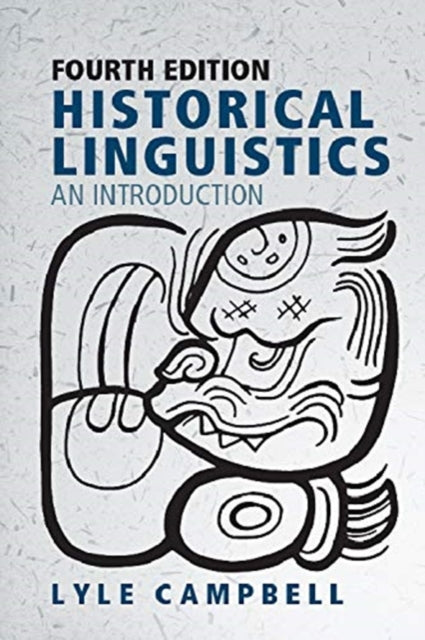
Lyle Campbell
Historical Linguistics: An Introduction
Historical Linguistics: An Introduction
YOU SAVE £7.77
- Condition: Brand new
- UK Delivery times: Usually arrives within 2 - 3 working days
- UK Shipping: Fee starts at £3.89. Subject to product weight & dimension
Bulk ordering. Want 15 or more copies? Get a personalised quote and bigger discounts. Learn more about bulk orders.
Couldn't load pickup availability
- More about Historical Linguistics: An Introduction
Lyle Campbell's fourth edition of Historical Linguistics is an accessible and comprehensive introduction to the field, with expert guidance and engaging style.
Format: Paperback / softback
Length: 512 pages
Publication date: 31 January 2021
Publisher: Edinburgh University Press
Lyle Campbell's Introduction to Historical Linguistics is a comprehensive and accessible guide that provides students with a solid foundation in the field. The fourth edition of this text has been revised and updated to include a lucid and engaging style, expert guidance, and comprehensive coverage that makes it an ideal resource for those embarking on their journey into historical linguistics.
The book begins with an introduction to the history and development of historical linguistics, providing students with a historical context for the field. It then delves into the basic principles of language, including sound, grammar, and vocabulary, and how these elements change over time. Campbell's clear and concise explanations make these concepts accessible to students with varying levels of linguistic expertise.
One of the key strengths of this text is its extensive coverage of language families and historical linguistics. Campbell provides detailed accounts of the evolution of different language families, including Indo-European, Afroasiatic, Austronesian, and Sino-Tibetan, and how these languages have influenced each other over time. He also discusses the methods used by historical linguists to study language change, such as comparative linguistics, dialectology, and genetic linguistics.
In addition to its theoretical content, Introduction to Historical Linguistics also includes numerous examples and exercises that help students apply the concepts they have learned. These examples range from historical texts and linguistic data to modern languages and language families, and they provide students with a hands-on experience of applying historical linguistic principles to real-world situations.
Another notable feature of this text is its accessibility. Campbell's writing style is clear and concise, making it easy for students to understand and engage with the material. He also includes numerous visual aids, such as diagrams and tables, to help illustrate complex linguistic concepts and relationships.
Overall, Lyle Campbell's Introduction to Historical Linguistics is a highly recommended resource for students interested in learning more about the field. Its comprehensive coverage, engaging style, and practical examples make it an ideal introduction to historical linguistics for students coming to the field for the first time. Whether you are a linguistics student, a historian, or simply someone interested in language and culture, this text will provide you with a valuable understanding of the past and present of language.
Lyle Campbell's Introduction to Historical Linguistics is a comprehensive and accessible guide that provides students with a solid foundation in the field. The fourth edition of this text has been revised and updated to include a lucid and engaging style, expert guidance, and comprehensive coverage that makes it an ideal resource for those embarking on their journey into historical linguistics.
The book begins with an introduction to the history and development of historical linguistics, providing students with a historical context for the field. It then delves into the basic principles of language, including sound, grammar, and vocabulary, and how these elements change over time. Campbell's clear and concise explanations make these concepts accessible to students with varying levels of linguistic expertise.
One of the key strengths of this text is its extensive coverage of language families and historical linguistics. Campbell provides detailed accounts of the evolution of different language families, including Indo-European, Afroasiatic, Austronesian, and Sino-Tibetan, and how these languages have influenced each other over time. He also discusses the methods used by historical linguists to study language change, such as comparative linguistics, dialectology, and genetic linguistics.
In addition to its theoretical content, Introduction to Historical Linguistics also includes numerous examples and exercises that help students apply the concepts they have learned. These examples range from historical texts and linguistic data to modern languages and language families, and they provide students with a hands-on experience of applying historical linguistic principles to real-world situations.
Another notable feature of this text is its accessibility. Campbell's writing style is clear and concise, making it easy for students to understand and engage with the material. He also includes numerous visual aids, such as diagrams and tables, to help illustrate complex linguistic concepts and relationships.
Overall, Lyle Campbell's Introduction to Historical Linguistics is a highly recommended resource for students interested in learning more about the field. Its comprehensive coverage, engaging style, and practical examples make it an ideal introduction to historical linguistics for students coming to the field for the first time. Whether you are a linguistics student, a historian, or simply someone interested in language and culture, this text will provide you with a valuable understanding of the past and present of language.
Weight: 862g
Dimension: 171 x 242 x 33 (mm)
ISBN-13: 9781474463126
Edition number: 4 ed
UK and International shipping information
UK and International shipping information
We deliver throughout the United Kingdom and to 128 countries and territories worldwide, including the United States, Australia, Canada, Germany, Spain and France.