Shulph Ink
Home Screens: Public Housing in Global Film & Television
Home Screens: Public Housing in Global Film & Television
We can order this item for you. Delivery usually takes about 4 to 6 weeks.
This item is not held in our immediate stock. We will order it for you after checkout.
Estimated delivery: About 4 to 6 weeks
- Condition: Brand new
- UK Delivery times: Usually arrives within 2 - 3 working days
- UK Shipping: Fee starts at £3.89. Subject to product weight & dimension
Bulk ordering. Want 15 or more copies? Get a personalised quote and bigger discounts. Learn more about bulk orders.
Couldn't load pickup availability
- More about Home Screens: Public Housing in Global Film & Television
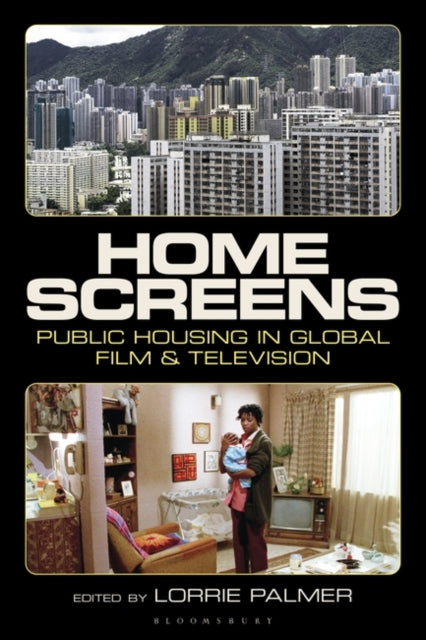
Film and television makers around the world depict public housing as a backdrop for drama, horror, social critique, rebellion, violence, artistic creativity, and explorations of race relations and political intrigue, shaping perceptions of these ubiquitous, often-stigmatized urban locations. Home Screens examines international film and media texts to explore documentary and fictional portrayals of the architecture of public housing and the communities that inhabit it.
Format: Hardback
Length: 296 pages
Publication date: 14 December 2023
Publisher: Bloomsbury Publishing PLC
Film and television makers around the world have long been drawn to public housing as a backdrop for their dramas, horrors, social critiques, rebellions, violence, artistic creativity, explorations of race relations, and political intrigue. Home Screens explores the ways in which socialized housing projects are represented on screen, bringing together a diverse group of interdisciplinary scholars to examine documentary and fictional portrayals of the architecture of public housing and the communities that inhabit it. The volume spans from the 1950s to the present, examining international film and media texts such as Die Architekten (1990), Swagger (2016), Cooley High (1975), Mee-Pok Man (1995), Treme (2010–2013), Mamma Roma (1962), The Pruitt-Igoe Myth (2011), and Below the Lion Rock (1972–1976). Essays within this book consider public and private attitudes toward socialized housing, explaining how onscreen representations shape perceptions of these ubiquitous, often-stigmatized urban locations.
One of the key themes explored in Home Screens is the impact of socialized housing on individuals and communities. Socialized housing projects are often seen as symbols of poverty, crime, and social exclusion, and they can have a negative impact on the mental and physical health of residents. However, Home Screens also highlights the positive aspects of socialized housing, such as its ability to provide affordable housing to low-income families and individuals.
One of the ways in which socialized housing is depicted on screen is through the use of documentary and fictional portrayals. Documentary films such as Die Architekten (1990) and Swagger (2016) provide a detailed look at the architecture of public housing projects and the communities that inhabit them. These films often focus on the struggles of residents to maintain their homes and their communities, and they highlight the social and economic challenges that they face.
Fictional portrayals of public housing, on the other hand, can be more complex and nuanced. Films such as Cooley High (1975), Mee-Pok Man (1995), Treme (2010–2013), Mamma Roma (1962), The Pruitt-Igoe Myth (2011), and Below the Lion Rock (1972–1976) explore the lives of residents in public housing projects and the social and political issues that they face. These films often depict the struggles of residents to find employment, education, and social support, and they highlight the ways in which public housing can be a catalyst for change.
One of the challenges that film and television makers face when depicting public housing is the need to balance the negative and positive aspects of the experience. Many films and television shows tend to focus on the negative aspects of public housing, such as the violence and crime that can occur in these communities. However, Home Screens argues that it is important to also depict the positive aspects of public housing, such as the sense of community and the opportunities that it provides for residents.
Another challenge that film and television makers face when depicting public housing is the need to avoid stereotypes. Many films and television shows tend to portray public housing residents as poor, uneducated, and criminal, and this can be harmful to the community. Home Screens argues that it is important to portray public housing residents as complex and diverse individuals with a range of experiences and backgrounds.
In addition to the depiction of public housing, Home Screens also explores the impact of socialized housing on the broader society. Socialized housing projects can have a significant impact on the economy, and they can also contribute to the development of urban communities. However, socialized housing can also be a source of tension and conflict, and it can be difficult to manage.
One of the ways in which socialized housing can be managed is through the use of community development programs. Community development programs can provide residents with access to education, employment, and social support, and they can help to improve the quality of life in public housing projects. However, community development programs can be difficult to implement, and they can be subject to political and economic pressures.
Another way in which socialized housing can be managed is through the use of public policy. Public policy can provide funding for socialized housing projects, and it can also regulate the behavior of residents. However, public policy can be difficult to implement, and it can be subject to political and economic pressures.
In conclusion, film and television makers around the world have long been drawn to public housing as a backdrop for their dramas, horrors, social critiques, rebellions, violence, artistic creativity, explorations of race relations, and political intrigue. Home Screens explores the ways in which socialized housing projects are represented on screen, bringing together a diverse group of interdisciplinary scholars to examine documentary and fictional portrayals of the architecture of public housing and the communities that inhabit it. The volume highlights the positive and negative aspects of socialized housing, and it argues that it is important to balance the negative and positive aspects of the experience. By doing so, film and television makers can help to promote a more inclusive and diverse society.
Dimension: 234 x 156 (mm)
ISBN-13: 9781350253957
UK and International shipping information
UK and International shipping information
We deliver throughout the United Kingdom and to 128 countries and territories worldwide, including the United States, Australia, Canada, Germany, Spain and France.