Gordon Barnes
How Do You Know?: A Dialogue
How Do You Know?: A Dialogue
YOU SAVE £3.03
- Condition: Brand new
- UK Delivery times: Usually arrives within 2 - 3 working days
- UK Shipping: Fee starts at £3.89. Subject to product weight & dimension
Bulk ordering. Want 15 or more copies? Get a personalised quote and bigger discounts. Learn more about bulk orders.
Couldn't load pickup availability
- More about How Do You Know?: A Dialogue
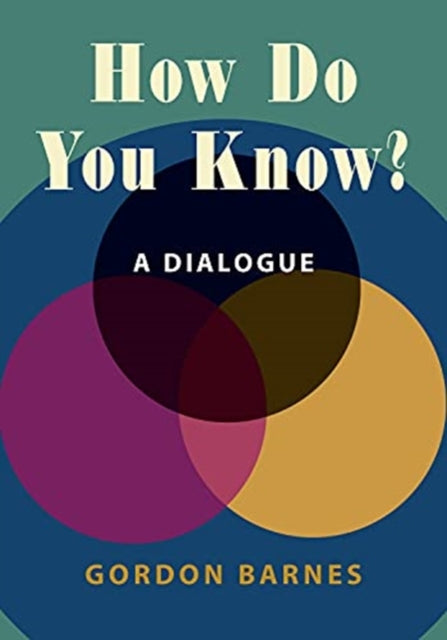
How Do You Know? is a book that explores problems of knowledge that arise in everyday life, such as how to know if someone is an expert, how to approach the testimony of other people, and whether the internet makes us better knowers. It approaches these issues through the lens of social epistemology and via the preeminently social genre of philosophical dialogue, equipping readers with tools and concepts to see more clearly for themselves.
Format: Paperback / softback
Length: 144 pages
Publication date: 06 October 2021
Publisher: Hackett Publishing Co, Inc
How can you know that another person is an expert if you are not an expert yourself? If experts are politically biased, should you still trust their testimony? How should you approach the testimony of others in general? Is it always irrational to believe in a conspiracy theory? Suppose someone who is just as intelligent and well-informed as you disagree with you about something. How should this affect your belief? Can we have knowledge of what is right and wrong?
How Do You Know? explores these problems of knowledge that arise in everyday life. The book employs the preeminently social genre of philosophical dialogue to approach these issues through the lens of social epistemology. Its characters think and speak like real people in the world today, discussing and debating issues that are current, practically relevant, and even controversial. The book equips readers with tools and concepts to see more clearly for themselves.
One of the central questions the book explores is how can you know that another person is an expert if you are not an expert yourself? The characters discuss various approaches to this problem, including relying on the reputation and expertise of others, seeking out multiple sources of information, and engaging in critical thinking and evaluation. They also consider the role of expertise in politics and the media, where biases and political agendas can influence the interpretation of information.
Another issue the book addresses is the question of whether experts should be trusted even if they are politically biased. The characters argue that while it is important to be aware of biases, it is not necessarily fair to dismiss the testimony of experts altogether. They suggest that instead of trusting experts blindly, we should be critical of their claims, seek out alternative perspectives, and engage in dialogue and debate to better understand the issues.
The book also explores the question of how we should approach the testimony of others in general. The characters discuss the idea of treating all testimony as innocent until proven guilty, as well as the idea of considering the context and background of the testimony. They also consider the role of personal experience and intuition in forming our beliefs and the importance of being open to new ideas and perspectives.
The book also examines the role of the internet in shaping our knowledge and understanding of the world. While the internet has provided us with access to a vast amount of information, it has also been a source of misinformation and conspiracy theories. The characters discuss the challenges of navigating the internet and identifying reliable sources of information, as well as the importance of being critical of the information we consume.
Finally, the book explores the question of whether it is always irrational to believe in a conspiracy theory. The characters discuss the nature of conspiracy theories and the reasons why people may believe in them. They also consider the role of evidence and reason in forming our beliefs and the importance of being open to the possibility of being wrong.
Overall, How Do You Know? is a thought-provoking and engaging book that explores important questions of knowledge and understanding. Its characters think and speak like real people in the world today, discussing and debating issues that are current, practically relevant, and even controversial. The book equips readers with tools and concepts to see more clearly for themselves and encourages them to be critical thinkers and engaged citizens.
Weight: 144g
Dimension: 140 x 216 x 10 (mm)
ISBN-13: 9781624669910
UK and International shipping information
UK and International shipping information
We deliver throughout the United Kingdom and to 128 countries and territories worldwide, including the United States, Australia, Canada, Germany, Spain and France.