ManishaNayak
I'm A Future Botanist!
I'm A Future Botanist!
YOU SAVE £2.21
- Condition: Brand new
- UK Delivery times: Usually arrives within 2 - 3 working days
- UK Shipping: Fee starts at £3.89. Subject to product weight & dimension
Bulk ordering. Want 15 or more copies? Get a personalised quote and bigger discounts. Learn more about bulk orders.
Couldn't load pickup availability
- More about I'm A Future Botanist!
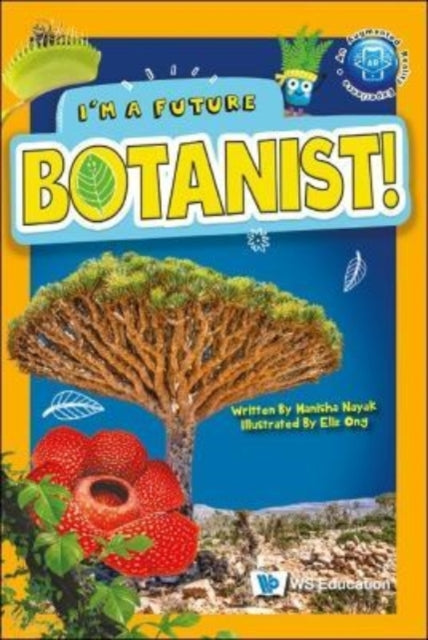
The I'm a Future Scientist! series is based on the Science Centre Singapore's Young Scientist badge programme.
It aims to spark sustained interest in scientific fields by delivering primary-school-level Science learning points in an engaging and relatable way.
The books feature educational articles, fun cartoons, hands-on activities, photographs, and illustrations, and augmented reality (AR) elements to help bring Science alive for children.
Additionally, readers can earn points for the Young Scientist Badge programme by using the links inside.
Format: Paperback / softback
Length: 56 pages
Publication date: 17 May 2022
Publisher: World Scientific Publishing Co Pte Ltd
Based on the Science Centre Singapore s longstanding and highly popular Young Scientist badge programme.
This exciting series of full-colour books for 6-12 year olds will spark sustained interest in scientific fields, such as botany, zoology, marine biology, conservation and the environment, astronomy, and many more, with delivering primary-school-level Science learning points in an engaging and relatable way!
Through clearly written educational articles, fun cartoons, suggested hands-on activities, as well as full-colour photographs and illustrations, these books are the perfect companions for budding scientists to delve further into a wide range of fields of Science.
In addition, Augmented Reality (AR) elements will also help to bring Science alive for children, helping them to retain the information provided better, and inspiring better learning!
And, as a bonus, earn points for the Young Scientist Badge programme from Science Centre Singapore, using the links inside!
What superpower do plants have that we don't?
Plants have a wide range of superpowers that we don't. One of the most impressive is their ability to photosynthesize, which converts sunlight into energy. This energy is used to power the plant's growth and metabolism, and it also produces oxygen as a byproduct.
Plants are also incredibly adaptable and can survive in a wide range of environments, from deserts to rainforests. They have developed a variety of adaptations, such as deep root systems, to help them access water and nutrients, and they can also adjust their growth and metabolism to cope with changing conditions.
Another superpower of plants is their ability to communicate with each other. Plants can send signals to each other through chemical messengers, such as hormones, to help them coordinate their growth and response to environmental stresses. This communication system is also used to attract pollinators, such as bees and butterflies, which help to fertilize the plants.
Plants also have a powerful immune system that helps them to protect themselves from pests and diseases. They can produce chemicals that are toxic to insects and other organisms, and they can also recruit immune cells to help them fight off infections.
Finally, plants have a significant impact on the environment. They help to regulate the climate by absorbing carbon dioxide from the atmosphere and releasing oxygen, and they also provide habitat for a wide range of animals and plants. They also play a crucial role in the carbon cycle, by converting carbon dioxide into glucose and storing it in their tissues.
Which flower smells like rotting meat and why?
One of the most unusual and distinctive flowers in the world is the corpse flower, also known as the titan arum. This plant is native to the rainforests of Sumatra and Borneo, and it is known for its foul smell, which is often described as smelling like rotting meat.
The corpse flower produces a large, spherical flower that can reach up to 3 feet in diameter. The flower is white or pink in color, and it has a thick, fleshy stem that can grow up to 10 feet tall. The smell of the flower is produced by a series of chemical compounds that are released when the flower blooms.
One of the main compounds responsible for the smell of the corpse flower is called trimethylamine oxide, which is also found in fish and other seafood. When the flower blooms, the stem of the plant swells and the flower opens, releasing a large amount of trimethylamine oxide into the air. This compound is highly volatile and can be smelled from a distance of several miles.
The smell of the corpse flower is not only unpleasant, but it is also highly toxic. The plant contains a number of other compounds that are harmful to humans, including hydrogen sulfide and potassium cyanide. These compounds can cause respiratory distress, vomiting, and even death if they are inhaled or ingested.
Despite its toxic properties, the corpse flower is a popular plant among botanists and gardeners. It is a unique and fascinating plant that has a lot to offer in terms of its biology and ecology. The flower is also a symbol of resilience and adaptation, as it can survive in harsh and challenging environments.
Why do some plants eat insects?
Plants have a variety of adaptations that allow them to survive in different environments. One of these adaptations is the ability to eat insects.
There are several reasons why plants may eat insects. One of the most common is that insects are a source of nutrients for the plant. Insects are high in protein, carbohydrates, and other essential nutrients that plants need to grow and thrive. By eating insects, plants can obtain these nutrients in a more efficient way than by consuming other sources of food, such as soil or water.
Insects also play a role in pollination, which is the process by which plants reproduce. Many plants rely on insects to transfer pollen from one flower to another, allowing them to reproduce and create new seeds. By eating insects, plants can help to ensure that pollination occurs and that their offspring are able to grow and thrive.
In addition to these reasons, some plants may also eat insects as a form of defense. Insects can be a pest for plants, and by eating them, plants can reduce the number of insects that are able to damage their tissues and reduce the risk of disease.
There are several different types of plants that eat insects. Some plants, such as carnivorous plants, have specialized structures that allow them to capture and digest insects. These plants typically have deep, narrow leaves that are covered in a sticky substance that attracts insects, and they have a digestive system that is designed to break down the insects' tissues.
Other plants, such as pitcher plants, have a pitcher-shaped structure that contains a liquid that is used to trap and digest insects. These plants typically have a deep root system that allows them to access water and nutrients, and they rely on insects to provide them with these resources.
Despite the benefits of eating insects, there are also some risks associated with this behavior. Insects can carry diseases and parasites that can be harmful to plants, and some plants may be vulnerable to predation by insects if they are not careful.
In conclusion, plants have a variety of adaptations that allow them to eat insects. These adaptations include the ability to obtain nutrients, pollinate, and defend themselves from pests and diseases. While there are some risks associated with this behavior, it is a crucial part of the plant's survival and ecology.
Why is Socotra island called the most alien-looking place on Earth?
Socotra island is a unique and fascinating place that is often referred to as the most alien-looking place on Earth. Located in the Arabian Sea, off the coast of Yemen, Socotra is known for its unique flora and fauna, which includes a variety of plants and animals that are not found anywhere else in the world.
One of the most distinctive features of Socotra is its flora. The island is home to a variety of plant species that are not found anywhere else in the world, including the dragon's blood tree, which is a species of bloodwood that is unique to Socotra. The tree is known for its distinctive red sap, which is used in traditional medicine and has a sweet and spicy flavor.
Another unique plant species found on Socotra is the Socotran frankincense, which is a species of frankincense that is unique to the island. The plant is known for its sweet and woody fragrance, which is used in a variety of products, including perfumes and incense.
In addition to its unique flora, Socotra is also home to a variety of unique fauna. The island is home to a variety of bird species, including the Socotra thrush, which is a species of bird that is unique to Socotra and is known for its distinctive call. The island is also home to a variety of reptiles, including the Socotra chameleon, which is a species of chameleon that is unique to Socotra and is known for its ability to change color.
One of the reasons why Socotra is often referred to as the most alien-looking place on Earth is its unique topography. The island is home to a variety of mountains, valleys, and deserts, which create a landscape that is unlike anything else in the world. The mountains are covered in dense forests, while the valleys are home to a variety of unique plant species.
Another reason why Socotra is often referred to as the most alien-looking place on Earth is its isolation. The island is located in the Arabian Sea, off the coast of Yemen, and is not easily accessible to tourists. This isolation has allowed the island to retain its unique flora and fauna, which has been protected from the effects of human activity.
Despite its unique features, Socotra is a fragile ecosystem that is threatened by a variety of threats, including deforestation, climate change, and overfishing. The island is home to a variety of endangered species, including the Socotra dragon, which is a species of lizard that is unique to Socotra and is considered to be one of the world's most endangered reptiles.
In conclusion, Socotra island is a unique and fascinating place that is often referred to as the most alien-looking place on Earth. The island is known for its unique flora and fauna, which includes a variety of plants and animals that are not found anywhere else in the world. The island's unique topography and isolation have allowed it to retain its unique features, but it is a fragile ecosystem that is threatened by a variety of threats.
Weight: 172g
Dimension: 152 x 230 x 10 (mm)
ISBN-13: 9789811252174
UK and International shipping information
UK and International shipping information
We deliver throughout the United Kingdom and to 128 countries and territories worldwide, including the United States, Australia, Canada, Germany, Spain and France.