ManishaNayak
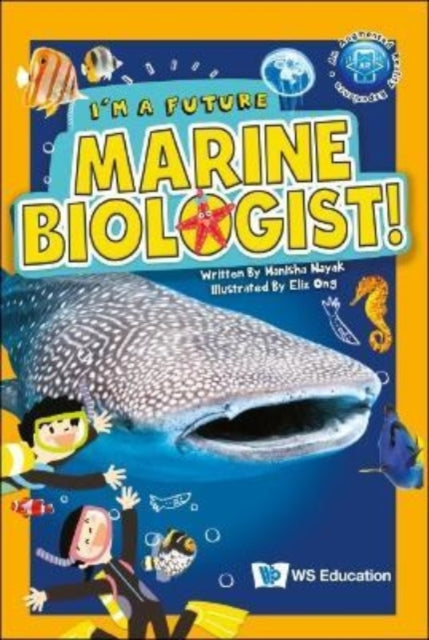
I'm A Future Marine Biologist!
I'm A Future Marine Biologist!
We can order this item for you. Delivery usually takes about 4 to 6 weeks.
This item is not held in our immediate stock. We will order it for you after checkout.
Estimated delivery: About 4 to 6 weeks
YOU SAVE £3.16
- Condition: Brand new
- UK Delivery times: Usually arrives within 2 - 3 working days
- UK Shipping: Fee starts at £3.89. Subject to product weight & dimension
Bulk ordering. Want 15 or more copies? Get a personalised quote and bigger discounts. Learn more about bulk orders.
Couldn't load pickup availability
- More about I'm A Future Marine Biologist!
The I'm a Future Scientist! series is based on the Science Centre Singapore's Young Scientist badge programme.
It is designed to spark sustained interest in scientific fields, such as botany, zoology, marine biology, conservation, and the environment, through engaging and relatable content.
The books feature educational articles, fun cartoons, hands-on activities, full-color photographs, and illustrations, and augmented reality (AR) elements to enhance learning.
Additionally, readers can earn points for the Young Scientist Badge programme by using the links inside the books.
Format: Hardback
Length: 56 pages
Publication date: 25 October 2022
Publisher: World Scientific Publishing Co Pte Ltd
Based on the Science Centre Singapore s highly popular Young Scientist badge programme.
Written in an engaging and relatable way for 6-12 year olds.
Delivers primary-school-level Science learning points in an exciting and engaging manner.
Features educational articles, fun cartoons, suggested hands-on activities, full-colour photographs, and illustrations.
Includes Augmented Reality (AR) elements to enhance learning and retention.
Earn points for the Young Scientist Badge programme from Science Centre Singapore.
Are corals plants or animals?
Coral reefs are colonies of tiny organisms called coral polyps. These polyps are actually animals, not plants. They belong to the phylum Cnidaria, which includes jellyfish, sea anemones, and sea turtles. Coral polyps are small and soft, and they live in colonies together. They work together to build their reef structures, which provide a home and food for many other marine organisms.
Coral reefs are important ecosystems that provide habitat for a wide range of marine species. They are also important for humans, as they provide food, tourism, and coastal protection. However, coral reefs are threatened by climate change, pollution, and overfishing, which can lead to their destruction.
Coral polyps are fascinating creatures that play an important role in marine ecosystems. They are not plants, but animals that work together to build complex reef structures. Coral reefs are important ecosystems that provide habitat for many marine species and are threatened by climate change, pollution, and overfishing.
Can sea stars regrow their limbs?
Sea stars, also known as starfish, are marine invertebrates that belong to the phylum Echinodermata. They are known for their unique ability to regenerate lost limbs. When a sea star loses a limb, it can regrow a new one over time. The process of limb regeneration is slow and can take several months or even years, depending on the species and the extent of the damage.
Sea stars have a complex circulatory system that allows them to transport nutrients and oxygen to their limbs. When a limb is lost, the sea star's central nervous system sends signals to the remaining limbs to grow and replace the lost one. The new limb is formed from cells that are derived from the sea star's stem cells.
Sea stars are important predators in marine ecosystems, and they play a critical role in maintaining the balance of marine populations. They are also popular with marine enthusiasts and are often kept as pets. However, sea stars are threatened by habitat loss, pollution, and overfishing, which can lead to their decline.
Sea stars are fascinating creatures that have the ability to regenerate lost limbs. The process of limb regeneration is slow and can take several months or even years, depending on the species and the extent of the damage. Sea stars are important predators in marine ecosystems and are popular with marine enthusiasts. However, they are threatened by habitat loss, pollution, and overfishing.
Does an octopus have blue blood?
The octopus is a fascinating marine invertebrate that belongs to the phylum Cephalopoda. It is known for its intelligence, adaptability, and unique physical characteristics. One of the most intriguing features of the octopus is its blood, which is blue.
The blue color of octopus blood is due to the presence of a protein called hemocyanin. Hemocyanin is a copper-based protein that binds oxygen and carries it throughout the body. In contrast, the blood of most other animals is red, which is due to the presence of hemoglobin, which binds oxygen and carries it in the blood cells.
Octopuses have a unique circulatory system that allows them to efficiently distribute oxygen to their body tissues. They have three hearts, which pump blood through their body in a circular manner. This circulatory system allows them to quickly move their limbs and swim through the water.
Octopuses are important predators in marine ecosystems, and they play a critical role in maintaining the balance of marine populations. They are also popular with marine enthusiasts and are often kept as pets. However, octopuses are threatened by habitat loss, pollution, and overfishing, which can lead to their decline.
Octopuses have blue blood due to the presence of hemocyanin, a copper-based protein that binds oxygen and carries it throughout the body. They have a unique circulatory system that allows them to efficiently distribute oxygen to their body tissues and are important predators in marine ecosystems. However, they are threatened by habitat loss, pollution, and overfishing.
Why does a pufferfish puff up?
The pufferfish, also known as the blowfish, is a fascinating marine invertebrate that belongs to the phylum Chordata. It is known for its unique ability to inflate and deflate its body to protect itself from predators. When threatened, the pufferfish inflates its body by filling its internal organs with water. This makes it look larger and more intimidating to potential predators, and it can also prevent it from being eaten.
The pufferfish has a complex circulatory system that allows it to quickly fill its internal organs with water. It has a heart that pumps blood through its body, and it also has a network of blood vessels that distribute blood to its organs. When the pufferfish senses danger, it constricts its blood vessels, which reduces the flow of blood to its organs. This causes the pufferfish to inflate its body by filling its internal organs with water.
The pufferfish is important in marine ecosystems as it plays a critical role in maintaining the balance of marine populations. It is a predator that feeds on smaller fish and invertebrates, and it helps to control the population of these organisms. However, the pufferfish is also threatened by habitat loss, pollution, and overfishing, which can lead to its decline.
The pufferfish is a fascinating marine invertebrate that has a unique ability to inflate and deflate its body to protect itself from predators. It has a complex circulatory system that allows it to quickly fill its internal organs with water, and it is important in marine ecosystems as it plays a critical role in maintaining the balance of marine populations. However, the pufferfish is also threatened by habitat loss, pollution, and overfishing.
The I'm a Future Scientist! series is an exciting series of full-colour books for 6-12 year olds that will spark sustained interest in scientific fields, such as botany, zoology, marine biology, conservation, and the environment. Through clearly written educational articles, fun cartoons, suggested hands-on activities, as well as full-colour photographs and illustrations, these books are the perfect companions for budding scientists to delve further into a wide range of fields of Science. In addition, Augmented Reality (AR) elements will also help to bring Science alive for children, helping them to retain the information provided better, and inspiring better learning! And, as a bonus, earn points for the Young Scientist Badge programme from Science Centre Singapore, using the links inside!
The series is based on the Science Centre Singapore's longstanding and highly popular Young Scientist badge programme, which has been running for over 20 years. The Young Scientist badge programme is designed to inspire and educate children about Science, and it has been successful in doing so. The series is written in an engaging and relatable way.
The series is written in an engaging and relatable way for 6-12 year olds, and it delivers primary-school-level Science learning points in an exciting and engaging manner. The books feature educational articles, fun cartoons, suggested hands-on activities, full-colour photographs, and illustrations, and they include Augmented Reality (AR) elements to enhance learning and retention. In addition, the series includes links to the Young Scientist Badge programme from Science Centre Singapore, which allows children to earn points for completing activities and challenges in the books.
The series is based on the Science Centre Singapore's longstanding and highly popular Young Scientist badge programme, which has been running for over 20 years. The Young Scientist badge programme is designed to inspire and educate children about Science, and it has been successful in doing so. The series is written in an engaging and relatable way for 6-12 year olds, and it delivers primary-school-level Science learning points in an exciting and engaging manner. The books feature educational articles, fun cartoons, suggested hands-on activities, full-colour photographs, and illustrations, and they include Augmented Reality (AR) elements to enhance learning and retention. In addition, the series includes links to the Young Scientist Badge programme from Science Centre Singapore, which allows children to earn points for completing activities and challenges in the books.
The series is based on the Science Centre Singapore's longstanding and highly popular Young Scientist badge programme, which has been running for over 20 years. The Young Scientist badge programme is designed to inspire and educate children about Science, and it has been successful in doing so. The series is written in an engaging and relatable way for 6-12 year olds, and it delivers primary-school-level Science learning points in an exciting and engaging manner. The books feature educational articles, fun cartoons, suggested hands-on activities, full-colour photographs, and illustrations, and they include Augmented Reality (AR) elements to enhance learning and retention. In addition, the series includes links to the Young Scientist Badge programme from Science Centre Singapore, which allows children to earn points for completing activities and challenges in the books.
The series is based on the Science Centre Singapore's longstanding and highly popular Young Scientist badge programme, which has been running for over 20 years. The Young Scientist badge programme is designed to inspire and educate children about Science, and it has been successful in doing so. The series is written in an engaging and relatable way for 6-12 year olds, and it delivers primary-school-level Science learning points in an exciting and engaging manner. The books feature educational articles, fun cartoons, suggested hands-on activities, full-colour photographs, and illustrations, and they include Augmented Reality (AR) elements to enhance learning and retention. In addition, the series includes links to the Young Scientist Badge programme from Science Centre Singapore, which allows children to earn points for completing activities and challenges in the books.
ISBN-13: 9789811252075
UK and International shipping information
UK and International shipping information
We deliver throughout the United Kingdom and to 128 countries and territories worldwide, including the United States, Australia, Canada, Germany, Spain and France.