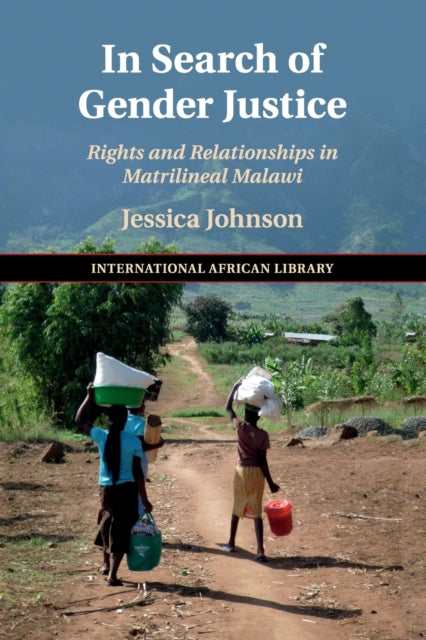
JessicaJohnson
In Search of Gender Justice: Rights and Relationships in Matrilineal Malawi
In Search of Gender Justice: Rights and Relationships in Matrilineal Malawi
We can order this item for you. Delivery usually takes about 4 to 6 weeks.
This item is not held in our immediate stock. We will order it for you after checkout.
Estimated delivery: About 4 to 6 weeks
YOU SAVE £2.99
- Condition: Brand new
- UK Delivery times: Usually arrives within 2 - 3 working days
- UK Shipping: Fee starts at £3.89. Subject to product weight & dimension
Bulk ordering. Want 15 or more copies? Get a personalised quote and bigger discounts. Learn more about bulk orders.
Couldn't load pickup availability
- More about In Search of Gender Justice: Rights and Relationships in Matrilineal Malawi
This book explores how ordinary Malawian citizens navigate disputes and achieve successful gender and marital relations, highlighting the intersections of law, custom, rights, and justice.
Format: Paperback / softback
Length: 216 pages
Publication date: 12 November 2020
Publisher: Cambridge University Press
Gender justice in matrilineal Malawi is a complex and multifaceted issue that has been influenced by a range of factors, including cultural traditions, social norms, and political systems. In this essay, we will explore some of the key aspects of gender justice in matrilineal Malawi and consider how they can be addressed to promote greater equality and empowerment for women.
One of the most significant aspects of gender justice in matrilineal Malawi is the role of women in the family and society. Women in matrilineal societies are often responsible for caring for their families and households, while men are often responsible for providing for the family. This can lead to unequal power dynamics and discrimination against women, particularly in terms of access to education, healthcare, and economic opportunities.
To address this issue, there are several steps that can be taken. One of the most important is to promote gender equality in education and training. This can include providing access to education for girls and women, as well as promoting gender-sensitive teaching and learning materials. Additionally, women can be empowered through vocational training and entrepreneurship programs to gain skills and knowledge that can help them to become self-sufficient and contribute to the economy.
Another important aspect of gender justice in matrilineal Malawi is the issue of reproductive rights and health. Women in matrilineal societies often face limited access to contraception and reproductive health services, which can lead to high rates of unintended pregnancies and maternal mortality. To address this issue, it is essential to promote access to contraception and reproductive health services, as well as to provide education and training on sexual health and reproductive rights.
Furthermore, gender justice in matrilineal Malawi requires addressing the issue of gender-based violence and discrimination. Women in matrilineal societies are often subjected to violence and discrimination, particularly in terms of domestic violence and sexual assault. To address this issue, it is essential to promote awareness and education on gender-based violence and discrimination, as well as to provide support and services for victims of violence.
In addition to these measures, it is also important to promote gender equality in political and social institutions. This can include promoting women's representation in government and other institutions, as well as promoting gender-sensitive policies and practices. Additionally, it is essential to address the issue of gender-based discrimination in the workplace, particularly in terms of pay and promotion opportunities.
Finally, it is important to recognize the role of culture and tradition in perpetuating gender inequality and discrimination in matrilineal Malawi. While culture and tradition can be a source of pride and identity, they can also be used to justify discrimination and inequality. To address this issue, it is essential to promote cultural change and diversity, as well as to promote gender-sensitive interpretations of cultural practices and traditions.
In conclusion, gender justice in matrilineal Malawi is a complex and multifaceted issue that requires a comprehensive and multi-faceted approach. By promoting gender equality in education and training, promoting access to contraception and reproductive health services, addressing gender-based violence and discrimination, promoting gender equality in political and social institutions, and promoting cultural change and diversity, we can work towards creating a more equitable and just society for women in matrilineal Malawi.
Gender justice in matrilineal Malawi is a complex and multifaceted issue that has been influenced by a range of factors, including cultural traditions, social norms. norms, and political systems. In this essay, we will explore some of the key aspects of gender justice in matrilineal Malawi and consider how they can be addressed to promote greater equality and empowerment for women.
One of the most significant aspects of gender justice in matrilineal Malawi is the role of women in the family and society. Women in matrilineal societies. societies are often responsible for caring for their families and households, while men are often responsible for providing for the family. This can lead to unequal power dynamics and discrimination against women, particularly in terms of access to education, healthcare, and economic opportunities.
To address this issue, there are several steps that can be taken. One of the most important is to promote gender equality in education and training. This can include providing access to education for girls and women, as well as promoting gender-sensitive teaching and learning materials. Additionally, women can be empowered through vocational training and entrepreneurship programs to gain skills and knowledge that can help them to become self-sufficient and contribute to the economy.
Another important aspect of gender justice in matrilineal Malawi is the issue of reproductive rights and health. Women in matrilineal societies often face limited access to contraception and reproductive health services, which can lead to high rates of unintended pregnancies and maternal mortality. To address this issue, it is essential to promote access to contraception and reproductive health services, as well as to provide education and training on sexual health and reproductive rights.
Furthermore, gender justice in matrilineal Malawi requires addressing the issue of gender-based violence and discrimination. Women in matrilineal societies. societies are often subjected to violence and discrimination, particularly in terms of domestic violence and sexual assault. To address this issue, it is essential to promote awareness and education on gender-based violence and discrimination, as well as to provide support and services for victims of violence.
In addition to these measures, it is also important to promote gender equality in political and social institutions. This can include promoting women's representation in government and other institutions, as well as promoting gender-sensitive policies and practices. Additionally, it is essential to address the issue of gender-based discrimination in the workplace, particularly in terms of pay and promotion opportunities.
Finally, it is important to recognize the role of culture and tradition in perpetuating gender inequality and discrimination in matrilineal Malawi. While culture and tradition can be a source of pride and identity, they can also be used to justify discrimination and inequality. To address this issue, it is essential to promote cultural change and diversity, as well as to promote gender-sensitive interpretations of cultural practices and traditions.
In conclusion, gender justice in matrilineal Malawi is a complex and multifaceted issue that requires a comprehensive and multi-faceted approach. By promoting gender equality in education and training, promoting access to contraception and reproductive health services, addressing gender-based violence and discrimination, promoting gender equality in political and social institutions, and promoting cultural change and diversity, we can work towards creating a more equitable and just society for women in matrilineal Malawi.
Weight: 330g
Dimension: 153 x 229 x 18 (mm)
ISBN-13: 9781108462471
UK and International shipping information
UK and International shipping information
We deliver throughout the United Kingdom and to 128 countries and territories worldwide, including the United States, Australia, Canada, Germany, Spain and France.