Shulph Ink
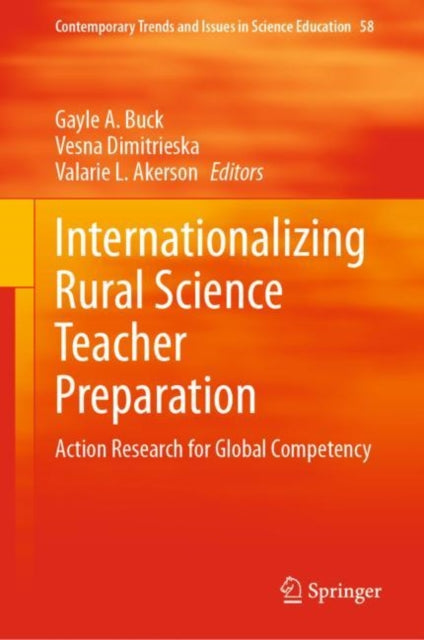
Internationalizing Rural Science Teacher Preparation: Action Research for Global Competency
Internationalizing Rural Science Teacher Preparation: Action Research for Global Competency
💎 Earn 536 Points (£5.36) on this item.
We can order this item for you. Delivery usually takes about 4 to 6 weeks.
This item is not held in our immediate stock. We will order it for you after checkout.
Estimated delivery: About 4 to 6 weeks
YOU SAVE £22.62
- Condition: Brand new
- UK Delivery times: Usually arrives within 2 - 3 working days
- UK Shipping: Fee starts at £3.89. Subject to product weight & dimension
Bulk ordering. Want 15 or more copies? Get a personalised quote and bigger discounts. Learn more about bulk orders.
Couldn't load pickup availability
- More about Internationalizing Rural Science Teacher Preparation: Action Research for Global Competency
The edited volume explores the need to enhance science education for rural students, incorporating local knowledge and culture with global trends, and addressing the lack of globally competent science teaching in preparation programs. It highlights the challenges faced by rural schools in keeping up with reform efforts and providing diverse experiences, particularly at the global level. The book includes action research projects for preservice teachers in elementary and secondary science methods and content courses, conducted in various academic institutions.
Format: Hardback
Length: 299 pages
Publication date: 24 November 2023
Publisher: Springer International Publishing AG
The edited volume "Increasing Quantity and Enhancing Quality of Science Education for Rural Students in an Interconnected, Interdependent, and Complex World" explores the importance of preparing rural students for success in an interconnected, interdependent, and complex world. It acknowledges that globally integrated education incorporates local knowledge and culture with global trends and highlights the need for globally competent science teaching. However, the volume notes that globally competent science teaching is not included in most preparation programs, and teachers enter schools unprepared to address students' needs. Rural schools lack opportunities to keep up with reform efforts and may have limited experiences with diversity, particularly at the global level.
The chapters in the volume describe globalization in the authors' respective academic institutions through sharing global competence action research projects for preservice teachers. The studies presented were conducted in elementary and secondary science methods and science content courses. The book's research is unique as the contributors have carried out action research in science teacher preparation programs and participated in peer discussions that helped them fill gaps in global science teaching while advancing the field of teacher preparation programs.
The volume begins by discussing the need for increasing the quantity of science education in rural areas. It highlights the fact that rural students often face significant barriers to accessing quality science education, including limited resources, inadequate infrastructure, and a lack of qualified teachers. The authors argue that increasing the quantity of science education in rural areas is essential to address these barriers and provide rural students with the skills and knowledge they need to succeed in the 21st century.
One of the key challenges facing rural science education is the need to enhance the quality of science education. The authors argue that quality science education should be focused on preparing students to thrive in an interconnected, interdependent, and complex world. This requires a curriculum that is relevant, engaging, and challenging, and that incorporates local knowledge and culture with global trends.
The volume highlights the importance of incorporating local knowledge and culture into science education. It argues that local knowledge and culture can provide students with a deeper understanding of the natural world and can help them develop a sense of identity and belonging. However, the authors also note that incorporating local knowledge and culture into science education can be challenging, as it requires teachers to have a deep understanding of the local context and to be able to adapt their teaching to meet the needs of their students.
The volume also discusses the need for globally competent science teaching. Globally competent science teaching is defined as teaching that prepares students to be successful in a globalized world. It requires teachers to have a deep understanding of global trends and issues and to be able to teach students how to apply their knowledge and skills in real-world situations. The authors argue that globally competent science teaching is not included in most preparation programs, and that teachers enter schools unprepared to address students' needs.
To address these challenges, the volume provides a range of strategies for increasing the quantity and enhancing the quality of science education in rural areas. These strategies include:
Increasing the number of science teachers: The volume argues that increasing the number of science teachers in rural areas is essential to address the shortage of qualified teachers. This can be done by providing training and support to existing teachers and by recruiting new teachers from rural areas.
Improving the quality of science education: The volume provides a range of strategies for improving the quality of science education in rural areas. These strategies include:
Providing access to resources: The volume argues that providing access to resources such as textbooks, laboratory equipment, and technology is essential to improving the quality of science education. This can be done by providing funding to schools and by partnering with local organizations and businesses.
Implementing culturally responsive teaching: The volume argues that implementing culturally responsive teaching is essential to improving the quality of science education in rural areas. This requires teachers to be aware of the cultural backgrounds of their students and to be able to adapt their teaching to meet the needs of their students.
Providing professional development opportunities: The volume argues that providing professional development opportunities to teachers is essential to improving the quality of science education. This can be done by providing training and support to teachers and by providing opportunities for teachers to collaborate with other teachers.
The volume also provides a range of case studies that illustrate the impact of globalization on science education in rural areas. These case studies include studies of schools in rural areas that have implemented globally competent science teaching and have seen significant improvements in student outcomes.
In conclusion, the edited volume "Increasing Quantity and Enhancing Quality of Science Education for Rural Students in an Interconnected, Interdependent, and Complex World" provides a comprehensive overview of the need to increase the quantity and enhance the quality of science education in rural areas. It highlights the importance of incorporating local knowledge and culture into science education, the need for globally competent science teaching, and a range of strategies for increasing the quantity and enhancing the quality of science education in rural areas. By implementing these strategies, we can help to ensure that rural students have the skills and knowledge they need to succeed in the 21st century.
Dimension: 235 x 155 (mm)
ISBN-13: 9783031460722
Edition number: 1st ed. 2023
UK and International shipping information
UK and International shipping information
We deliver throughout the United Kingdom and to 128 countries and territories worldwide, including the United States, Australia, Canada, Germany, Spain and France.