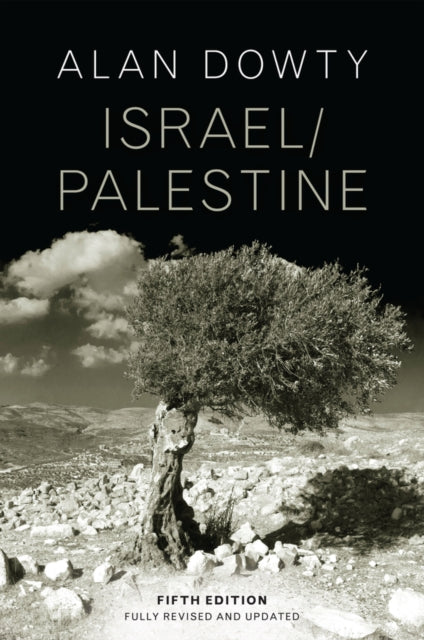
A Dowty
Israel/Palestine, 5th Edition
Israel/Palestine, 5th Edition
YOU SAVE £2.61
- Condition: Brand new
- UK Delivery times: Usually arrives within 2 - 3 working days
- UK Shipping: Fee starts at £3.89. Subject to product weight & dimension
Bulk ordering. Want 15 or more copies? Get a personalised quote and bigger discounts. Learn more about bulk orders.
Couldn't load pickup availability
- More about Israel/Palestine, 5th Edition
The Israeli-Palestinian conflict is a complex issue with deep historical roots. This book provides a clear and objective overview of the conflict, presenting the opposing perspectives of the two sides and explaining why it is waged with such vehemence. Despite the gap between the two sides narrowing over time, the conflict remains intractable.
Format: Paperback / softback
Length: 272 pages
Publication date: 03 February 2023
Publisher: Polity Press
The Israeli-Palestinian conflict, a complex and enduring issue in the Middle East, has garnered significant attention due to its peculiar intensity and apparent intractability. Spanning decades, this conflict has defied numerous attempts at resolution, leaving many perplexed about its unique characteristics. In this essay, we will explore the factors contributing to the peculiarity of the Israeli-Palestinian conflict and its apparent resistance to resolution.
Historical Context:
The Israeli-Palestinian conflict has its roots in the late 19th and early 20th centuries, when the British Empire colonized the region and established a Jewish state in Palestine. The establishment of Israel sparked widespread opposition from the Arab world, which claimed the land as their own and saw the creation of a Jewish state as an encroachment on their sovereignty. The conflict escalated in the 1940s and 1950s, with the emergence of the Arab League and the subsequent Arab-Israeli War, which resulted in the displacement of millions of Palestinians and the establishment of Israel's borders.
The conflict has since evolved into a multifaceted and complex issue, encompassing political, economic, social, and cultural dimensions. The two sides have engaged in numerous peace negotiations, but these efforts have often failed due to a range of factors, including mutual distrust, conflicting territorial claims, and the ongoing Israeli occupation of Palestinian territories.
One of the key factors contributing to the peculiarity of the Israeli-Palestinian conflict is the historical and political context in which it occurs. The conflict is situated in a region with a rich history of conflict and rivalry, with competing claims and ideologies vying for dominance. The Arab world, in particular, has long been dominated by a sense of Arab nationalism, which seeks to establish a pan-Arabic state that encompasses all Arab territories. This sense of nationalism has been a driving force behind the Arab-Israeli conflict, as Arab leaders have sought to reclaim land that they believe was stolen from their ancestors.
On the other hand, Israel has developed into a modern, democratic state that claims its right to exist and defend itself against external threats. Israel's establishment in 1948 led to the displacement of millions of Palestinians, who were forced to flee their homes and land. The Israeli government has since maintained a military occupation of Palestinian territories, which has been criticized by the international community for its human rights violations and its impact on the daily lives of Palestinians.
Another factor contributing to the peculiarity of the Israeli-Palestinian conflict is the role of religion. The conflict has been deeply intertwined with religious beliefs and ideologies, with both sides claiming religious justification for their actions. The Jewish faith, in particular, has played a significant role in shaping Israeli identity and its relationship with the Arab world. Many Jews believe that their historical connection to the land of Israel gives them a moral and legal right to establish a Jewish state in the region.
However, the Arab world also has strong religious and cultural ties to the land of Palestine, which they view as sacred and integral to their identity. Many Arab leaders and individuals argue that the establishment of a Jewish state on Palestinian land is an act of religious and cultural injustice, and they seek to reclaim the land and establish a Palestinian state that is independent and sovereign.
Political Dimensions:
The political dimensions of the Israeli-Palestinian conflict are also significant. The conflict has been characterized by a series of power struggles and negotiations between the two sides, with each side seeking to gain the upper hand and establish its own political agenda. The Israeli government has been criticized for its policies towards Palestinians, including the construction of settlements in occupied territories, the use of military force.
The Palestinian leadership has also been criticized for its inability to establish a unified and coherent political agenda that can effectively challenge the Israeli government's policies. The Palestinian Authority has been divided into numerous factions, each with its own political agenda and priorities, making it difficult to reach a consensus on key issues such as the status of Jerusalem, the right of return for displaced Palestinians, and the establishment of a Palestinian state.
Economic Dimensions:
The economic dimensions of the Israeli-Palestinian conflict are also significant. The conflict has had a devastating impact on the economies of both sides, with the Israeli economy heavily dependent on military spending and the Palestinian economy struggling to develop due to the Israeli occupation and economic restrictions. The Israeli government has been criticized for its economic policies towards Palestinians, including the closure of Palestinian businesses, the confiscation of Palestinian land, and the restrictions on the movement.
The Palestinian leadership has also been criticized for its inability to establish a viable and sustainable economy that can provide employment opportunities and economic stability for its people. The Palestinian Authority has been divided into numerous factions, each with its own economic agenda and priorities, making it difficult to reach a consensus on key issues such as the status of Jerusalem, the right of return for displaced Palestinians, and the establishment of a Palestinian state.
Social Dimensions:
The social dimensions of the Israeli-Palestinian conflict are also significant. The conflict has had a profound impact on the social fabric of both sides, with widespread displacement, poverty, and social inequality. The Israeli government has been criticized for its policies towards Palestinians, including the construction of settlements in occupied territories, the use of military.
The Palestinian leadership has also been criticized for its inability to establish a unified and coherent social agenda that can effectively challenge the Israeli government's policies. The Palestinian Authority has been divided into numerous factions, each with its own social agenda and priorities, making it difficult to reach a consensus on key issues such as the status of Jerusalem, the right of return for displaced Palestinians, and the establishment of a Palestinian state.
Cultural Dimensions:
The cultural dimensions of the Israeli-Palestinian conflict are also significant. The conflict has had a profound impact on the cultural heritage and identity of both sides, with widespread displacement, poverty, and social inequality. The Israeli government has been criticized for its policies towards Palestinians, including the construction of settlements in occupied territories, the use of military.
The Palestinian leadership has also been criticized for its inability to establish a unified and coherent cultural agenda that can effectively challenge the Israeli government's policies. The Palestinian Authority has been divided into numerous factions, each with its own cultural agenda and priorities, making it difficult to reach a consensus on key issues such as the status of Jerusalem, the right of return for displaced Palestinians, and the establishment of a Palestinian state.
Conclusion:
In conclusion, the Israeli-Palestinian conflict is a complex and multifaceted issue that has defied numerous attempts at resolution. The conflict has its roots in historical, political, economic, social, and cultural factors, with each side claiming its right to exist and defend itself against external threats. The two sides have engaged in numerous peace negotiations, but these efforts have often failed due to a range of factors, including mutual distrust, conflicting territorial claims, and the ongoing Israeli occupation of Palestinian territories.
The conflict has had a devastating impact on the economies, societies, and cultural heritage of both sides, with widespread displacement, poverty, and social inequality. The two sides have engaged in numerous peace negotiations, but these efforts have often failed due to a range of factors, including mutual distrust, conflicting territorial claims, and the ongoing Israeli occupation of Palestinian territories.
The Israeli-Palestinian conflict is a complex and multifaceted issue that has defied numerous attempts at resolution. The conflict has its roots in historical, political, economic, social, and cultural factors, with each side claiming its right to exist and defend itself against external threats. The two sides have engaged in numerous peace negotiations, but these efforts have often failed due to a range of factors, including mutual distrust, conflicting territorial claims, and the ongoing Israeli occupation of Palestinian territories.
The conflict has had a devastating impact on the economies, societies, and cultural heritage of both sides, with widespread displacement, poverty, and social inequality. The two sides have engaged in numerous peace negotiations, but these efforts have often failed due to a range of factors, including mutual distrust, conflicting territorial claims, and the ongoing Israeli occupation of Palestinian territories.
The Israeli-Palestinian conflict is a complex and multifaceted issue that has defied numerous attempts at resolution. The conflict has its roots in historical, political, economic, social, and cultural factors, with each side claiming its right to exist and defend itself against external threats. The two sides have engaged in numerous peace negotiations, but these efforts have often failed due to a range of factors, including mutual distrust, conflicting territorial claims, and the ongoing Israeli occupation of Palestinian territories.
The conflict has had a devastating impact on the economies, societies, and cultural heritage of both sides, with widespread displacement, poverty, and social inequality. The two sides have engaged in numerous peace negotiations, but these efforts have often failed due to a range of factors, including mutual distrust, conflicting territorial claims, and the ongoing Israeli occupation of Palestinian territories.
Weight: 450g
Dimension: 230 x 153 x 23 (mm)
ISBN-13: 9781509554829
UK and International shipping information
UK and International shipping information
We deliver throughout the United Kingdom and to 128 countries and territories worldwide, including the United States, Australia, Canada, Germany, Spain and France.