Pascal Leclair
Landmark Experiments in Protein Science
Landmark Experiments in Protein Science
💎 Earn 264 Points (£2.64) on this item.
YOU SAVE £3.14
- Condition: Brand new
- UK Delivery times: Usually arrives within 2 - 3 working days
- UK Shipping: Fee starts at £2.39. Subject to product weight & dimension
Bulk ordering. Want 15 or more copies? Get a personalised quote and bigger discounts. Learn more about bulk orders.
Couldn't load pickup availability
- More about Landmark Experiments in Protein Science
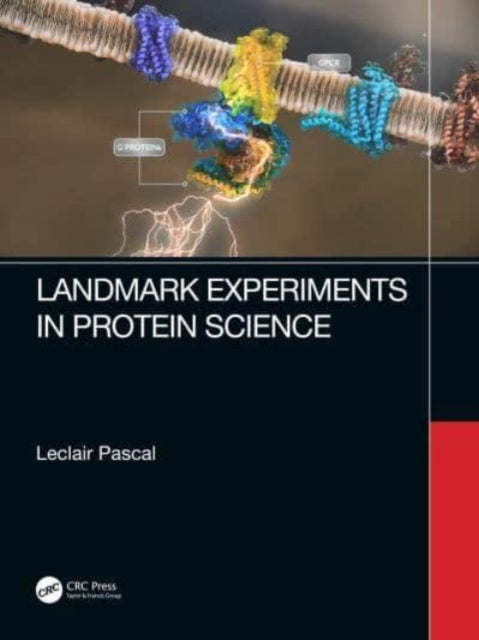
Proteins are essential for cells to function, grow, communicate, and die. Landmark Experiments in Protein Science explores how proteins were discovered, their role in cells, and how dysfunctional proteins can lead to cancer. It describes landmark experiments in cell biology and biochemistry, discusses the How and Why of these experiments, and includes primary data and graphs.
Format: Paperback / softback
Length: 238 pages
Publication date: 31 July 2023
Publisher: Taylor & Francis Ltd
Proteins are the indispensable workhorses of cells, carrying out the majority of critical tasks that enable cells to utilize nutrients, proliferate, communicate with one another, and, most importantly, self-destruct in the event of abnormal behavior. The discovery of proteins has been a pivotal milestone in our understanding of cellular biology. In this essay, we will delve into the historical background, cellular functions, and potential implications of dysfunctional proteins in the development of cancer.
Proteins were first identified in the late 19th century by scientists such as Wilhelm von Hofmeister and Emil Fischer. These groundbreaking discoveries were made through a series of experiments that involved isolating and purifying proteins from various biological sources. The isolation of proteins was a significant achievement, as it required the development of sophisticated techniques such as chromatography and electrophoresis.
Proteins play a vital role in cells by performing a wide range of functions. They act as enzymes, catalysts that facilitate chemical reactions within cells. Enzymes are responsible for many of the metabolic processes that occur in cells, including the breakdown of nutrients, the synthesis of molecules, and the regulation of cellular processes. Proteins also serve as structural components, providing support and structure to cells and tissues. They are involved in cell signaling, communication, and the regulation of gene expression.
Dysfunctional proteins can have profound consequences for cells and tissues. One of the most well-known consequences of protein dysfunction is the development of cancer. Cancer is a complex disease characterized by the abnormal growth and proliferation of cells. Many cancers are caused by mutations or alterations in genes that encode proteins. These mutations can lead to the production of dysfunctional proteins that promote cancer cell growth and survival.
There are several mechanisms by which dysfunctional proteins can contribute to cancer development. One of the most common mechanisms is the activation of signaling pathways that promote cell growth and survival. For example, mutations in the oncogenes KRAS and BRAF can lead to the activation of signaling pathways that promote cell growth and survival, resulting in the development of cancer.
Another mechanism by which dysfunctional proteins can contribute to cancer development is the disruption of cellular processes. For example, mutations in the tumor suppressor genes TP53 and PTEN can lead to the disruption of cellular processes that regulate cell growth and survival, resulting in the development of cancer.
In addition to their role in cancer development, dysfunctional proteins can also have other detrimental effects on cells and tissues. For example, proteins that are misfolded or unfolded can cause cellular stress and damage, leading to the development of diseases such as Alzheimer's and Parkinson's disease.
To better understand the role of proteins in cellular functions and their potential implications in cancer development, it is important to study the structure and function of proteins. This can be achieved through a variety of techniques, including X-ray crystallography, nuclear magnetic resonance (NMR) spectroscopy, and mass spectrometry.
In conclusion, proteins are the indispensable workhorses of cells, carrying out the majority of critical tasks that enable cells to utilize nutrients, proliferate, communicate with one another, and, most importantly, self-destruct in the event of abnormal behavior. The discovery of proteins has been a pivotal milestone in our understanding of cellular biology, and their role in cells is multifaceted. Dysfunctional proteins can have profound consequences for cells and tissues, including the development of cancer. By studying the structure and function of proteins, we can better understand the mechanisms by which these proteins contribute to cellular dysfunction and disease development. This knowledge can lead to the development of new treatments and therapies for a wide range of diseases, including cancer.
Weight: 708g
Dimension: 210 x 280 x 15 (mm)
ISBN-13: 9781032458694
This item can be found in:
UK and International shipping information
UK and International shipping information
UK Delivery and returns information:
- Delivery within 2 - 3 days when ordering in the UK.
- Shipping fee for UK customers from £2.39. Fully tracked shipping service available.
- Returns policy: Return within 30 days of receipt for full refund.
International deliveries:
Shulph Ink now ships to Australia, Belgium, Canada, France, Germany, Ireland, Italy, India, Luxembourg Saudi Arabia, Singapore, Spain, Netherlands, New Zealand, United Arab Emirates, United States of America.
- Delivery times: within 5 - 10 days for international orders.
- Shipping fee: charges vary for overseas orders. Only tracked services are available for most international orders. Some countries have untracked shipping options.
- Customs charges: If ordering to addresses outside the United Kingdom, you may or may not incur additional customs and duties fees during local delivery.