Shulph Ink
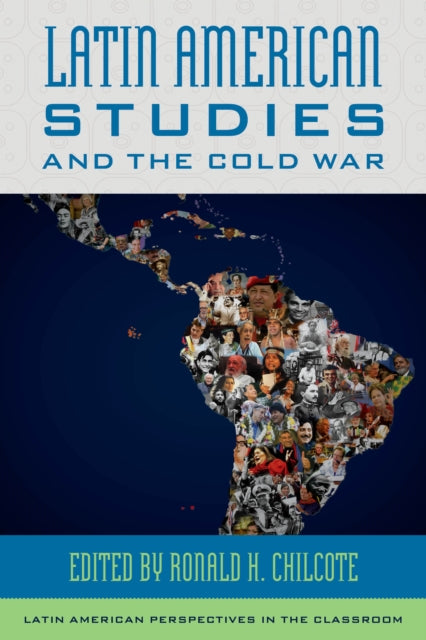
Latin American Studies and the Cold War
Latin American Studies and the Cold War
💎 Earn 354 Points (£3.54) on this item.
We can order this item for you. Delivery usually takes about 4 to 6 weeks.
This item is not held in our immediate stock. We will order it for you after checkout.
Estimated delivery: About 4 to 6 weeks
YOU SAVE £9.20
- Condition: Brand new
- UK Delivery times: Usually arrives within 2 - 3 working days
- UK Shipping: Fee starts at £3.89. Subject to product weight & dimension
Bulk ordering. Want 15 or more copies? Get a personalised quote and bigger discounts. Learn more about bulk orders.
Couldn't load pickup availability
- More about Latin American Studies and the Cold War
The Cold War significantly impacted Latin American studies in the US, UK, Netherlands, Germany, Czechoslovakia, Soviet Union, China, and Cuba, with new academics challenging the mainstream consensus and opening the field to progressive theoretical currents. This book is essential for new directions in the field.
Format: Hardback
Length: 280 pages
Publication date: 17 March 2022
Publisher: Rowman & Littlefield
The Cold War's Impact on Latin American Studies in the United States, United Kingdom, Netherlands, Germany, Czechoslovakia, Soviet Union, China, and Cuba
The Cold War had a profound impact on the field of Latin American studies in the United States, United Kingdom, Netherlands, Germany, Czechoslovakia, Soviet Union, China, and Cuba. This timely text traces the evolution of Latin American studies during this period, highlighting the ways in which the new generation of academics challenged the mainstream Cold War consensus and opened the field to progressive theoretical currents. Drawing on unpublished documents, the book provides a unique insight into the intellectual and political dynamics of the time, shedding light on the ways in which the Cold War shaped the study of Latin America.
One of the key themes of the book is the impact of the Cold War on the academic study of Latin America. During the Cold War, the United States and the Soviet Union were engaged in a geopolitical struggle for dominance in the region, and this conflict had a significant impact on the academic study of Latin America. The United States, for example, supported authoritarian regimes in Latin America, while the Soviet Union supported socialist and communist movements. This led to a polarized academic landscape, with scholars on both sides of the Cold War debate arguing for their respective positions.
However, the new generation of academics challenged the mainstream Cold War consensus and opened the field to progressive theoretical currents. These scholars argued that the Cold War was not a natural or inevitable phenomenon, but rather a product of political and economic interests. They sought to understand the social and economic structures that had led to the Cold War and to develop alternative theories and policies that could address the region's problems.
One of the most significant contributions of the new generation of academics was the development of the field of Latin American cultural studies. Cultural studies focused on the cultural expressions of Latin America, including literature, music, art, and film, and sought to understand the ways in which these expressions reflected the social and political conditions of the region. This approach challenged the traditional view of Latin America as a homogeneous and static region and instead highlighted the diversity and complexity of the region's cultures.
Another important contribution of the new generation of academics was the development of the field of Latin American political economy. Political economy focused on the economic structures of Latin America and sought to understand the ways in which these structures had contributed to the region's economic problems. This approach challenged the traditional view of Latin America as a poor and underdeveloped region and instead highlighted the potential for economic growth and development.
In addition to these theoretical contributions, the new generation of academics also played a significant role in promoting Latin American studies in the United States and other countries. They organized conferences, workshops, and other events to bring together scholars and students from different countries and to promote the exchange of ideas and knowledge. They also worked to establish Latin American studies programs in universities and colleges, and to increase the number of Latin American students studying in the United States and other countries.
Despite the significant contributions of the new generation of academics, the Cold War continued to have a negative impact on Latin American studies in the United States and other countries. The United States, for example, continued to support authoritarian regimes in Latin America, and this led to a lack of political and economic stability in the region. The Soviet Union, on the other hand, continued to support socialist and communist movements, and this led to a lack of economic development in the region.
In the 1980s, the Cold War began to decline, and this led to a renewed interest in Latin American studies. The United States, for example, began to support democratic reforms in Latin America, and this led to a greater openness and transparency in the region's political and economic systems. The Soviet Union, on the other hand, began to collapse, and this led to a loss of influence in Latin America.
Today, Latin American studies is a vibrant and diverse field that is recognized as a critical component of the study of the world. Scholars and students from all over the world are studying Latin America, and the field is producing new knowledge and insights that are helping to shape the world's understanding of the region.
In conclusion, the Cold War had a profound impact on the field of Latin American studies in the United States, United Kingdom, Netherlands, Germany, Czechoslovakia, Soviet Union, China, and Cuba. The new generation of academics challenged the mainstream Cold War consensus and opened the field to progressive theoretical currents, and this has led to a greater understanding of the social and economic structures of the region. Despite the negative impact of the Cold War, Latin American studies is a vibrant and diverse field that is recognized as a critical component of the study of the world.
Weight: 553g
Dimension: 238 x 159 x 24 (mm)
ISBN-13: 9781538141588
UK and International shipping information
UK and International shipping information
We deliver throughout the United Kingdom and to 128 countries and territories worldwide, including the United States, Australia, Canada, Germany, Spain and France.