Shulph Ink
Machine Learning and the Internet of Things in Solar Power Generation
Machine Learning and the Internet of Things in Solar Power Generation
We can order this item for you. Delivery usually takes about 4 to 6 weeks.
This item is not held in our immediate stock. We will order it for you after checkout.
Estimated delivery: About 4 to 6 weeks
YOU SAVE £11.00
- Condition: Brand new
- UK Delivery times: Usually arrives within 2 - 3 working days
- UK Shipping: Fee starts at £3.89. Subject to product weight & dimension
Bulk ordering. Want 15 or more copies? Get a personalised quote and bigger discounts. Learn more about bulk orders.
Couldn't load pickup availability
- More about Machine Learning and the Internet of Things in Solar Power Generation
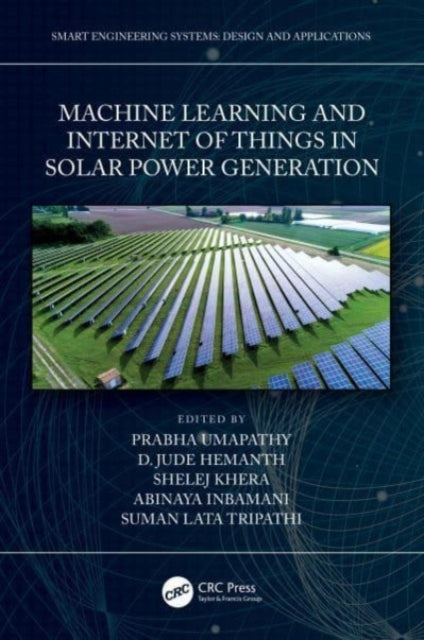
The book investigates various MPPT algorithms,and the optimization of solar energy using machine learning and deep learning. It covers topics such as solar cell design, artificial neural network techniques, solar collector optimization, and more. It is an ideal reference text for academic researchers in diverse engineering domains.
Format: Hardback
Length: 232 pages
Publication date: 29 June 2023
Publisher: Taylor & Francis Ltd
Chapter 1: Introduction
The book investigates various Maximum Power Point Tracking (MPPT) algorithms, and the optimization of solar energy using machine learning and deep learning. It will serve as an ideal reference text for senior undergraduate, graduate students, and academic researchers in diverse engineering domains including electrical, electronics and communication, computer, and environmental.
Chapter 2: Data Acquisition by the Internet of Things for Real-Time Monitoring of Solar Cells
This chapter discusses data acquisition by the Internet of Things for real-time monitoring of solar cells. It covers topics such as data acquisition systems, data transmission protocols, and data processing techniques. It also highlights the advantages of real-time monitoring of solar cells, such as improved energy efficiency, reduced maintenance costs, and increased profitability.
Chapter 3: Artificial Neural Network Techniques, Solar Collector Optimization, and Artificial Neural Network Applications in Solar Heaters and Solar Stills
This chapter covers artificial neural network techniques, solar collector optimization, and artificial neural network applications in solar heaters and solar stills. It discusses topics such as neural network architecture, training algorithms, and performance evaluation methods. It also highlights the advantages of using artificial neural networks in solar energy optimization, such as improved accuracy, faster convergence, and adaptability to changing conditions.
Chapter 4: Solar Analytics, Smart Centralized Control Centers, Integration of Microgrids, and Data Mining on Solar Data
This chapter details solar analytics, smart centralized control centers, integration of microgrids, and data mining on solar data. It discusses topics such as solar energy forecasting, energy management systems, and power grid integration. It also highlights the importance of data mining on solar data for improving energy efficiency and reducing costs.
Chapter 5: Highlights the Concept of Asset Performance Improvement, Effective Forecasting for Energy Production, and Low-Power Wide-Area Network Applications
This chapter highlights the concept of asset performance improvement, effective forecasting for energy production, and low-power wide-area network applications. It discusses topics such as asset optimization, energy management strategies, and wireless communication technologies. It also highlights the advantages of these applications in solar energy systems, such as increased reliability, reduced maintenance costs, and improved energy distribution.
Chapter 6: Solar Cell Design Principles, the Equivalent Circuits of Single and Two Diode Models, Measuring Idealist Factors, and Importance of Series and Shunt Resistances
This chapter elaborates on solar cell design principles, the equivalent circuits of single and two diode models, measuring idealist factors, and importance of series and shunt resistances. It discusses topics such as solar cell materials, cell structures, and operating conditions. It also highlights the significance of these factors in determining the performance of solar cells.
Chapter 7: Perturb and Observe Technique, Modified P&O Method, Incremental Conductance Method, Sliding Control Method, Genetic Algorithms, and Neuro-Fuzzy Methodologies
This chapter discusses perturb and observe technique, modified P&O method, incremental conductance method, sliding control method, genetic algorithms, and neuro-fuzzy methodologies. It covers topics such as parameter identification, optimization algorithms, and performance evaluation methods. It also highlights the advantages of these methodologies in solar energy optimization, such as improved accuracy, faster convergence, and adaptability to changing conditions.
Conclusion
In conclusion, this book provides a comprehensive overview of solar energy optimization using machine learning and deep learning. It covers various topics such as data acquisition, artificial neural network techniques, solar analytics, smart centralized control centers, integration of microgrids, and asset performance improvement. It also highlights the importance of solar cell design principles and the various methodologies used in solar energy optimization. This book will serve as an invaluable resource for senior undergraduate, graduate students, and academic researchers in diverse engineering domains, as well as professionals working in the solar energy industry.
Weight: 590g
Dimension: 234 x 156 (mm)
ISBN-13: 9781032299785
UK and International shipping information
UK and International shipping information
We deliver throughout the United Kingdom and to 128 countries and territories worldwide, including the United States, Australia, Canada, Germany, Spain and France.