Matthew Wale
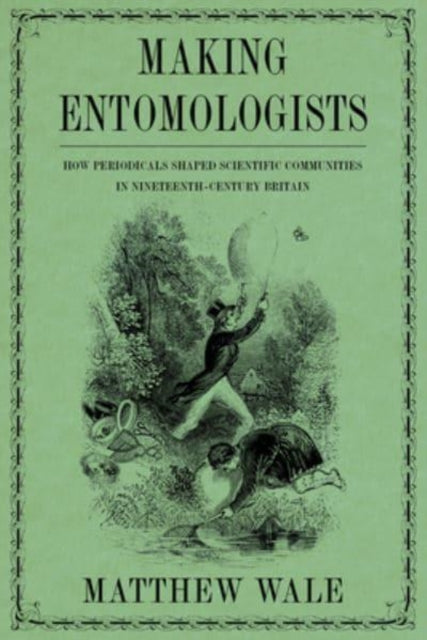
Making Entomologists: How Periodicals Shaped Scientific Communities in Nineteenth-Century Britain
Making Entomologists: How Periodicals Shaped Scientific Communities in Nineteenth-Century Britain
💎 Earn 274 Points (£2.74) on this item.
- Condition: Brand new
- UK Delivery times: Usually arrives within 2 - 3 working days
- UK Shipping: Fee starts at £3.89. Subject to product weight & dimension
Bulk ordering. Want 15 or more copies? Get a personalised quote and bigger discounts. Learn more about bulk orders.
Couldn't load pickup availability
- More about Making Entomologists: How Periodicals Shaped Scientific Communities in Nineteenth-Century Britain
In the 19th century, popular natural history periodicals had a democratizing power, welcoming contributions from correspondents regardless of their background, posing a threat to elite science. This study reveals how an increase in these publications enabled many actors to participate more fully in the life sciences and entomology, and imagine themselves as part of a wider community. Women were also active participants, although in smaller numbers.
Format: Hardback
Length: 252 pages
Publication date: 06 December 2022
Publisher: University of Pittsburgh Press
In the nineteenth century, popular natural history periodicals wielded an extraordinary democratizing power. By embracing contributions from correspondents regardless of their background, they posed a significant threat to those who considered themselves as the gatekeepers of elite science, who, in turn, used their own periodicals to create more exclusive communities. This study seeks to reexamine the landscape of science participation in the nineteenth century, offering a more nuanced analysis of the so-called amateur-professional divide that resonates with the rise of citizen science today. Matthew Wale demonstrates how the proliferation of popular natural history periodicals during this century played a pivotal role in shaping not only the life sciences and the field of entomology but also scientific communities that otherwise would not have existed. These publications facilitated the involvement of a diverse range of actors, from wealthy gentlemen of science to working-class naturalists, in an extensive network of fellow practitioners. Moreover, they enabled these individuals to envision themselves as part of a broader community. While women did participate in these groups, their numbers were significantly lower than those of men. However, it is important to note that this study specifically focuses on journals and magazines devoted to natural history.
Introduction
The nineteenth century witnessed a remarkable transformation in the dissemination of scientific knowledge. The rise of popular natural history periodicals played a significant role in this shift, as they welcomed contributions from correspondents across different backgrounds, challenging the traditional notion of elite science and creating a more inclusive scientific community.
The Democratizing Power of Natural History Periodicals
By welcoming contributions from individuals who were not traditionally considered scientists, natural history periodicals challenged the authority of established scientific institutions. They opened up a space for a broader range of voices and perspectives to be heard, democratizing the process of scientific discovery and dissemination.
The Threat to Elite Science
The traditional gatekeepers of elite science, such as university professors and scientific societies, saw the rise of popular natural history periodicals as a threat to their own authority. They used their own periodicals to shape more exclusive communities, limiting access to scientific knowledge to those who could afford to subscribe or participate in their activities.
The Amateur-Professional Divide
One of the defining features of the nineteenth century was the supposed divide between amateurs and professionals in science. Natural history periodicals, however, blurred this divide by welcoming contributions from both amateurs and professionals. This led to a more nuanced understanding of science, as individuals from different backgrounds brought their unique perspectives and expertise to the field.
Women's Participation in Natural History
While women did participate in natural history groups and societies, their numbers were significantly lower than those of men. This reflects the broader societal norms and gender biases of the time, which limited women's opportunities in science and other fields. However, women's contributions to natural history were valuable and should not be overlooked.
Conclusion
In conclusion, the nineteenth century saw the rise of popular natural history periodicals as a powerful force for democratizing science. By welcoming contributions from correspondents regardless of their background, they challenged the authority of elite science and created a more inclusive scientific community. This study highlights the significance of these periodicals in shaping the life sciences and the field of entomology, as well as their impact on scientific communities that otherwise would not have existed. It also sheds light on the amateur-professional divide that persisted in the nineteenth century and its relevance to the rise of citizen science today.
Weight: 534g
Dimension: 161 x 237 x 27 (mm)
ISBN-13: 9780822947516
UK and International shipping information
UK and International shipping information
We deliver throughout the United Kingdom and to 128 countries and territories worldwide, including the United States, Australia, Canada, Germany, Spain and France.