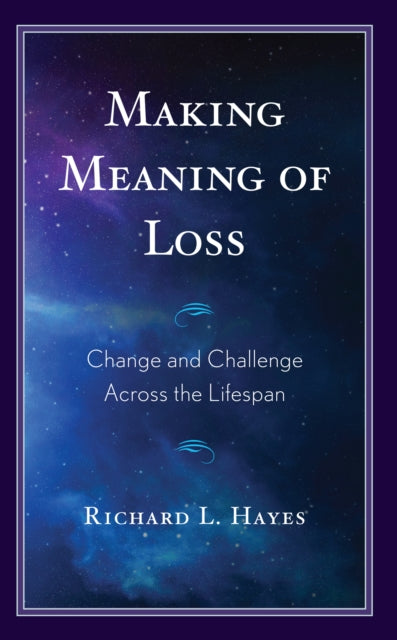
Richard L. Hayes
Making Meaning of Loss: Change and Challenge Across the Lifespan
Making Meaning of Loss: Change and Challenge Across the Lifespan
💎 Earn 169 Points (£1.69) on this item.
We can order this item for you. Delivery usually takes about 4 to 6 weeks.
This item is not held in our immediate stock. We will order it for you after checkout.
Estimated delivery: About 4 to 6 weeks
- Condition: Brand new
- UK Delivery times: Usually arrives within 2 - 3 working days
- UK Shipping: Fee starts at £3.89. Subject to product weight & dimension
Bulk ordering. Want 15 or more copies? Get a personalised quote and bigger discounts. Learn more about bulk orders.
Couldn't load pickup availability
- More about Making Meaning of Loss: Change and Challenge Across the Lifespan
Making Meaning of Loss: Change and Challenge Across the Lifespan explores how change brings loss to our lives, how we make meaning of it, and how our experience with loss directs our encounters with loss in the future. It provides suggestions for how earlier losses can become fruitful allies in encounters with change and how caregivers can help others learn from the losses in their lives.
Format: Paperback / softback
Length: 174 pages
Publication date: 15 May 2024
Publisher: Lexington Books
Making Meaning of Loss: Change and Challenge Across the Lifespan is a comprehensive exploration of the impact of change on our lives and how we navigate the challenges of loss. It delves into the ways in which loss challenges us to rethink our worldview, question our identity, and reinvent ourselves. Drawing on a lifespan approach, Hayes examines how we make sense of the losses that change brings in each period of our lives and how the way in which we meet the challenge that each loss brings directs our encounters with loss in the future. The book offers valuable insights into how caregivers can help others learn from the losses in their lives and apply them to construct a more reliable self for meeting the challenges of an uncertain future.
One of the key themes of the book is the importance of rethinking our worldview in the face of loss. Hayes argues that loss can disrupt our sense of self and our understanding of the world, and it can lead us to question our beliefs and values. This can be a difficult and painful process, but it is essential for our growth and development. By rethinking our worldview, we can gain a new perspective on the losses we have experienced and find new ways to cope with them.
Another important theme of the book is the question of who we have become as a result of loss. Hayes suggests that loss can shape our identity and our sense of purpose in life. It can lead us to question our relationships, our careers, and our goals, and it can force us to reevaluate our priorities. By asking ourselves who we have become, we can gain a deeper understanding of ourselves and our strengths and weaknesses.
In addition to rethinking our worldview and questioning our identity, loss can also lead us to reinvent ourselves anew. Hayes suggests that loss can be a catalyst for change and growth, and it can provide us with the opportunity to explore new interests and passions. By reinventing ourselves, we can find new ways to live our lives and to make a positive impact on the world.
One of the challenges that caregivers face when helping others make meaning of loss is the fact that loss is a deeply personal and emotional experience. Caregivers may feel overwhelmed, helpless, and frustrated, and they may not know how to help their loved ones. Hayes provides several suggestions for how caregivers can help others make meaning of loss.
One of the most important suggestions is to listen actively to the person who is experiencing loss. Caregivers should be patient and understanding, and they should allow the person to express their feelings and thoughts without judgment. They should also be willing to provide support and guidance, and they should be able to help the person find new ways to cope with their loss.
Another suggestion is to provide practical support to the person who is experiencing loss. Caregivers can help with tasks such as cleaning, cooking, and shopping, and they can also provide emotional support. They should be aware of the person's needs and should be willing to meet them.
In addition to providing practical and emotional support, caregivers can also help their loved ones make meaning of loss by helping them to find new ways to connect with others. Hayes suggests that loss can lead to isolation and loneliness, and it can be difficult for people to find new friends and relationships. By helping their loved ones connect with others, caregivers can help them to feel less alone and to find new sources of support.
Another important suggestion is to help the person who is experiencing loss to find new ways to cope with their emotions. Hayes suggests that loss can be a very emotional experience, and it can be difficult for people to manage their emotions. By helping the person to find new ways to cope with their emotions, caregivers can help them to feel more stable and to be more productive.
Finally, caregivers can help their loved ones make meaning of loss by helping them to find new ways to live their lives. Hayes suggests that loss can be a catalyst for change and growth, and it can provide us with the opportunity to explore new interests and passions. By helping their loved ones find new ways to live their lives, caregivers can help them to find new sources of meaning and purpose.
In conclusion, Making Meaning of Loss: Change and Challenge Across the Lifespan is a comprehensive exploration of the impact of change on our lives and how we navigate the challenges of loss. It offers valuable insights into how caregivers can help others learn from the losses in their lives and apply them to construct a more reliable self for meeting the challenges of an uncertain future. By rethinking our worldview, questioning our identity, and reinventing ourselves, we can gain a new perspective on the losses we have experienced and find new ways to cope with them. By listening actively to the person who is experiencing loss, providing practical and emotional support, helping the person to find new ways to connect with others, and helping the person to find new ways to live their lives, caregivers can help their loved ones make meaning of loss and to find new sources of meaning and purpose.
Weight: 268g
Dimension: 227 x 152 x 13 (mm)
ISBN-13: 9781666924527
UK and International shipping information
UK and International shipping information
We deliver throughout the United Kingdom and to 128 countries and territories worldwide, including the United States, Australia, Canada, Germany, Spain and France.