
Shulph Ink
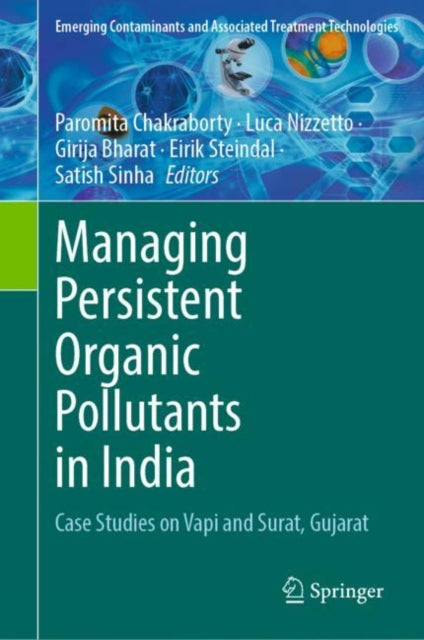
Managing Persistent Organic Pollutants in India: Case Studies on Vapi and Surat, Gujarat
Managing Persistent Organic Pollutants in India: Case Studies on Vapi and Surat, Gujarat
We can order this item for you. Delivery usually takes about 4 to 6 weeks.
This item is not held in our immediate stock. We will order it for you after checkout.
Estimated delivery: About 4 to 6 weeks
YOU SAVE £22.22
- Condition: Brand new
- UK Delivery times: Usually arrives within 2 - 3 working days
- UK Shipping: Fee starts at £3.89. Subject to product weight & dimension
Bulk ordering. Want 15 or more copies? Get a personalised quote and bigger discounts. Learn more about bulk orders.
Couldn't load pickup availability
- More about Managing Persistent Organic Pollutants in India: Case Studies on Vapi and Surat, Gujarat
Persistent Organic Pollutants (POPs) are a class of chemicals that are harmful to the environment, human and animal health, and are restricted under the Stockholm Convention. This book focuses on determining the sources, fate, analytical techniques, health impacts, regulatory aspects, management, best environmental practices, and case studies, with recommendations for the way forward.
Format: Hardback
Length: 200 pages
Publication date: 13 July 2023
Publisher: Springer International Publishing AG
Persistent Organic Pollutants (POPs) are a group of chemicals that are persistent, bioaccumulative, and toxic (PBT), which are restricted for use under the Stockholm Convention. They have a significant impact on the environment, human health, and animal health. Most POPs are semi-volatile organic compounds (SVOCs) and have a long-range transport potential, often being deposited in colder climates and found in places away from the regions they are produced. POPs are hydrophobic and lipophilic chemicals, which means they bind to solids and fatty tissues in both marine and terrestrial environments. This can lead to the movement of POPs up the food chain. This book focuses on determining the sources, fate, analytical techniques of detecting POPs, as well as their health impacts. It also dwells on the regulatory aspects, management of POPs, best environmental practices (BEPs), Indian and international case studies, and gaps in understanding the regulatory aspects. Several key recommendations for the way forward are provided in the concluding chapters of this book.
Dimension: 235 x 155 (mm)
ISBN-13: 9783031313103
Edition number: 1st ed. 2023
UK and International shipping information
UK and International shipping information
We deliver throughout the United Kingdom and to 128 countries and territories worldwide, including the United States, Australia, Canada, Germany, Spain and France.