Shulph Ink
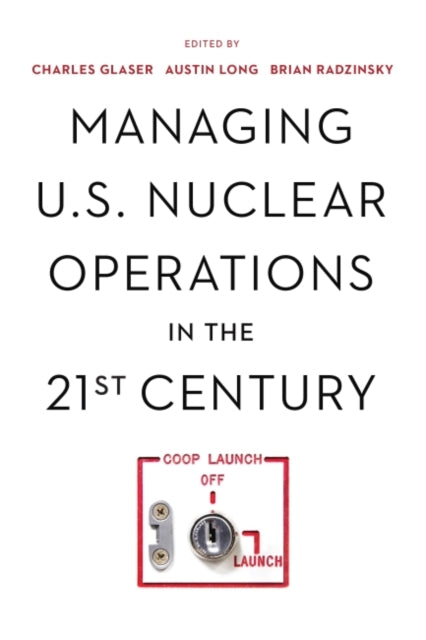
Managing U.S. Nuclear Operations in the 21st Century
Managing U.S. Nuclear Operations in the 21st Century
💎 Earn 153 Points (£1.53) on this item.
We can order this item for you. Delivery usually takes about 4 to 6 weeks.
This item is not held in our immediate stock. We will order it for you after checkout.
Estimated delivery: About 4 to 6 weeks
YOU SAVE £5.22
- Condition: Brand new
- UK Delivery times: Usually arrives within 2 - 3 working days
- UK Shipping: Fee starts at £3.89. Subject to product weight & dimension
Bulk ordering. Want 15 or more copies? Get a personalised quote and bigger discounts. Learn more about bulk orders.
Couldn't load pickup availability
- More about Managing U.S. Nuclear Operations in the 21st Century
The United States and its principal rivals maintain sizable arsenals of nuclear weapons, and arms control agreements and the end of the Cold War have made the prospect of nuclear war a distant fear for the general public. Managing U.S. Nuclear Operations in the 21st Century focuses on how theories and policies are put into practice in managing nuclear forces in the United States. It addresses questions such as what have been the guiding priorities of U.S. nuclear strategy since the end of the Cold War, what nuclear attack options would the president have during a war, and how are these war plans developed and reviewed by civilian and military leaders? The answers to these questions depend on the process by which national strategy for nuclear deterrence is converted into nuclear war plans and the entire range of procedures for implementing those plans if necessary.
Format: Paperback / softback
Length: 310 pages
Publication date: 03 May 2022
Publisher: Brookings Institution
The United States and its principal rivals—China and Russia—still maintain sizable arsenals of nuclear weapons, along with the systems for managing them and using them if that terrible day ever comes. Managing U.S. Nuclear Operations in the 21st Century focuses on how theories and policies are put into practice in managing nuclear forces in the United States. It addresses such questions as: What have been the guiding priorities of U.S. nuclear strategy since the end of the Cold War? What nuclear attack options would the president have during a war? How are these war plans developed and reviewed by civilian and military leaders? How would presidential orders be conveyed to the uniformed men and women who are entrusted with U.S. nuclear weapons systems? And are these communications systems and supporting capabilities vulnerable to disruption or attack? The answers to such questions depend on the process by which national strategy for nuclear deterrence, developed by civilian leaders, is converted into nuclear war plans and the entire range of procedures for implementing those plans if necessary. The chapter authors have extensive experience in government, the armed forces, and the analytic community. Drawing on their firsthand knowledge, as well as the public record, they provide unique, authoritative accounts of how the United States manages its nuclear forces today. This book will be of interest to the national security community, particularly younger experts who did not grow up in the nuclear-centric milieu of the Cold War. Any national security analyst will find this book to be a valuable resource for understanding the complexities of managing nuclear forces in the 21st century.
Exploring how the United States manages its still-powerful nuclear arsenal
Arms control agreements and the end of the Cold War have made the prospect of nuclear war a distant fear for the general public. But the United States and its principal rivals—China and Russia—still maintain sizable arsenals of nuclear weapons, along with the systems for managing them and using them if that terrible day ever comes.
Managing U.S. Nuclear Operations in the 21st Century
Managing U.S. Nuclear Operations in the 21st Century focuses on how theories and policies are put into practice in managing nuclear forces in the United States. It addresses such questions as: What have been the guiding priorities of U.S. nuclear strategy since the end of the Cold War? What nuclear attack options would the president have during a war? How are these war plans developed and reviewed by civilian and military leaders? How would presidential orders be conveyed to the uniformed men and women who are entrusted with U.S. nuclear weapons systems? And are these communications systems and supporting capabilities vulnerable to disruption or attack?
The answers to such questions depend on the process by which national strategy for nuclear deterrence, developed by civilian leaders, is converted into nuclear war plans and the entire range of procedures for implementing those plans if necessary. The chapter authors have extensive experience in government, the armed forces, and the analytic community. Drawing on their firsthand knowledge, as well as the public record, they provide unique, authoritative accounts of how the United States manages its nuclear forces today. This book will be of interest to the national security community, particularly younger experts who did not grow up in the nuclear-centric milieu of the Cold War. Any national security analyst will find this book to be a valuable resource for understanding the complexities of managing nuclear forces in the 21st century.
Weight: 488g
Dimension: 152 x 228 x 23 (mm)
ISBN-13: 9780815739616
UK and International shipping information
UK and International shipping information
We deliver throughout the United Kingdom and to 128 countries and territories worldwide, including the United States, Australia, Canada, Germany, Spain and France.